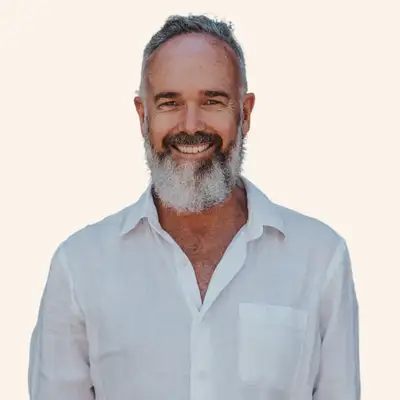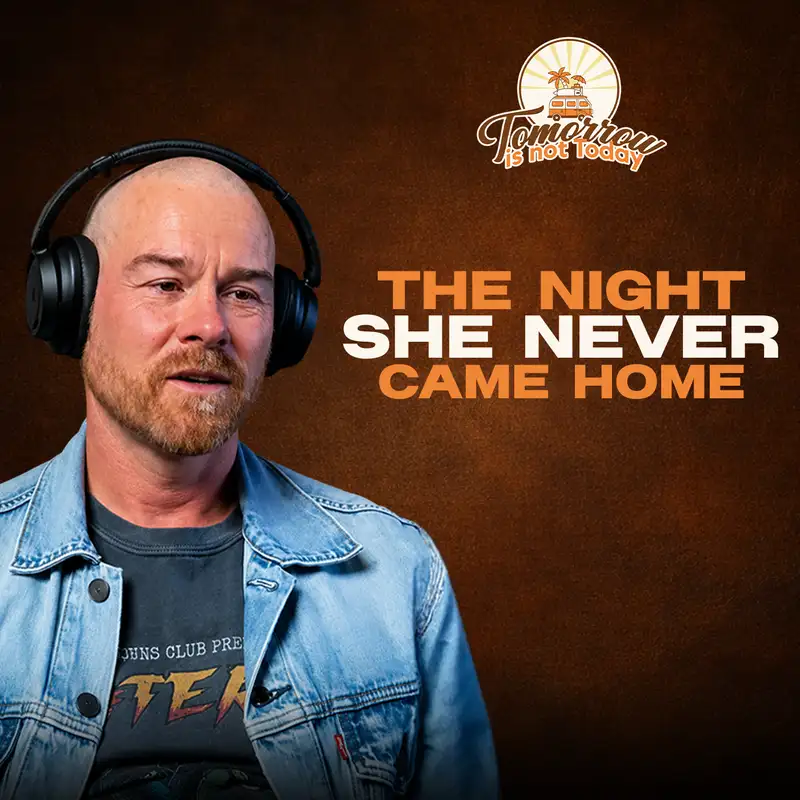
Jason King
Download MP3[00:00:00] My daughter, Jordan, who took her own life at 18 years old. And she went out on Friday night and never came home, and my mental health was at the lowest point that it's been. Um, I moved to Broken Hill in 2004 from Alice Springs, not knowing my ex was pregnant, and a couple of years later found out I had a kid, and- How, how did you deal with one thing after the other from a, a mental health perspective for yourself?
To be perfectly honest, there were times that I struggled to cope
The brain is an organ like other organs, and if we starve it of essential nutrients, it's going to let us down. What you just said then is I think one of the most crucial messages that can, anybody can get across. Some of the things that, you know, I was able to do when things were better was to integrate regular exercise.
I don't think I could tell Jordan's story. I don't think I'd be here talking to you if I hadn't [00:01:00] found that place. That's awesome. I think the alcohol and the drugs, it's a way that we try and push emotions down. It is a fact that there is more love inside you than you could ever possibly imagine. No, I think you've just given us one of the best psychological lessons around grief that I have ever heard anywhere.
How can you create the life you want and leave a legacy you're proud of? Um
Welcome to the Tomorrow Is Not Today podcast. I'm very excited about this podcast. This is a story that no one ever wants to tell, but unfortunately I believe it's a story that everybody needs to hear, uh, this one. I've got an incredible guy all the way from Broken Hill, which is pretty exciting. I never, um, thought I'd have one from Broken Hill, so that's pretty cool.
Uh, his name is Jason King. [00:02:00] Jason, welcome to the podcast, and tell us a little bit about what you're doing to make the world a better place. Yeah, G'day mate. Thanks so much for having me on. Um- Oh, what am I doing to make the world a better place? Well, I think, um, what I'm doing now is working on a project called the Jordan Liberty Project, and it started as a documentary project to, in memory of my daughter, Jordan, who took her own life at 18 years old, um, in March of 2023.
And as part of that process of sharing, um, her story and my journey, my healing journey, it's actually become, uh, an impact project as well. And I'm still making-- in the process of trying to make the documentary, so that's kinda become a, a bit of a mission of mine is, um, I've got a background in, in filmmaking, and so, um, trying to finance it and do it at the highest level to make the biggest impact has, has been a challenge in and of itself.
And anyone who's ever tried to make a high-end film, or, or be it, um, or even a [00:03:00] documentary, um, would realise some of those challenges. Uh, but what I found is that just by talking about it, actually activated this, um, space for people to talk about mental health in a way that we did not realise was so necessary, particularly in our remote community of Broken Hill.
And so, um, as a result of that, I've been bringing impact partners on, and I've been working closely with a number of local organisations. Um, specifically our official impact partner is the, our first one, you know, it's only still, I guess I see this as the beginning of the journey really. Um, the Flying Doctors through their wellbeing place and their mental health team here in Broken Hill in the, the southeast section of the, the New South Wales RFDS service, and they've been really supportive and as well as other organisations in the community and, um, just looking at ways that we can really get that conversation around youth mental health in particular, uh, out there and, and talk about this stuff while we have the chance.
And, um, that's kinda I guess the, for me is [00:04:00] really at the c- at the, at the heart of what I'm trying to do is make, uh... You know, encourage people and motivate and inspire people to be kind to themself and create space for conversations that I really wish that I had been able to have with Jordan, but now is no longer possible.
And so that film, you know, the, the documentary is the film that I wish Jordan and I had have seen while she was still alive, and the bonus is all these other things that I didn't even think about, um, at the, uh, at the start, you know, have now been happening and it's just been really beautiful. I, I, I, I wanna start and say thank you for what you're doing.
You're taking what, to me as a dad, would be one of the most horrific things that could ever possibly happen, um, and you're using your skill set to be able to go, "You know what? Other people need to know and understand this better. I wanna bring some education, some encouragement- Uh, to [00:05:00] other people so, A, they understand, and B, so that they don't need to go through it at the same time.
Uh, and I, I think that's a huge, huge credit for somebody to do that. Um, and, and I, again, I appreciate you coming on because It sort of, you sort of relive, to a degree, what you never stop living through day to day. But yet already, um, from our chats, you've impacted hundreds and hundreds of people, possibly even more than that, and the plans that you have are just huge.
And to get someone like the Royal Flying Doctor Service on board with you is incredible. So tell us a little bit... You, you did go over a few little things there, but tell us a little bit about, about the journey, um, with Jordan through her life, um, and things that you- so other parents may see, notice, and recognize things as well.
Yeah, I mean, um, I, I do wanna [00:06:00] s- shout out again to the RFDS because, like, n- not most people think of them as an emergency retrieval service, but what I've noticed through my time with them is just how much they're able to offer this sort of level of bespoke healthcare in our most remote and isolated areas, and sometimes they can pivot in places that other services can't.
So yeah, I can't thank them enough for their support. And they were the first donation to my project was through the f- that RFDS mental health team, and they're the first impact partner, and they've been really supportive. So yeah, I can't say enough good things, and they're now supporting myself and the, and the, um, other participants of the documentary as well as hopefully coming on the trip.
So yeah, it'll be pretty, pretty exciting. But, um, to... You know, I mean, there's so much, um, there's so much in- to unpack when it comes to, um, you know, surviving suicide loss. Being bereaved by suicide is as... It doesn't matter who the person is, you know, in relation to you, it's one of the most difficult things, if not the most difficult thing you can ever [00:07:00] go through, and to lose a child that way has been like, yeah, it's indescribable.
There's just no other way to, to put it. So, um, so yeah, to get that out there, I suppose, is, is one thing, and I do want to share up front, for people who are coming along for this journey with us, that, um, my intention for all of this is to approach this, even though it's tragic and horrific and the, the most difficult thing that any parent can really go through if we stop and think about it, um, my intention for this chat now and for every time that I'm talking to people about Jordan's story is not to dwell on that, um, tra- tragedy and the horror, and to focus on how we can approach this subject from a place of love and kindness, and, you know, how we can use some of the more difficult and challenging aspects of Jordan's life and her story and what happened to her in a, in a way that can really inspire others to make positive changes in their lives.
[00:08:00] And whether that's someone who's bereaved by suicide loss or whether that's someone who's going through a difficult time right now, um- You know, that's-- it doesn't matter to me. Like, it's really important to just put that out there. But yeah, Jordan, um, I moved to Broken Hill in 2004 from Alice Springs, not knowing my ex was pregnant, and a couple years later found out I had a kid.
And so I didn't actually meet her until she was 20 months old, and I flew her and her mum across to Melbourne. Um, I was in Broken Hill. I'd actually ju-just met someone who, Dominique, who I ended up, we ended up, um, getting married, but we'd only just met and she came down and, um, it was a really interesting time meeting Jordan for the first time.
But I, um, you know, like it was a shock finding out that I was a dad, and I thought, well, you know Sheila's in p- she'd since moved to Perth by then. I was in Broken Hill. Neither of us could really, or I certainly wasn't in a position to [00:09:00] relocate at the time, and so I just thought, "Well, I'm a dad. I have a young person, you know, um, a, a child.
I'm gonna go meet them and, and just see, um, how it goes." And so I picked, uh... I remember seeing Jordan for the first time, and it was just like, it's... I've, I, I was at the birth of both of her two other children with Dominique, and I was at their births, and it was a similar feeling meeting Jordan for the first time, just that recognition.
And, um, and yeah, I, I decided I did wanna have-- There was just no decision to be made. I had to be part of her life, and I had to have her in my life, so I set about doing that, and it was a really challenging time, um, navigating, uh, what became an increasingly acrimonious relationship, um, going through the family court system, paying for everything, s- still ma-managing to try and live and manage a business.
I had a mil- had... I came, I moved here to take over Bell's Milk Bar, which is, uh, Australia's oldest milk bar, a 1950s joint, and, and, um, got into filmmaking [00:10:00] after that. Yeah, so I was trying to run this up and down small business. Luckily, Dominique had a stable job, and she supported me, uh, a lot of the way. Um, but yeah, like it was well and truly worth it looking back now.
There's no, there's no chance, um, it wasn't worth it, but it was a challenge. And I mean, to be honest with you, like I thought that I had a documentary in me about this and a story to tell when Jordan was still alive about just that grief that I was feeling and a lot of parents feel, um, you know, of, of all genders, um, for children who are still alive and that time we lose, and particularly that early time.
Like I, you know, Jordan never had a chance to know me. I never had a chance to, to know her during the most important bonding time that a child has with their parents, and that's really hard to, to move through. And, you know, the hardest part is, I guess the kicker is that I thought that I had more time to do that, you know, to unpack all of that and to go through that with her and help her and to get to know her, um, as she grew into adulthood.
And, um, sadly, that wasn't to be the case. So, [00:11:00] um, yeah, she spent most of her time in, in Western Australia, come over for the school holidays. Uh, in the early years, we ended up getting like a month three times a year, which I think was, is the most you could expect under those circumstances and a really good foundation.
And then we saw her every school holidays, and she-- Even though she wasn't sched- uh, the kids weren't scheduled to be born, she actually arri- They were both born, Tommy, who's 16, and Charlotte, who's now 13, um, were both born by the day that Jordan arrived for her school holiday visits, you know, two and three weeks, um, early respectively.
So, uh, they have-- we all had this really amazing experience over here in Broken Hill. And then in, in, um- In late in, late in, or early in, in 2020, Jordan moved over here, um, after a s- previous suicide attempt. And it was a real big challenge because in February of that year, Dominique was diagnosed with breast cancer, and in March, as we know, of 2020, the world got [00:12:00] locked down for COVID.
So all of those plans that I had to nurture and support Jordan in her recovery and help her through, um, you know, they just got, um, ha- attacked by real life and by this horrendous experience of trying to juggle all of these competing things and, and doing the best we could. Um, and then, yeah, that sort of ultimately she went, she went to...
Finished her high school here and got accepted into university and was having a gap year and, and yeah, things got really tough for her and she, she couldn't make it through. That, that is quite like those few months in particular there is absolutely in- in- intense, absolutely intense. Like, there, there would not be a moment where you didn't have some stressful thoughts, very stressful thoughts going through your mind.
How, how did you, I guess, deal with one thing after the other from a, a mental health perspective for yourself? Yeah, I mean, looking back now, like, when I think about it, if I go through and I [00:13:00] describe everything that happened at that time, like, if I told you it was a nightmare I had, you'd think, "Oh my gosh, what a nightmare."
Like, it really did feel like I-- At, at one point I remember thinking, like, "I've just come out of a living, a living nightmare." Like, and there were times where it felt like that on the ground, and, um, to be perfectly honest, there were times that I struggled to cope with it. You know, the, the movie business was big here in Broken Hill.
I do a lot of, um, location management as well, so I make short c- documentary content and film content for, and also, um, work on, uh, lo- location scouting and things like that for bigger productions. So at that time, you know, the RFDS TV show was actually in town, and I was working on that, and during COVID we-- there were-- filming was impacted in a lot of other areas, and we ended up with all this extra work out here, and the milk bar was like either as, either completely dead or as busy as it's ever been, and you never knew when that switch was gonna be flicked, as w- many of us experience in our own endeavors, you know.
And in the end, the support was there, but at [00:14:00] the moment, in the moment, it was really hard. And it was also hard because Dominique was off getting a double mastectomy and recovery, and I was, um, homeschooling and single parenting those two kids at the time, you know, looking after, after kids and Jordan. And she is an extrovert, was an extrovert, and, um, w- was really struggled with being locked down, and also getting to know, like, you know, ch- changing school, uh, on the back of struggling mental health problems in year 10 is hard enough in the best of cases, um, you know, with everything else going well.
But if you imagine, you chuck yourself into this COVID-impacted breast cancer, um, fueled, uh, experience, and you're an extrovert and you just wanna go hang out with your friends. Uh, but even then, like you've got all the, the, the school stuff that comes into it, um, it's a challenge. It was a real challenge and, um, you know, to go back to your question, like there were times where I think my mental health was at the lowest point that it's been in my life during that period, and there were [00:15:00] also times where I was able to, um, to-- where I was able to take positive steps and things were better.
And some of the things that, you know, I was able to do when things were better was to integrate regular exercise. At the time, like I, over that period, I did self-medicate in some pretty unhealthy ways, and I know it's something a lot of people do. And, um, I was able to start that, the idea of cutting back on alcohol in particular, eating a bit more healthy, exercising regularly, um, drinking like two liters of water a day.
And, um, it's interesting looking back now when I think about it because that ebbed and flowed, and when I think about when things were better and when things were worse, for me it's- Uh, you know, a scientist, um, mental health expert or, or even, you know, like a physical health, um, practitioner would probably say it's a no-brainer that the times when I felt better coincided when I was doing those things they tell us that we should be doing.[00:16:00]
And, um, yeah, it's that kinda, that kinda thing. So, um, so that kinda really helped and, um, but I wasn't able to, to really fully, um, embrace that. And, and after Jordan died, I, I really found myself back in that unhealthy place of, you know, self-medicating by drinking too much in particular, by, you know, smoking weed to try and cope with what was, you know, such a really challenging time.
And I certainly, um- Don't judge myself for that. But what I will say is that when I was able to, to, um, find a place where I've been able to be sober, um, and experience what it's like to live my life from that place without those things, um, it's bloody hard. It's not really easier, but it's certainly, um, better and I've been able to, um, you know, find-- I don't think I could tell Jordan's story, I don't think I would be here talking to you if I hadn't found that place.
What, what you just said then is, [00:17:00] I think one of the c- most crucial messages that can, anybody can get across at any time, is the fact that you, you obviously had to fight really, really hard to get to that point of making those good positive changes and the, doing the positive things for yourself. Um, and like you said, I'm so glad you don't judge yourself for, for anything 'cause nobody none of us have any right to judge anybody for anything like that at all.
Um, and we all have our own journey, that's for sure. Uh, and that's the fact that you're here now talking about this, to me, that in itself is a massive, massive thing. A massive kudos on that one. Uh, and, and but the simple things of the food, the exercise, the water, uh, these are things that people just bypass or don't even take much notice of at all, for the most part, and yet these are the critical things.
And like you said, anybody to, [00:18:00] to do with physical, mental health or anything like that is gonna tell you this is some of the most basic things that are gonna help us. There's so much research out there for that. So I'm really glad that you pointed that out and what it actually did, and you could tell the ups and downs by what you were differing, doing with the habits that you put into your life.
Yeah, yeah. And I mean, um, things like I ended up, you know, the week Jordan, the week Jordan died, um, Dominique and I were, um, had just decided to separate, you know, and, and I just sold the milk bar. Like I was in the process of, the day after she died, I signed the deal to, to s- to sell the milk bar, and so I was grieving already so much.
Um, and um, you know, w- yeah, it's no wonder that, and I just did the best that I could at the time. But, you know, to your point of, of the, you know, the healthier options and, and what we're told and what we know, what if we're honest we know we need to do, um, Jordan, it was [00:19:00] a constant thing for me with, with Jordan to...
Like she didn't drink water at all. Like I don't know if she ever drank water. Um, she- She, she did drink alcohol and she did use drugs, and she did spend a lot of time, uh, on her mobile phone, and she did, um, you know, like, I don't know, she walked around as kids do when they want to get from A to B and stuff like that in terms of exercise.
But I was constantly at her, um, to, to... It was a constant source of frustration for me to see her and just to know that, like, the, you know, I don't know the exact science of it, but I'm sure that a little bit of, um, desktop research would tell us that the brain is an organ like other organs, and that if we starve it of essential nutrients, it's gonna let us down, like other organs are gonna let us down if we don't look after them.
And I think it's just so important for people to remember that, you know, [00:20:00] i-if we're, if you aren't sure, if you are struggling and you c- you have the kind of thoughts that, uh, you know, that pain of, of being y- you know, you do reflect on things when you lose a child to suicide, and you do think about suicide and learn about it and mental health in different ways.
But that, you know, that, uh, intense psychological, um, pain that's just indescribable. Unless you've been there, you probably don't even realise what it is. Um- You know, the brain i-is gonna be whatever, however hard that is to deal with and whatever is going on, it must be easier if the brain is h-as healthy as it can be from a physiological point of view.
And, um, I know myself i-in my healing, my ongoing healing journey, just stuff like, um, making myself exercise even though I don't feel like it. Um, and like I never get back from a walk or a run and go, "Oh, I really regret doing that. I hated..." I mean, I might have hated doing it, but I never regret [00:21:00] having done it.
And, and I think, um, you know, the same is true if you make yourself drink two liters of water, or you make yourself eat a healthy meal and skip the, um, the Macca's or whatever the case might be. So, um, but for me, like in my own experience, um, like there's so many things that I wish that I could do differently with the benefit of hindsight, and there's so many things I wish I could go back in time and change.
But if I could just pick one, it would be to be kinder to myself, because I think, um, you know, having found that place for myself, it's just so much easier to support the others that you-- in your life. And as a parent, you know, it's so much easier to support my other children and, and myself, um, from that place.
And, but it wasn't until I f- till I did those things, and I can't say that I'm com-- I h- I'm doing all those things now, but the ones that I are doing, that I am doing, the difference it is making. You know, it's not until you find that place that you realise, uh, how much it, the, the, that the, the beers, uh, might be actually [00:22:00] impacting your mental health until you've k- sort of got that cleaner, um, outlook.
And if anyone's on the fence about ch- making changes in their own lives, you know, I'd highly encourage you to give it a go and just see for yourself. Like I actually thought that I might, thought I might give it a go for six months. Like I committed to six months, and the benefits in my life are such that I don't wanna, I don't really wanna stuff that up by, uh- By tampering with it, it's just working so well for me.
That is so cool. That is so cool. And you're right, when you're in the middle of it, we all know what we should do, and I think, I, I don't know of anybody who doesn't pretty much on a daily basis fight with this, that sometimes we know what we need to do, but actually doing that can be a completely different story altogether.
Um, and that's why I think anybody who actually can actually get out and make that difference and do what they don't want to do as opposed to what they should do, um, can... is, is a massive, it-- even that in itself is a big accomplishment, a massive accomplishment. Tell me, you [00:23:00] said one of the things you would do would be to be kinder to yourself.
Can you give us some practical steps on what maybe how you weren't kind to you and what you would do to be more kind to yourself? Yeah. And, and I mean, to your point too of knowing what to do and not doing it, like that's probably been the hardest thing for me, one of the hardest things about this entire experience.
Jordan left-- she did leave some journals, and, um, I'm still sort of working out which ones, which bits to share and not share in terms of, um, the, the documentary project. But, like, one of the hardest things was, was to read that, you know, she wrote, she wrote this down, you know, like words along the lines of like, "I know all the-- like I d- I'm not eating, I'm not doing this, I'm...
like I know all, I know everything that's wrong with me, and why don't I do anything, but I d- yet I don't do anything to change it, and why don't I do that?" Like, and it's like just knowing she had that awareness and seeing the steps that she tried to take to help herself and knowing she still couldn't get there is just like absolutely the [00:24:00] most tragic part, and I look at her and I, I see person she was.
Um, and she's such a beautiful person, and she really deserved to live a long and, and healthy life. And, um, you know, so many people have reached out to me over the course of this project who've told me they were in that place, and they have been able to find a way through, and they're no longer in that place anymore.
And, and I think something to really focus on is that when things are-- however bad things are, whatever's going on for us, um, it, you know, it might be ongoing for a while, but it's usually almost always temporary and things will change. Even if you do nothing differently, things will eventually change for you in, in your life.
But for me, in terms of being kind, I think, um, definitely f- definitely the, the being-- not drinking and, and, um, you know, when Jordan died, I went and got a prescription for, uh, medicinal cannabis, and I was taking the cannabis oil and smoking weed and drinking and to [00:25:00] try and just somehow stop feeling the pain that I just can't put into words.
And, you know, like there came a point where I was just like, "This isn't really gonna help me." And, and I think now, like, so, um- My daughter, who's 13, like she's an extrovert too, and she says the first thing that comes into her mind. And, um, she's really beautiful and, um, and I have her 50- 50/50 with Dominique.
And, um, when I've got her, you know, from the place that I've been able to find by being kinder to myself, I'm able to be a lot more patient with her. And with Jordan, we used to, um, trigger each other, and I used to-- it used to escalate, you know. And, and it was a really challenging time for all of us. And I, like the fact that we've all come through the way we have is like so, um...
I feel like it's such an amazing, uh, positive thing. But, um, but I think, [00:26:00] yeah, for me, that's probably the biggest one when I say about being kind to myself. I think just, um... And then like through, I suppose like, um, as part of that journey, because like-
It, uh, it's only been three years, right? It's been three years, just over, since we lost Jordan, and I recently went to a, to an event and it had been, like, 18 or 19 years since they lost their 21-year-old and, and everyone was still, like, really cut up about it, obviously. And, um, and I was reflecting on that and just thinking, like, "This is something that's never gonna leave me," and this is something when you lose someone this way, it's, it's part of you.
It changes you. Like, it, it changes your molecular structure in a way that's not possible to put back. Um, and there's different way... different levels of how you can move through that in, in your life. And like, I definitely didn't want it to be something that, that I dwelt on [00:27:00] forever and that, that I never got past and it effectively ended my life as well.
Um, but you know, um, I kinda... I was reflecting on this. It's, it's a bit like if, if this pain and this grief is something that we were to, you know, take out and look at and then put away, and for a lot of people, it's possible to put it in the cupboard behind the door, you know, behind, behind the, behind the books at the back of the shelf and close the door and not, not look at it, um, unless you really want to, and then take it out and, and take the care to look at it.
And I suppose, like, by me doing this project I've, I've, um... it's almost like I've put this grief in the trophy cabinet and I'm polishing it every day, and as I walk in the door, I'm seeing it every day. And, um, so for me, being kind to myself has been learning ways to, um, take care of myself as the custodian of that grief that I'm sharing with everyone in order to help them and to make sure that I'm, I'm okay.
And, um, so I've been, you know, seeing therapists who's been helping. I've been [00:28:00] doing... One of the things that's been really helpful for me is art therapy, which has been supplied through the, um, Flying Doctors Wellbeing Center here in Broken Hill. And, um, it's amazing how writing, like drawing, getting a cra- a messy crayon and finding, you know, that place, but then drawing what you're thinking and feeling as opposed to trying to find words to it can actually unlock different layers of grief and express yourself in, in different ways.
Um, I've also been using songwriting and music as a way to just let it, let those emotions out, and I think that's a key for me is, like, yeah, finding, finding ways. Like, I think the alcohol and the drugs, it's a way that we try and push emotions down- A- and, and, and get rid of them. And I think being kind to yourself is allowing all the emotions and all the parts of you to exist together, and it's not something that we really think about, particularly as blokes, um, but just generally.
Like maybe we don't make time for emotions to sit with. Like for me, you know, to s- [00:29:00] I was sort of-- I did go through a period of thinking, "Well, if I'm s- gonna be so sad, how could I ever be happy?" And now I've, I've found a place where I can be sad and happy. And, um, it's-- and by just allowing the sadness to be there and by allowing the, all of that, that emotion to be there.
And, uh, recently I've been exploring guilt, you know, that, that old one, and I didn't-- I'd kinda lo- looped it, like pushed them all in together, thinking, "Oh, this is actually grief," but I only... And I've been doing some EFT as well, the tapping, um, and that, that sort of helps. You know, it, it's so much we don't know.
Um, I mean, maybe, um, traditionally, like Eastern medicine in particular, uh, does know this, but like there's so much we're now sort of finding out and things like the nervous system and regulation and all this stuff is becoming more mainstream. But we've got these meridian lines, and they finish at these points, and if we just tap on them, that actually signals to our body that it's safe to express certain emotions and it's safe to, to, um, to [00:30:00] explore those feelings.
And, and so yeah, that's been something I've been working on as well. And, um, when I say like being kind to myself, it doesn't mean it's easy, and I think that's something to really also, um, make sure that we distinguish, because taking the easy way out isn't necessarily taking the kind way out. And, um, so it's been really, really hard.
It's actually been really, really, really, um, challenging this year as I've finished, uh, some of the pitch materials for the documentary and sitting with this immense grief coupled with the, um, guilt and then still trying to, um, you know, live a life. But definitely been able to be, you know, happy and sad at the same time.
Like, you know, wearing these noise-canceling headphones, and I recently kind of realised that when you-- if you can allow the, everything just to be there, you know, the, the, the love that's in your heart, the, the part of you that's joy-- the, the joy that you can then find actually acts [00:31:00] like noise-canceling headphones for, for you, you know, for your heart.
And it's kinda like if you're on an airplane, and you've got the, the crying kid behind you, um, you know they're still there, but they, um, you can listen to your-- you can hear your own music a lot more louder, and so it doesn't bother you anywhere near as much. Everything can exist on that, that airplane of emotions all at once, and I think that's, for me, probably the most important, um, realisation that I've had in my healing journey, which is still ongoing, obviously.
Jason, I think you've just given us one of the best psychological lessons around grief that I have ever heard anywhere, and I've heard a lot of them, and I've read a lot of them, and that was just brilliant. Like, I really hope people listen to that and go and execute on it, because you're not just talking theory, [00:32:00] um, you're talking...
Like, to be able to work on a documentary every day where you've got to relive this, and like you said, you walk in the door and there it is sitting in front of you because that's your job, that's your project, that's what you're working on every day. Uh, and everything that you're doing, uh, to, to get through this, to work it through, all that sort of thing.
And, uh, what you were talking about there, obviously some of those things are gonna be a little bit easier than others, but nothing you talked about that I could see was, was easy in any way. Um, and it's just the way you talked about the thoughts and the feelings and how you dealt with them and worked through them in different, in different modalities, I guess, uh, is phenomenal.
Thank you so much for that. 'Cause that's, that's as practical and raw, but deeply scientific and psychological as you're ever gonna get. I appreciate it. Thanks. Um, and I think, you know, too, like we try and, for me, the big change was [00:33:00] rather than trying to f- like I was trying to fix everything, you know? And, and just sort of letting it be there is actually, um, it sort of dissipates on its own.
It's really w- really, uh, amazing if you can find that place and, and like One of the things that I always think about is, and from reading Jordan's notes as well, and from talking to people, is just how much we can, like, you know, the most negative voices in our lives come from within. The most consistent, persistent, negative critical thinking and critical, like, yes, there are examples of, of outside influences that can affect us, but often it's our own critic, our inner critic, that's the harshest one and the most persistent one that we can never get away from.
And, and I think we do try and push it away, but if we can just accept that there is actually, like, well, firstly, you know, with Jordan, like, if she just knew how loved she was, like looking around, when I look around and I just see how deeply her, her passing has impacted [00:34:00] so many people and continues to, to this day, like, it's heartbreaking.
And to know that she didn't feel that way, that she didn't know that other people felt that about her, but more importantly, she didn't f- feel that way about herself, um, you know, that's, I guess that's kind of the, that really is the heart of the, the kindness, is how can you, how can you tap the, the universe of love that lives inside you that's greater than anything you could ever imagine and, and allow everything that y- you know, everything that's happening to you to exist within that universe, that loving universe of, of self-love?
Um, yeah, it's pretty, um, it's pretty powerful, and it, and it, I find that, like, it's not always easy at all to get to. But if you can find it, it's, it's so powerful and, um, yeah, it's, it's a big message that I share with people all the time. It's just, if you just knew how loved you were, you are. Mm. That, that, that is a powerful, [00:35:00] powerful message right there.
I think that's the crux of the whole lot. It really, really is. Um, there's a couple of things there that you mentioned. One is instead of trying to push the, the grief away and the, the trauma, whatever it is, um, and this is one of the things that I've- I learnt to do, but also, um, being educated around as well is exactly what you're talking about.
Don't try and push it away, just allow it to be. It is, it is what it is. We've got these feelings for a reason, and they do come out of... You don't have those feelings if you didn't and don't love somebody or something or whatever it is. That's what they come from. That's the basis of them. And unfortunately, it can turn into, to fear or all sorts of other emotions and actions that aren't necessarily a positive actions as well.
So just almost embracing it, allowing it to be there, not push it away. But at the same time, you've got this, this happiness and this joy and this, the peace that can be there, [00:36:00] and they can be there at the same time. They can... It's, it's really hard to-- It doesn't make logical sense, but they can actually coexist in the same person at the same time, uh, which I think is a massive thing.
And one of the things there you said that, um, Jordan didn't realise how loved she was, how many people actually loved her and how much. Do you think that by, if we as humans were to tell other people in different ways just how much they're loved, they're appreciated, they're seen, they're noticed, they're welcome, do you think that would make a big difference in people's lives?
I would like to think that if people knew how loved they were, you know, if you knew how loved you are, that it would make a massive difference. Um, and I mean, look, for, for... W- what we do know is from people who s- who survive a suicide attempt, um, a lot of people say they [00:37:00] instantly regretted that decision at, you know, the moment that it felt like it was too late.
And, um, I mean, one of the things that Jordan's death has done for me, it's forced me to reexamine my spiritual beliefs, and I do believe that a part of her exists beyond the physical. And, you know, if she could speak from there, she would, she would say if she had a cha- a choice, you know, a chance to come back and have another go, she had her time again, she wouldn't have made, she wouldn't have done it.
You know, and she would have realised that things would have been different, and the best could be yet to co- could, the best could be yet to come for her, just like it can be for others. And, you know, that's the reason why I'm doing this, because I don't want to be doing it, like, really. Um, I really don't want to be here talking about this.
Like, it's, it is actually challenging in a way that, um, it's very hard to put into words. But, like, it, I know that it's helping people and, you know, I wanna, I want people to think about it now, and I know that it's not always easy and everyone's situation's different. But absolutely, if [00:38:00] people, if people knew how loved they were, how much love there was for them...
And I come back to that point that, like, even if you are, you know, even if you don't, can't think of a single person, you're all alone, you feel all alone, you can't think of a single person who loves you, um, whether that's true or not- It is a fact that there is more love inside you than you could ever possibly imagine, and it is there if only you look for it.
Can you say that again? That, that was very powerful. Yeah, no, there's more love-- I believe there's more love inside every single human being than any of us can possibly ever imagine, and all we have to do is look for it. That's awesome. I love that. Jason, take me back to-- this is for the benefit of parents who have kids that are struggling at the moment.
Um- [00:39:00] This could be a little interesting aspect
Parents who have kids that are struggling in different ways, what are some, some signs, some things that people might notice that are like, "Hey, maybe I should take a bit more notice about that. Maybe I should put in, um, do something a little bit differently," or whatever. What, uh, from a dad's perspective, what could some of those things be?
Um, yeah, no, look, it, it really is a tough one. It's one of those things when you look back and you see the things and, um- You know, like Jordan struggled with her mental health for a long time, and we sort of all knew she was struggling, and it was like a perfect storm for all of us at that time. But if, if I was to look back and try and pinpoint some of the things that, that happened to her and, and n- and I guess [00:40:00] with the benefit of reading her journal as well that she left and seeing, like knowing from her inner world a little bit about what, what she was thinking and feeling and, um...
You know, she, um... Like one of the hardest things for us is actually we had planned to have like an intervention of sorts because we'd noticed, I mean, she was over 18, uh, but she was still living at home, and she'd started staying out, like going out, um, to the pub or for a party or something and then not coming home till the next day.
And that was, that wasn't our rules. You know, we didn't have a lot of rules, but one of the rules for our house was that if you're staying here with us, that you, um, you come home unless you prearrange something else. And so that also, you know, I suppose correlated with what we could tell was, um, you know, more, um, riskier behavior all around.
So [00:41:00] particularly like feeling like she was partying a bit too hard, and we'd actually, you know, made a, a conscious decision to have a chat with her about it. Um, like, "Hey, you know, we're really worried about you, and, like we've noticed your behavior's been escalating, some of these things you're doing really aren't healthy.
Like how can we all work together to, to, um, to support you to, to make some healthier choices?" And, um, you know, we were gonna do it, uh, the weekend before she died, and we... Life just got in the way. We didn't get around to it, and we're like, "Oh, well, it's all right. We'll, we'll catch up with her next weekend."
And, you know, next weekend never came. She went out on Friday night and never came home. And, and I think my... a message that I would give to parents is like, if you think, you know, if you think that there's, um, something you'd like to talk to your children about and you're worried about them, and you can do it from a place of love [00:42:00] and kindness, um, don't wait till next weekend.
Do it this weekend. Um, you know, I had a, like backyard home office that I'd go to most nights and I'd come home, uh, come back into the main house, walk... I had to walk past Jordan's door like every night, you know, pretty much. And I, I don't know how many times it was, but it was more than once that I stopped.
I could hear her in her room, and I stopped at the door and, and like it was like a scene from a movie or something. Like I'm like You know, I just, whatever it was, I couldn't, um, I didn't, I didn't do that. And, you know, like now looking back, it's one of the things I really regret that I didn't at least attempt to talk to her.
And, you know, I know that it would've been hard, and it was hard, and it was really toxic. She, you know, it was challenging. Like so much going on at that time for us. And like I said, I'm not judging myself for anything I did or didn't do. But with the benefit of hindsight, you know, and for people whose children are still alive right now who might, they might be [00:43:00] struggling with, it's so hard to know what to do.
And if you go in too hard, it can, it can also cause... Like who's to say what would've happened had we had that conversation, you know? Like there's, there's all different... Look, it's so challenging and, and then, you know, children, teenagers, young adults, they don't wanna know what their parents have got to say.
They wanna figure it out for themself. And, you know, the challenge I suppose with that is that their peer group p- becomes their main kind of source of support, and they're all struggling. Like certainly in Broken Hill, like a lot of people are really doing it tough mentally. We're, we're, we're more connected than ever, but yet we f- a lot of us feel more alone.
And so that's the backdrop we're all trying to, to work from. And, you know, it just like the generation before, we didn't have smartphones so when we were their age. And, you know, there's probably a middle, probably up and coming generation now that did. They've got young children right now that did grow up with phones.
Um, but like it's something where, you know, there's a whole different range of, of, um, challenges we're all facing, and just the most important [00:44:00] one is to be there with them and have that conversation now. And, um, I'm just trying to think what else. I mean, in Jordan's case, it was so many things. Like if you look back, it, it really was a perfect storm, and she'd just started antidepressants, and she was in the risk, the win- the higher, uh, risk window where your, your, um, the, the, the chemistry is all over the place and you actually have a higher risk of suicide in that period.
But, you know, um, she took them, and the reason she went back on them is because she was really struggling and, yeah, there's so many things. Um, but, uh, the main one would be like if you're worried about your kids, like- And you think you would like to do something, don't wait till next week. And you're right.
As a, as a parent, like having had three kids go through that sort of age bracket, um, you wanna talk to them, but you, you're scared 'cause you don't know what sort of response you're gonna get. You're not, you're not sure sometimes how you're gonna put it across yourself. Am [00:45:00] I gonna handle this well? Am I gonna stuff it up?
Am I gonna say something wrong? Am I gonna get upset? Am I... And all these things go through your head. And then again, it's like, "Well, what are they gonna think? What are they gonna say? Is it gonna trigger them to something or..." And it, it really can be a very, very difficult thing. As simple as it sounds, like, "Hey, let's just go and have a chat with your kids," yeah, great theory, but the practicality of it sometimes is not necessarily easy at all.
Uh, in, in fact, it can be quite scary. So I love what you just said then. If you want to, just do it. Doesn't matter what you're thinking, but do it well. Well, and I think, like, you know, back to the start of this conversation, um, it's something I never did, and I, if I have a time again, I would do, is like take a deep breath.
You know? Like s- just even though y- you may... Like not everyone has all the skills all the time, but like just going in with the intention of [00:46:00] like, "Okay. All right. I'm here. I'm doing this thing. I'm talking to my kid and I'm coming from a place of love and kindness for their best interests and we're gonna work together on whatever it is- I don't know, like if that's, like if that...
Like, it feels to me like a good place to start, and a place from which y- it is hard to say the wrong thing from that place. But if we just charge in there, like even if it's coming from a place of love and kindness, l- because we really care deeply about our children and we're really worried. If we come in there and we just got home from work and we've just jumped out of like a one-hour commute and, and like some idiot cut us off on the way, like, and then we go and try and talk to our teenager, and then they've just been on...
We've all been on our devices or maybe we've had a couple of beers before we do it, you know, and have that conversation, uh, which is normal. You know, we come home from work and we have a glass of wine, we crack open a tinny. And then we have that conversation from that place, like maybe it doesn't go as, the same way, and it's the same conversation with the same intention.
So yeah, I guess it's that kind of... That would probably be my, [00:47:00] if I could go back in time and change what, how I approached it and, and if I can see the differences how I approach my, um, parenting now, um, and the difference it's made. You know, and, and I'm really lucky because, um, Dominique and I have a really, um, awesome co-parenting relationship.
We live 500 meters down the road. The kids still feel like they're part of one family and the difference that it makes, um, compared to like an acrimonious relationship with someone you don't talk to who lives on the other side of the country is, you know, and the difference it makes for those kids is, uh, night and day.
Yeah, no, that's awesome, Jason. That, that is awesome. Tell me a little bit about what you're doing now. Um, I know we've had a chat about it before, and I think it's absolutely incredible what you're doing and the people that you're influencing as well with it. 'Cause it, this isn't just something like, oh, I'm gonna go and try and see if I can get a message to kids.
This is a huge thing that you're putting together, uh, to reach so many people that absolutely love it too. Just tell everybody what, what you are doing at the moment, [00:48:00] where you wanna take it.
Uh, so Jordan was born in Alice Springs, but never went back there. And it was a trip that she, she and I were gonna take. It was actually one, one... the, the one thing that we both were really looking forward to and really wanted to do, and just never got a chance between the COVID lockdowns and, and the, you know, the crazy life that was going on at the time.
And, um, you know, I hoped that that was a cha-- that would've been a chance for us to unpack all of those things we had just been talking about, and for her to, to really find her place in the world. I don't think she really felt like she fit in either family, and I can only imagine that's something that a lot of kids from separated families might, um, come up against, particularly if both parents remarry and they have other s- you know, half siblings.
Um, especially if there's any sort of distance between the, the families or if there's a different parenting style. So for me, like I just, I wanted to take her back to where she was born and show her where she came from. And I hoped that, you know, that, that journey, that road trip would've been a good way to, to sort of hold [00:49:00] her captive in the car and, um, have the some of those con- difficult conversations that just come up sometimes when you are traveling in a car.
It's a actually a really good way, going on a long car trip with a, a teenager, particularly if the, um, if you don't have Starlink or, um, you know, mobile phone service, it can be a good way to actually, um... You know, they get so bored, they start talking about stuff. So anyway, um, I actually took that trip myself as part of my healing journey six months after she died.
And, um, I'm actually wearing her clothes right now. This is her shirt and her jacket. Um, and I, I... At the time she had... Some of them weren't washed and I... It just, it was a way for me to really just im- uh, I guess like celebrate the physical relationship that I had with her and let go of that and embrace the more spiritual part of the journey.
And it, um, I met Dominique and the kids up in Alice Springs and we went and spent some time at Uluru and just grieved together and healed together. And it was such a powerful, um, experience for me that, [00:50:00] um, I wanted to ta- and, uh, um, make this film and sort of share Jordan's story, and I thought taking that trip would be a really great vehicle for the, for the film.
And what I'd, what I've found though is like in sharing, um, this project and that I wanna make this documentary and honor Jordan's life and use it as a way to help inspire others to make changes in their lives, the biggest supporters, the loudest cheer squad have been Jordan's friends and the young people in our community who've told me just how much they need this and how important it is f- um, to us all.
And so I've actually taken them with me on... I'm, I'm hoping to and, and, and planning to take Jordan's friends with me, um, as well as my kids on the trip. Um, Dominique's coming along and we're gonna go to, to Alice Springs to, to lay Jordan's ashes to rest. And, um, I've When I got back from that trip, I actually sent half over to Western Australia, so her grandmother's got the other half, and she is going to join [00:51:00] me, um, in Alice Springs.
And so the RFDS are coming along with me and the, and the, um, the Broken Hill contingent, and we're gonna film that. And hopefully, um, you know, as hard as it's definitely gonna be, like I know it's gonna be a really hard, um, trip, if we can find the, the funding to bring the film crew along and film it, we're gonna be able to tap into the heart of some of the biggest challenges that are facing regional Australians right now, um, particularly our young people, and, and even more remote places than Broken Hill along the way That's phenomenal.
And, and you're not just doing this, but you're actually doing work with schools and sporting clubs and things as well. Tell us a little bit about that. Um, well, I mean, I haven't really, um, gotten into that side of things so much. I mean, there's-- I've been talking in my local community. Just this week I ta- I spoke at a, um, Health New South Wales, uh, staff recognition and innovation awards.
They invited me as their guest speaker to talk about Jordan's story. But, um, [00:52:00] I've partnered with Gravity Films, who is, um, who made a, um, a film called The Last Daughter, which screened in, like, over 750 community screenings right around Australia, and they developed a, like a school package for educational materials that goes with it.
So, um, I'm certainly-- it's certainly something that I'm willing to do and, um, I, I know that as time goes on there'll be more opportunities to share in person Jordan's story with people. But, um, I'm really hoping that we can get the appropriate funding that's necessary to make a high-end documentary film and all the associated resources so that this is the kind of thing that...
You know, 'cause it's one thing, like, there's some great training opportunities out there for young people to, to help them to, um, educate them about how to support each other, um, and for adults as well to, to be able to support each other, um, like mental health, the idea of mental health first aid. But I think, like, when we think about the statistics, you know, unless you've actually lost someone personally, it's very hard to understand, um, [00:53:00] the impact that this can have, you know, on our communities.
You know, and look, I, I truly believe if Jordan had more of an understanding of what the impact of her death was gonna do to the community and how, you know, how, uh, you know, and certainly based on some of the feedback I've gotten from some of the people, you know, you know, in her circle, like, who've s- who've just kinda just, uh, like, it's just, yeah, it's just obvious, like, how much it's impacted them.
Um, you know, if we can just, like, show that to people in community and school settings, I hope that it's gonna motivate and inspire us y- through the power of storytelling to be able to actually want to do the training and understand why we're doing the training when we do it. And yeah, that's definitely my, my dream for this project is to get it to those places where, you know, the statistics don't tell the story.
You know, if, if, like, we lose more than one young person to suicide under 24 in Australia every single day, and that's skewed more heavily [00:54:00] towards regional and remote places. And so, yeah. And, and then it, it's, I think it's, like, nine people, um, of any age within Australia every day on average take their own life, and it's the biggest-- of any of the deaths, it's, it's the most productive years lost of any other thing.
And, and so I just think, like, we're losing, in particular because a lot of people die younger from suicide and- Y- you know, like I wanna do everything I possibly can to try and help people appreciate just how loved they are and, well, give us as much ammunition as we can to support each other and support ourselves through this journey of life.
And look, at the very least, um, yeah, like just decide, make a decision, turn up, um, more fully in our own lives. Why is it so prevalent in sort of, I guess, outback or regional type areas? Out here, [00:55:00] certainly during COVID, we, um, you know, we did have, um... That isolation was really apparent. You know, some of these areas can be more isolated.
Like, I do think, uh, like I, I haven't been fully across all of the stats, but, like, a lot of, uh, more isolated areas have high First Nations populations, and we know that, that suicide is a big issue, a bigger issue than the general public, um, in those communities as well. So I think that kind of thing can also impact, um, areas out here.
Um, but um- You know, like the, the, one of the saddest things that's hap- that I've found is just talking to young people and just hearing how much they're struggling, um, across the board. You know, like, um, and it's not the case that all young people are struggling. There's young people who are doing okay, but, you know, the amount of young people that are struggling is, has really shocked me and, and 'cause obviously I was focused on Jordan at the time.
But yeah, now, now just sort of looking, [00:56:00] expanding the, the lens a little bit, looking a bit wider, like it's a really big issue and, um, it do- it is troubling that it's not... Well, we, I don't know if it's really changing. Like, and it, I guess like it, it is a very complex issue, right? Suicide, mental health is such a complicated thing, and it's, it's not like, um, you can just build a new road and make...
and get rid of the black spot or make a, a better airbag for, for our, um, for our brain, for our mental health, you know, to be able to fix this. But, um, I wanna do more. I, I, I feel like as a community we have an obligation to support it, you know, to do more. So yeah, that's what I hope this can be. I- I've got a friend who actually, he- he's been doing it for about 30 years now, going out back, mostly working with farmers.
Um, and some of the stories that he has is just horrendous. Like, there's been numerous times when he's rocked up just as someone was about to take their life [00:57:00] and saved that. And just little things because of the... They, farmers, especially in the outback, and I'm sure you'd be very well aware of this, is they deal with pressures that none of us deal with, none of us would even think about dealing with.
We go down, we buy our bag of peas and some potatoes and stuff, and we're all good, thanks. Uh, but these farmers are dealing with everything on a, on a regular, regular basis, and he... The amount of people out there that he has seen, that he has saved, um, and that, that he's dealt with over these years is incredible.
And he keeps going back again and again and again, despite the fact that it actually takes a toll on him as well, uh, as you can imagine. Uh, because out back is just such... It, it's, it's rife with this type of thing, sort of completely different types of pressures than what we in the city, uh, type and coastal areas actually have to deal with.
Yeah, absolutely. I mean, I think I was only reading, uh, the other day that, yeah, um, every 10 days we lose a farmer [00:58:00] to suicide in Australia. One every 10 days. Um, so yeah, it is, it makes sense. I mean, it doesn't make sense, but it, it's understandable and, um, in some ways, like why there'd be different, um- different, different pressures.
But yeah, it, it is an issue. I mean, the isolation and the loneliness is probably a big thing, right? Like, we spend this... Back to that point of if we're our own worst critics and we're the only ones there, there's no one to, um... Or, you know, uh, and often, often we're on out of a land out this way. There can be hundreds of kilometers to the nearest town, and it can only be a really small, um, population that you're, that you're part of.
Um, so yeah, like it is a, it is a big issue and, you know, I, I think like focusing on supporting young people in regional areas is something that I'm drawn to just because you've gotta... I feel like it's important to focus somewhere. Um, but also like if we're, if we can help young people then, you know, [00:59:00] they- not only are they less likely to take their own life as, as adults and when they get older, but they're gonna live more joyful, happy- happier, you know, healthier, um, and fuller lives and contribute m- more fully to society and, um, isn't that why we're all here?
Like, aren't we all here to, to live a happy, joyful life and contribute to society? I'm so glad you said that. I'm so glad you said that. That is exactly what it's all about. Exactly. Um, tell us if... 'Cause- What you've just told us, your story and how you-- what you're doing, if people wanna get involved with this project and the way that you're helping people, how can they get in touch with you?
Uh, yeah, like if people, if people, um, wanna get in touch, uh, probably through social media is, is one way. Uh, we're on Instagram and Facebook and TikTok. Um, the Jordan Liberty website is jordanliberty.org, and that's-- I'm doing my best to try and keep that updated. It's a bit more if people wanna do a deeper dive.
Um, at the moment, um, even [01:00:00] with the opportunities that exist to fundraise through the film industry, through traditional film financing, um, to be able to get that, the professional film crew up to Alice Springs is gonna require some philanthropic and private support. So if anyone felt, uh, moved enough to, to want to chip in financially, then we're fundraising through Documentary Australia.
And that, for anyone who's not aware, Documentary Australia only accepts projects that have social impact component. And once approved, people can donate to that and claim it on their tax as a tax deduction. So, uh, if you wanna make a tax-deductible donation, you can find the Jordan Liberty Project on Documentary Australia.
And, um, if, if, uh, i- if you can't do that, just, um, you know, following along and sharing it as far and wide as possible, um, would be a great help. And I think what, what I've, what I've been finding and where I'm sort of-- what I've sort of realized is like, I wanna make this film, and I started out trying to tell this story and make this film with this big goal [01:01:00] o-of doing that.
But, um, it's actually already making the kind of impact that I've, I wanted it to make, but at the end of the film, like along the way, and I think that's a really important, um, thing for us all to consider. Like, sometimes we've got this endpoint to our journey that we think the journey's about, but actually the journey itself can be the-- just as powerful and exciting as any of the endpoint might ever be.
And so in this case, that's certainly, certainly been the case and, you know, it, it was the case from the very first moment. So I actually put out a post about this time last year telling people I was making the film and opening up the do- the donations for-- through Documentary Australia and, um About three hours after that first post on Facebook, I got a, um, I got a message from a young person in my community who...
It just blew me away and, um, hit me, like, in the most powerful way because they've said like, [01:02:00] um, "Hey, I just wanted to let you know, Jason, that I was just on Facebook. I was just on social media to, um... I was actually on there to... I was having a really bad day, and I was on there to delete all my accounts, if you know what I mean.
And I saw your message, and I realised that maybe the best could be yet to come for me. And it was like an angel was looking over me. And I just really wanted to let you know, because I've called Beyond Blue, and I made, you know, I've, I've, I've made a mental healthcare plan, and things are a lot better now, and I really appreciate you doing this."
And that was the first message I ever posted about it, and I always, I always, um, thought, you know, before I started, like if even if this helps one family to avoid ... And that's kind of what I haven't really mentioned, like I, I just want to stop other people around me to go through what we're all going through, you know, from experiencing that pain.
Um, and even if it can help one family from doing that, then it's worth it, and like the first, very first message I ever shared [01:03:00] publicly about what I was doing, um, potentially did that already. So, um, I sort of knew I was on the right track. Yeah, it's been phenomenal and it, it's-- And since then, you know, I've still get, I've still continued to get people with, send me those messages and, um, you know, we've actually, we're doing a project now, which I don't think I've mentioned, but a legacy project.
So one of the things that those young people told me when they were talking about, um, that like what, you know, just, just the whole thing is like, where can we go and, um, is there somewhere we can go when we want to be close to Jordan? Um, and obviously, you know, I, I feel like you can do that anywhere, but there wasn't an actual place and I just thought, what if there was a place that we could go to remember Jordan?
Where would it be? And out of that, we've born this peaceful place for mental health project. So our local arboretum, which is like a nature reserve in the middle of town in Broken Hill next to the shopping center, um, it has a lot of, uh, native plants and things in it. We're making a community labyrinth there, and people are going and making [01:04:00] these, uh, handma- hand-decorated tiles.
There's a local woman that made one over in Sydney, Suzanne Jones, and she's been leading us all in making these, decorating these clay tiles, which started in honor of Jordan and have now expanded to everyone in our community. And, um, we're hopefully going to be able to, to make a permanent peaceful place for mental health that can bring us all together in ways I never could have imagined when I started this project only 12 months ago.
That's so, so good. It's, it's-- One of the messages I try to get across to people is that your, what you do doesn't need to be loud and proud and big and out there. You start doing something, and this is, this is what can happen. And now it's not just one person doing an impact on one or two things, but there's a whole ton of people all around the place having a massive impact for so many other people Just by doing a little thing like that.
And that, that is absolutely incredible. I love that It's bringing people together. It's not just the RFDS now, it's Headspace, it's Mission Australia, it's [01:05:00] Lifeline, the PCYC, you know, Murramarra Health, the Broken Hill City Council, um, and you know, we've got supporters from the f- you know, the foundation, Broken Hill and the local cl- the Democratic Club and, um, like all of these people and organizations are coming forward and supporting us, whether it's through impact and joining together, you know, and things like, um, you know, applying for grants together to try and do this work together rather than doing it all in our silos or whether it's actually forwarding, you know, community money for donations to help us take this trip and, and keep educating people further and keep sharing that story.
It's just, um, yeah, definitely, uh, my- it's definitely my view that particularly in regional areas, but I think it's everywhere, you know, like every industry, no matter what industry it is, benefits when we all work together instead of all trying to do our own thing. And, and I think that's probably, you know, the, the biggest downside from things like social media and technology, so great, it says that it's here to connect us, but it actually makes us feel more individual.
And I think projects [01:06:00] like this then are to bring it-- physically bring everyone together and sit down and spend half an hour making a tile for someone you love, you know, is gonna live on, um, you know, and this other project is just a way to combat that and offset that So Facebook and Instagram is it Jordan Liberty?
Uh, Jordan Liberty Projects Is that- There's actually a, a makeup artist- Jordan Liberty Project ... in the States called Jordan Liberty, so yeah, it's not that one. Okay. In case anyone's wondering. Yeah, yeah. No, definitely not that one. Jordan Liberty Project. This will all be in the show notes anyway, and in the description on YouTube as well.
Um, before we go, Jason, I really, really appreciate your time and sharing your heart, and sharing some actual really good gold nuggets of practical steps for everybody to be able to, um, take away and deal with things, which is phenomenal. Um, two questions I'll leave with at the end. Number one, or sort of one question, how can you create the life you want and leave a legacy you're proud of?
Um, yeah, I mean, I, I think, um... I was only reflecting [01:07:00] recently, like other than losing my daughter, which is a really big other than, um, you know, the life that I'm living now, I, I've-- After I sold the milk bar, I-- and because I live in Broken Hill, I was able to buy a house, my dream Broken Hill house, and, um, I, I've reflected on, you know...
I remember in the past my goal was to, you know, be able to work part-time, you know, to bring the money in, and then spend the rest of the time working on projects that-- my passion projects, you know, that made a difference in the world, and I'm actually doing that. Like I've actually found a way, um, to be able to spend most of my time working, and energy, you know, working on this amazing passion project that's making a really powerful difference in the world and, um, work part-time to bring enough money in to pay the bills as well.
Um, and the result of that is that, you know, that it is leaving a legacy for Jordan that [01:08:00] any parent would be proud of for their child, and, um, it's something that is really actually pretty hard to, to articulate. But I think the key of all of that, certainly the, the leaving a legacy part, is, um, the biggest change for me has sort of become, has come from actually finding something that is just with every, every fiber of my being I have to do, no matter what, in the service of others, um- As a starting point, and to me, that's kind of been the biggest, the biggest way, the biggest secret sauce in this whole thing, and I'm so glad, you know, I'm so glad to have found that.
Yeah. Yeah. Couldn't agree more. That's it has to be the s- the start, the very beginning of it. Uh, really appreciate you coming on today, sharing your story, sharing, like I said, your heart, and, and some amazing truths that we can just operate our lives by every day. Um, coming from the heart of love and kindness, [01:09:00] thinking of other people as the start of everything that we do, it doesn't...
That's, that's the message right there, I think. No matter what's happening, no matter how good things are, bad things are, whatever it is, that message right there is as good as it gets. Yeah. If you start with that, you might even feel better in yourself, uh, as well, as a bonus. Totally. Totally. Thanks, Jason.
Really appreciate it. Have a fantastic day. Yeah, no worries. Thank you.
Creators and Guests