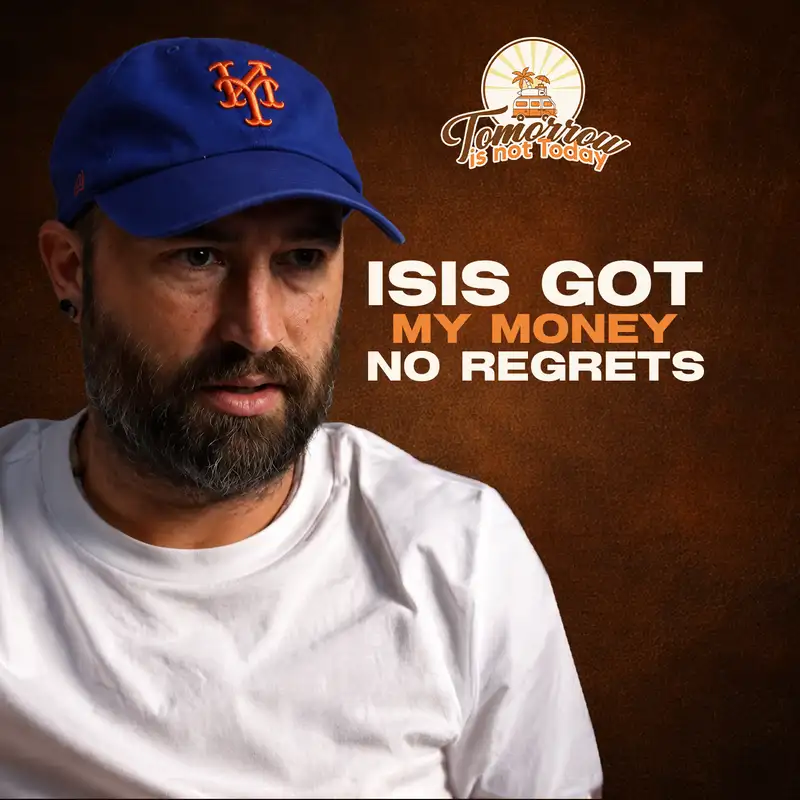
ISIS got my money - no regrets
Download MP3TINTPOD26Tim Buxton Landscape Video
===
[00:00:00] ISIS had made gains towards us. There was no one on the streets. Our organization is saying, "You guys need to leave." I wasn't ready to go. I find peace in chaos. I told my wife when I got back, I'm like, "We've gotta go." She just said, "No way." What, what goes through your mind of, "What have I done?" And your wife had the guts to get out and do what you just knew you had to do.
Yeah. Tell me some of the stories. There's hell all around us in this world. I mean, the women, the men were taken, um, rounded up in these villages and slaughtered.
There's an element to, like, I was born for this I don't know if I've ever heard of anybody else doing exactly what you've done and the way that you help people in some of the most dangerous parts of the world. I'm a wild jungle boy at heart. [00:01:00] I'm restless in the stillness. I'm restless in the predictability.
My mission in life is, is for people to know that they belong. I believe a stranger is just a friend you haven't met yet. That is such a good point. You're gonna suffer, but learn how to do it well. Like- There's something inside every one of us that we just have to do it Amen. And we all have our trauma, and we all have our pain that, if unresolved, will destroy us.
One of the most scariest experiences I, I remember, like, I was-
Welcome to Tomorrow Is Not Today podcast. Today is, is a very different podcast to normal, and I'm incredibly excited about that. Uh, normally we'll, say, introduce our guest and then go, "Hey, tell us about how you're helping people." Not today. We're leaving that to the end. Uh, and you wanna stay around for that because it is absolutely huge.
But, [00:02:00] uh, Tim, you have spent your life doing what... I don't know if I've ever heard of anybody else doing exactly what you've done and the way that you help people in some of the most dangerous parts of the world. Um, and that's why I wanted your story on. It's a little bit of a different angle. You haven't come from an, uh, angle of gone through some traumatic thing.
You've actually thrown yourself into traumatic areas to help people, which is fantastic. So just tell us a little bit about you, though. Um, yes. It's such a privilege to be, um, able to share with you, Kingsley, and thanks for the invitation. Um- Where to begin? I, I, I wanna start by saying I was born, n- not to go all the way back, but I was born in, um, in Indonesia.
In the jungles of Papua is where I spent the first couple years of my life, so I don't have a lot of cognitive memory, but, um, my parents were, were serving, [00:03:00] um, as missionaries amongst an unreached people, people group, um, living in, in, in essentially the jungles, and I was the only little white boy in this, in the villages.
My older brothers and sisters were living, um, during the week at a, at an Am- American boarding school while my parents were, were doing this work amongst, um, this remote people group. And I, I firmly believe, like, my operating system of the way I live was forged in those early years of my life. Mm-hmm. And, and I, and I...
Again, I've got all the photo albums to look back and, and, and, and live my life through, through that lens, but obviously not, not, not a lot of cognitive memory of that. But I'm, I'm a wild jungle boy at heart- ... essentially, and I feel like I'm drawn to that chaos, and I operate... I, I really struggle to operate in places here like Australia that's this very kind of time, linear kind of, um, format.
And so, [00:04:00] um, I think I've always been drawn to the wildness, I've drawn to, um, the chaos, and I think, um, having been so privileged to have experienced life, um, in such different contexts to realise that the world isn't as it's presented to you, or it isn't just as it is presented to you. Mm. There's so many other ways that life is lived and can be viewed, and so, um, there's just been an insatiable thirst to, to kind of experience that and do that through my life, and it's taken me all around the world.
And thankfully, you know, I'm really grateful that it's, um, in this season of life it's back here, um, on Australian soil where I've got family, um, my family at least, around me. I so love that, and you've, you've started off already telling us that this isn't gonna be your normal Western culture sort of story that we're gonna be hearing.
Um, and I, and I... One of my big things, I guess, with this podcast is I really want people to see [00:05:00] beyond ourselves, beyond our, like... We live on the Gold Coast. Yeah. Like, it can't get much better than this, honestly. The amount of opportunity, potential here, everything that's here, it's gorgeous in every way, shape, and form.
And it's so easy to get caught in that bubble 100%. But there's a whole world out there that we can easily forget, or we flick on our TV and our news and we see stuff from whatever country around the world- Mm ... that's going on and go, "Oh, poor people. Okay. Oh, what? I can't believe I've gotta wait another five minutes for my food."
Yeah. You know what I mean? And it's- Yeah ... that's, that's what happens. Yeah. So take us a little bit, tell us where you went- Yeah ... and what possibly come over you to take a young family there in the first place. Yeah. Um, so in 2014, um, my wife and I had been, um... My wife's from New York, so I'd been living in, i- in America for about 10 years.
So used to the jungle. Yeah. So [00:06:00] again, drawn to the concrete jungle and the chaos and wildness of that place. We had a couple of kids. Um, in fact, we'd, um, we'd just, um, my wife had just given birth to our third child. Um, and at, um, when she was nine weeks old, Lily, and we had a, a one-year-old and a two-year-old, so quite young- Mm
young little tribe at the time. Um, we moved our family to, uh, the Kurdistan region of Iraq. So we flew into this city called Erbil, and it was June 9th, 2014, and on that very same day, a rebel group infamously known as ISIS ha- steamed across the border 50 kilometers to the west and took Iraq's second-largest city, Mosul.
And on that day, more than two million refugees fled from, from that M- Mosul region and fled across the border into where we, um, w- was, was now our new home. And, um, I just remember getting, um... We got off the [00:07:00] plane, it was like f- must have felt like 50 kilometre- 50, 50 degree Celsius on the tarmac. We, we had all our belongings, everything, and there's this photo of us, this, uh, um, just so happy to be in Iraq, and we n- were oblivious to what was going on just, uh, you know- Mm
a few kilometers away. And we drove to, through three mountain ranges, seven army checkpoints to this beautiful bowl valley city called Sarrach, which was our, our new home, and we, we got there and, and flicked on the news and found out what had just happened. And- I know, I just thought what a, you know, what, what goes through your mind?
I thought, "What have I done?" Mm. You know, like, um, this, you know, they, they were known, um, uh, for doing some of the most barbaric things you would've probably remembered on the news, the orange jumpsuits and the journalists and the, and the, and the people that they were, were publicly, um, you know, killing and, [00:08:00] um, the threats and, and, and for the n- you know, for the next few c- y- couple years they had, um, taken over two thirds of Iraq.
Um- Wow ... in, in terms of taking control, and so, um, yeah, the There was a decision I think we had to make within those first few weeks of like, um, are we meant to be here? Was this the reason we're here? And do we kind of drive our tent pegs just that little bit deeper, or do we, um, do we hightail it out of here?
And, um, and I have the most amazing, supportive wife, and we felt so supported and protected in this, this beautiful mountain refuge city. It's a, a city known for being a place of refuge for men- for many conflicts r- in the region for many years. And so we did just that and spent, you know, the next three and a half years, um, serving those refugees that had fled genocide.
Many of them had fled the [00:09:00] genocide that took place a- amongst the Yazidis. Um, yeah, and we, we, we did that for, yeah, for probably the most memorable, challenging, um, time of our lives. Um, and, uh, so that's, that's how it all began. So you went there. You felt like you were meant to go there and, and help those pe- obviously before all the refugees- Yeah
came through, but you felt like you were meant to go there and help those people. It's a funny story. Like m- I, I was in... When I lived in New York, I was coordinating all these humanitarian trips around the world that would respond to natural disasters or would work in really developing countries, and we'd take teams of medical practitioners, or we'd take construction teams, and we'd build latrines and toilets in the Philippines, or we'd, we'd respond to, you know, um, in Zambia, uh, with, with orphanages that were caring for, for AIDS.
In fact, my wife, before I'd met her, had spent two years [00:10:00] living in South Africa, um, working with AIDS orphans with an organization, um, there on the ground. She, she lived in the, in an, a Russian army tent in the middle of nowhere for weeks on end by herself, so- Wow ... when I met her, I knew, well, this is- ... this is the kind of person I wanna, um, I, I, I think will, will, um, will travel and go places- Mm
with me together and, um, but I do remember one of my assignments was, uh, my, my, my boss at the time said, "Look, I've been asked to go to Iraq. Um, you know, they've been working on this project that we've been supporting, um, but I, I don't wanna go Um, and no one else wants to go. Um, uh, would you, would you be able to go?"
And I was like, "Sure." You know, like m- my, in my mind I'm like, um, sounds like a, a place not many people get to go to, at least from our part of the world. Um, and I remember telling my wife, she's like, "You know I'm pregnant, right, with our first child?" I was like, "Oh, yeah." Um, but they assured me everything will [00:11:00] be fine.
Um, uh, anyway, yeah, exactly. So sh- she wasn't too impressed that I'd already said yes. Um, but, um, sure enough, I went, um, and got to spend, you know, about a week, or, what was it, about f- it was a 10-day trip, went to a few different Middle East countries and about, you know, f- uh, four or five days in Iraq. And I'm like, "Why aren't there more people here doing the work?"
Mm. Like, everyone thinks you can't go here. I mean, I didn't even need a visa. I just rocked up and got a visa on entry. Um, and it's like that even to this day, you know? I think it, you might have to get it online first, but it's so, it was, the process wasn't that, as complicated as what I thought. Mm. And, you know, I'm expecting to see, you know, um, Apache helicopters flying around everywhere, and you get out there and it's just, uh, this, this, it's, Erbil's the, known as the c- oldest continuously inhabited city in the world, and the architecture- Mm
and the culture and the people [00:12:00] and the... It just blew me away. And I remember taking a trip up into the mountains into this town, which was where we ended up calling home for those few years, right on the Iranian border, Iranian border, 15 miles from the Iranian border, right nestled in the, the, the base of the Zagros Mountains, 360-degree mountains, and it, uh, you know, for, for five, six months of the year they're snow-capped.
It's just, it's like you feel- Yeah ... like you're in Switzerland. Like, I'm not in Iraq. Yeah. And here I, and here I was and I'm like, "Oh, there's so much work to be done in this part of the world. There's so much suffering that they've endured from all the wars and the civil wars and, uh, between Iran and Iraq, and so much going on."
It's like, "I th- I think I'm ready to, to go back and, and, and live on the f- on the field," if, if that's the, uh, the saying, then, then kind of, um, just going in and out with sh- short teams. And, um, I told my wife when I got back, I'm like, "We gotta go." She just said, "No way." But I said, "Well, will you, will you just at [00:13:00] least pray?
You know, ask, you know, maybe if you need some kind of divine guidance if you should do this." She goes, "No way." Um, so that was 2010. Um, and then I remembered I, I'd got permission to take a few teams back there to do a few short-term trips, and, uh, eventually she came for a quick trip and she saw it for herself.
She saw how hospitable and loving and wonderful the people are. She saw the community that existed. She, she saw their suffering and, um, and you know- Mm ... people that have known nothing but war yet, um, had, have no part to play in all the p- politics and craziness of it. And, and like me, her heart broke and, um, three and a half years later she's like, "All right, let's go."
Mm. And, uh, so we packed up our bags, we sold everything. And, um, and we, and we went, you know, three [00:14:00] kids in tow.
Making a decision like that to go to a place like that with a young family, you must have had a bit of kickback from people. Yeah. You know, and if it wasn't for my wife who said, "We need to go." Like, I've made dumb decisions without my wife's blessing, and it never pays off. You know? Like, wisdom is in, in counsel and, and, um, but knowing how things did kind of initially go, you know, get pretty dangerous and kind of messy at the beginning, to know that she was with me in this- Mm
is all the assurance that we need because, yeah, even our family, like immediate family, "What are you... You just need to come back right now, Tim. You've well done. You, you, you, you did the right thing, but..." Um, and again, shaded through, or they're just seeing things from their perspective. They're [00:15:00] not sitting in, in the Suran with us where we, we, we felt so safe.
Mm. Uh, we knew we were protected not only by the mountains and the, the army checkpoints and, um, even Saddam Hussein in all his might and power in his own country couldn't break through and, and conquer this part of- Mm ... of, of Iraq. And so there was context and stuff that obviously people, um, couldn't understand.
But we, we know that, um, we still needed to, to be wise and, uh, yeah, there was, there was even times where, um, I remember, um, there was people, there was like so- I think it was New Idea and a few other different things had grabbed onto these little stories or it had got posted in some, you know, news, online newspaper thing, and I just remember flicking through the comments and just the vitriol and, "You are a child abuser.
I can't believe you're..." Wow. Like, and I, have you ever discovered that folder in your Facebook that's like messages that they've [00:16:00] automatically filtered out for you? I don't know. It's like there's- No ... there's your messages, like personal, and then there's general messages. And I, for some reason I discovered this, this like list of messages-
that I had never even read before that, that, that, that I, I opened. And it was just filled with people direct messaging me like terrible things, like of how like, um... And reacting to these, these, um, articles that, that had appeared- Yeah ... there. Um, so yeah, I mean, um, keyboard warriors, of course. Mm. Uh, didn't, didn't th- you know, didn't really think too much about their opinions.
But, um- But even, even to this day when, yeah, like people hear about, about the, the, the journey we did and, and the fact that we had our kids with us, they can't wrap their heads around it. Um, and I don't expect them to, you know? Like, um, everyone, um, I, I, I can't wrap my head around a Formula One driver getting in a [00:17:00] car, going that fast.
Yeah. Do you know what I mean? Like- Yeah, yeah ... but they're trained their whole life. Like they- Yeah ... from, from carting as a little kid, I mean, to any of us to do that, and I feel like my life upbringing is trained to- Mm ... you know, I'm not saying I'm some SAS, like Special Air Service person, but there's an element to like, I was born for this.
Yeah. To, to go into these places and, and to, to learn how to build relationships with people so different to me, and to be able to connect in a way that, um, that provides, you know, that doesn't eliminates risk that others wouldn't, wouldn't, um, wouldn't be able to navigate. I so love what you've just said in all of that, because that basically is the essence of what this podcast was started from earlier on, is that we all have our purpose in life.
Mm. And we all [00:18:00] have a passion to do it, no matter what it looks like. Mm. But there's something inside of us that you cannot avoid. You can push it down, you can pretend it's not there, you can focus on building a business or building something or whatever Right ... but there's something inside every one of us that we just have to do it.
Mm. Yeah. But most of us don't have the guts to step out and have a go, and it can be just a little thing to start with and, and make it bigger
I know even myself personally- Mm ... um, I've gotta push myself all the time, 'cause I know what I've gotta do, and it's, to me it's a thing, something that I need to push myself through. [00:19:00] 'Cause you have people say stuff like, I can't imagine what would've come through those messages, but they obviously weren't very encouraging ones.
Yeah. But you just gotta get out and do it, and make it happen, and stop living a boring life, and get out and live with purpose, and I so love what you've done. And, and the lives that you would've impact in doing this, and again, we're gonna get to what you're doing now to, to help- Mm ... people, which is just phenomenal.
But tell us a little bit about, because you did and your wife had the guts to get out and do what you just knew you had to do- Yeah ... tell me some of the stories of what happened, how you helped some of those people. I remember one of the things your wife said on one of your promo videos. Yeah. Simple sentence, "A refugee is a person."
Mm. That hit me. My wife has the ability, I think, I see big things, macro level, and she always is able, I mean, she, [00:20:00] the thing that drew her to Africa, um, to work with AIDS orphans is, like, she was challenged, "Would you just do it for one? Would you just do it for the one person?" Um, and, and I think- You know, her ability to see, um, that individual in, in moments when I'm obviously a lot of the work I had to do in, in the context there was responding to this 20, 30 families, maybe 100 people.
They're, they're in these abandoned buildings they've fled on, um, with all their belongings, and it's the middle of winter. And the landlords of these newly construct- the buildings that were under construction, right? Just con- just concrete shells- Mm-hmm ... you could imagine, wanted to actually kick them out, and they've got nowhere to go and, and you need to help them.
And so- [00:21:00] Mm ... we're all dealing with, like, how do you handle this? But my wife would be able to just zone in on the one individual and the one person, um, and, um, and see them for who they are. And I think it, um, you know, she always helped, helped bring me back and grounded me in, in that as in our purpose, 'cause sometimes it just gets overwhelming.
And sometimes the, the, the big task of what you had to do and what you were addressing just seems like, well, to your point, well, I can't make a difference. Like, and like, we've got no resources, and how do we do things? And if so, well, if you can just do it for that one person, then maybe, you know, um, the answer to how to solve it for, for the, the larger group might- Mm
might then appear. Um, and it's taking those, like one step by step, one day at a time. And, um, [00:22:00] and yeah, like, you know, that, that example of like, I just, I'll never forget that day sitting in that room. And there were m- most of the, mostly were the men that were in this one kind of big room in a concrete shell.
It's the middle of winter. We're freezing. We'd bought some, some tomatoes and some food and some things from the market to just give them some immediate kind of real supplies. But they sat us down and said, "We've got nowhere to go. We know you've helped some other families with some shelters before. Can you help us?"
Um, and we're sitting there, and then they're, they start saying, "And, and by the way, like-" Uh, my two daughters are captured with ISIS, and my... And we've got... And they just started listing, you know, it, all the family heads of the homes were just listing how many of them were still in captivity, you know, as- Mm.
Um, and [00:23:00] i- carrying that and thinking, it felt like now it's on me. Like, I've gotta carry that, the, I've, we've got to do th- that, and we were just a small, it was just a couple of families that were living there leading the work for this organization. We had no money. Um, and so we would just, again, um, we'd go to the local government, the mayor, and say like, "Do you have any other more tents or anything that you have on hand?
Do you have a, some land, some space?" And again, working with incredible locals that we'd, we'd, um, were working with us in our organization and, and some local business leaders and just getting a few heads together and say, "Well, we're willing to help make this happen if, if we all can come together." And, and, uh, within, within a, a week or so, there was another small little what we call micro-refugee villages or little camps for these groups of like 20-odd families.
Mm. 'Cause they'd flee together. [00:24:00] Mm. You know, they all lived as neighbors and, and you know, the three brothers and the aunt and the cousin, like they'd all, they'd all just m- move together to, in, in safety and from, from region to region. And, um, another one, and by the end of, by the end of our time there, there was seven or eight of these micro villages that were built, and the tents were then replaced with actual concrete- Oh, wow
Besser block buildings with their own bathrooms and their own, uh, little kitchenette areas. Um, and, um, the UN would even visit and see these, these things and, and again, within the city limits so the, the local municipality had given land so that they were able to get local jobs in the communities. You look at other UN camps and, and there's like these 20,000 tent cities, and they're, they're more dangerous in there than there are if they were, you know, from the, the, the situations they sometimes fled from.
And so the UN would visit and said, "How did you do this?" And, and there was no money [00:25:00] needed for security, like personnel, because they're all relatives and families and took care- Mm ... of each other, and when one got a job doing some tiling work or working on a, you know, in the markets, they'd come and share with the other families.
And, um, you know, um, it was just amazing to see how, you know, working side by side with, with the locals, um, we saw this work continue. But there were moments I, I swear where I, I just- I didn't have an answer in how we were gonna help. And, um, yeah, it, and the weight of almost hearing all of their sufferings would just weigh you down with like- Mm
oh, this is what they call, what I learnt later is a term compassion fatigue, you know? Um, where you just, you just can only take so much of some- some- someone else's plight and suffering and, [00:26:00] um, and there wasn't a lot of places to, to go and kind of deal with that, um, and process that. Um, and it took its toll.
So how does compassion fatigue, what does it actually do to you exactly? Uh, well, there were moments where I broke out in hives all over my body. Um- Oh ... literally, um, from s- it's stress. The, the weight, the stress, the anxiety, the, um... And I remember, yeah, there's not enough cream I could, like it, nothing would, would fix it.
Um, um- Yeah, there's... I think it, I think we know what P- PTSD- Mm. Um, is a, it's a, it's a form of PTSD as well, the, the post, you know, the, the, the ongoing non-relenting kind of stress of... I mean, uh, we loved... I [00:27:00] mean, I wanna paint a beautiful picture of this place, but it, and it, it, and there was so much of the life that we lived there that was just so fun, just going through, roaming through the, the market.
N- not very m- many people spoke English, so I'm learning Kurdish on the fly, the language they speak there, and just, like, um, just having a blast, you know, in, in such a foreign, foreign land. 150,000 people and there's only a few Western, a handful of Western families- Mm ... in there. So, um, it was quite a, an awesome experience.
But, um, yeah, so, so I'm just wondering, like, um, like, how, how are we, um, how are we gonna make it? Like, how, how are we gonna, um, uh... There were like, you'd have for about sometimes three hours a day you'd have power. Um- Oh, wow ... you'd have, the power would come on and off, and then when you got power, [00:28:00] um, it would be, like, this shared community generator power, um, that we could basically just turn your fans on.
And in the, in the summer it is, like, putrid hot. I mean, you're, you're dying. And then, um, and then you've got water that's delivered, uh, every few days and then gets... You store up in the tanks, and so there's only a limited amount of water that you can use. Sometimes it felt like you were camping indoors.
And so when you operate in life here and you don't even, you don't even think about, "Do I need power?" Mm. "Do I have wa- water, enough water to do the laundry today?" Or, or, you know, whatever the case might be. Um, every day those little stresses, so you're operating just constantly in this... You know, and for them that's, like the locals there, that's all they know.
Yeah. But for us- Yeah, yeah. Kind of clearly ... you know, privileged Westerners, we're just like, uh, it took us a while to adjust- Yeah ... to, to those constant stresses and press- [00:29:00] pr- um, pressures and, you know, the needs of three small little kids. My wife was homeschooling them at home. So it was just one of those, um, uh, things where I think you just, you're constantly on this level of stress.
And I, I still think to this day, I still have just extremely high cortisol levels or whatever that might be. Like- Mm-hmm ... um, that, um, you know, it's been a really, um, you know, post-Iraq journey trying to, like, at what is the new normal for me. Um- And, um, yeah, so those are things you kind of just, they wear down on you and I think have a greater impact than those, like, huge, like, those major instances that I can recall that just, um, yeah, kind of, uh, really acute and intense, um, traumatic experiences from our, our time there.[00:30:00]
'Cause you're, you're thinking... 'Cause obviously y- you got your family that you gotta think of. Yeah. And obviously they're really young kids, really young- Yeah ... in the middle of this, this scenario as well. I imagine the medical facilities aren't probably gonna be what you would be used to either, if anything did go on.
Yeah. And then you're looking at all these people going, "How do I even start to help with some of these?" And if there's two million refugees, and fortunately your wife's there going, "Hey, let's just, let's just fix this one." Yeah, yeah. "Let's do that." And it grew from there When they came over as refugees, obviously it's not just a physical- Mm
help they need either. How were you able to help them outside of that? Or w- or were you able to? Yeah. Yeah, we were. And, and, and I, I have to give so much credit to the locals, and I think [00:31:00] this is what anyone... What I learnt early on in doing international humanitarian work, you're going into cus- countries and you're, a Westerner's often going in to try and help, is that you, you're, you're the, the, the resources and the power to help is within that community.
Mm. Yeah. It's like your child, right? Like, if you're doing stuff for your kid all the time, they're not gonna learn to grow. Now, there's some things and resources you, you can provide that they might not have access to, but they have the, the ability, they have the dignity, they have the resources. And so I think those, that years of experience meant, meant we lent so heavily on the local community, and we realised we, we had a beautiful bridge that we could bridge the West and some of the finances and some of the, um, you know, the, the experience that we'd had to help.
Um, and so, um, [00:32:00] you know, that, that meant the help was actually what was needed and what, rather than what our, we thought was needed. Mm. Um, there was a strong filters to make sure, um, that it, it was done in that certain way. Though from their perspective, they still saw us as the Westerners, and that's the hard thing.
They'll always, or quite often they'll, you know, anyone that's that desperate and in need, you're the one that has... I mean, they thought I had a direct line to the president at the time. It was Obama. They literally, um, in one instance, I remember we were setting up another one of these micro villages. We were putting the tents together, and one of the f- the older m- gentleman comes to me and he, and he hands me his phone.
He says that, um, "I just got off the call with ISIS, and they've, they've, they said that my daughter's in Raqqa and another one in Fallujah." Okay? They had two daughters, and he said that one, they were $12,000 each and I can have my daughters back. [00:33:00] And he's s- saying this, I, I'm getting this through in, in translation 'cause thr- I couldn't quite understand what he's saying, as he's kinda like tear- like, you know, motioning with his hands and, and grabbing his shirt and in, in just like agony.
And I'm like, um, "You know Obama. You know... Like, surely you can help me." And, and I'm... I- all I could think of was my own three little kids. Mm. And I thought of my, my two daughters and what I would do for them I mean, I'd move heaven and earth to get them back Mm. And that's all I could think of. And, um, I end up writing about that processing, writing about that experience.
Well, it ended up on, on my blog. It ended up being found, someone found it, and it got to... Went vi- somewhat viral, [00:34:00] and someone in the government then reached out, and th- there's a beautiful end to that story. A- and a res- resolve that I could not have manufactured, but they ended up, there was end up being a, a, a, a government kind of mission to kind of get a few of the girls and- Wow
they were a couple of them that were, were rescued, and they were eventually moved to, to Germany, um, where they received a lot of post, obviously, traumatic counseling- Mm ... and care, and there's a huge diaspora in Germany of, of these families. And, and it was, it was around that time where beyond just providing the emergency care, my wife was starting a little preschool for the kids 'cause we realized they weren't gonna be going back anytime soon, and they can't miss out on education for too long.
Let's just at least start, do something, and she used her s- education background. And then we partnered with an Aussie, um, psy- [00:35:00] psychologist and, and another organization in the US that were doing some research, um, on what was known as post-traumatic growth, um, which is this idea that, you know, there's this- You know, belief that, you know, that, that, that, that people don't just go through trauma and, and I think this is what this podcast is all about, and just kind of get back to where they were.
They can actually go through trauma, hit rock bottom, and it, it becomes a catalyst for them to grow and go beyond- Mm ... what they were before. Mm. And what is that? That's post-traumatic growth. That's not PTSD, which just takes you back to ground z- back to where you were. Yeah, yeah. Or s- maybe sub, but at least manageable.
No, you can actually grow through trauma, you know? And then they developed this framework around that, and we started piloting that for the first time. They, they tailored it towards re- the [00:36:00] refugee experience, and we, we piloted that program, groundbreaking program, in our camps, you know, in Iraq. Um- Wow ... and we've used it here in Australia with, with families when they've come on this side of the journey, and I've personally used that in my own personal life, you know, applied the principles, um, that, that, that program, uh, lays out.
And it's, it's not rocket science, but, um, done in the context of community in a small group, um, it is powerful. That, that really... That's really exciting to hear. Mm. Really exciting. 'Cause I must admit, everybody that comes on the podcast, they... And they've been through, like, some of the most horrific things you can experience in life.
Yeah. Uh, they are the most kind, generous, empathetic, um, people-serving people I've ever met. Mm. But yet when you look at their life- [00:37:00] Doesn't surprise me, yeah ... you wouldn't think so. And you've just explained, uh, what it is. 'Cause I've looked at this and go, "I, I think it's phenomenal that they've done this."
And, but you, you've just explained exactly what happens. Yeah, I mean, I think science can, like, you know, like you're saying, it c- there can be, "Oh, there's a scientific explanation for this," but really you know deep down, right? There's something that happens in an individual's life, and you choose, "What journey am I gonna take?"
Mm. "Am I gonna allow this to make me bitter, or am I gonna allow this to make me better," right? And I wish it was just a once-off choice And suddenly I'm on a trajectory of just my life getting better. Um, I think the hardest thing I've had to deal with over the years is that that's actually a constant choice I have to make [00:38:00] because I've seen how I can still spiral- Yeah
back down if, um... And I think grief, pain, suffering that we've all experienced and just, just experiences that like I think, I think we're all human, right? And we all have our trauma, and we all have our pain that if unresolved will destroy us. Mm.
You know, I grew up quite a religious person and
I've seen the best and worst of religion, both in, in the maybe more like radical extremism, but also within institutionalism and in, within church communities as well. But [00:39:00] there's one thing that I think I've held onto is this, the beauty of, of what I think- The mission and the person of Jesus was all about was how to take pain and how to take the worst of this world.
You can call it a name sin, or you can just grief and suffering and, and how you can, it, how he taught us the transformative way to turn that around- Mm-hmm ... into new life and beauty. Um, and, and There's hell all around us in this world, you know? And quite often it lives i- deep, buried within us and we don't realise it exists, and the art is to learn how to take [00:40:00] the hell that's thrown against us outside from out in, and, and to trans- and to transform that into something beautiful.
You know, the story of an oyster, right? Like as- Yeah ... as this irritant inside of it, and yet it transforms it into something beautiful, and I think that's, that's something that I've had to realise, um, I have to constantly do, 'cause, um, I'll, I'll have to face my next battle, my next challenge. And the challenge unfortunately, the n- the mountain- Yep
is usually a little tougher next. I think we often don't realise that that's part of the human journey. We think we should go on this linear trajectory and everything should be good, and that's, that's sometimes what- Mm ... we're sold. Yeah. Is that's what life should be good. It should always be going uphill, but it's not.
Yeah. It's not. It never is that. Every [00:41:00] TikTok or YouTube is telling you how success is just following this simple formula, and- Yeah ... it's- But it's not. There's not one life like that ... yeah. That it can look like it from the outside, because you only see glimpses of the good bits. Nah. You don't get the full story, right?
No. And, and one thing I've noticed, Rick Warren- Mm ... um, who wrote the book The Purpose Driven Life. Yeah. Uh, big church in America as well. Uh, phenomenally successful book. But he, he talks about how we're, we're on parallel journeys in our one life, where there's always something good going on, and there's always something horrible going on at the same time in life.
And I think for, for, if people would not expect life to always be good, but without being negative or cynical, expect there to be bad stuff, because those bad- Yeah ... bits are what actually, like you said, that, uh, the traumatic growth aspect can actually make us bigger [00:42:00] and better if we embrace it properly and make the decision for that to happen.
Um, which you would've seen no doubt with a lot of people in a lot of different ways. One of the things I've had to teach, you know, I'm a father now of four kids, so, um, and they're what? Two teenagers, 15- 13, 12, and eight, so they're a lot older now. You did well. Um, one of the things I, I got this a- advice early on was, um, and I, I think this is again one of the hardest challenges in life, is now I'm like the weight of like having all of these kids, I've gotta live an example for them, and I feel like I do a terrible job half the time.
Um, it was you've got to teach your children not to be happy, but teach them to suffer well. Mm. Um, happy- happiness is so often this, this [00:43:00] goal. Like I, my goal is to be happy, and it's like, well, happy just comes and goes- Mm ... with suffering and pain and, and all the emotions and experiences of life. Um, learning though to cut the half-life of your suffering um, is probably the most powerful tool you can give.
Like you're gonna suffer, but learn how to do it well. Like- Mm ... learn how, um, learn how to... You know, you see people that are, uh, get caught, and I, I, I've found myself getting caught in, in that whirlpool of this is the end of the world, and I can't believe what's happening, and, and spiraling into depression.
And I've been there. I've done, I've done that. Um, and you know, there's how, how have I, how, how do we do that? I think it's surrounding [00:44:00] ourselves with people that are safe in our lives that, that have got our backs- Yeah ... um, uh, that are, that are good people. They will, will help us out and pick us through those times.
It's, it's, um, yeah, having, learning the ability to be grateful, learning the ability to look at what you do have and not what isn't working. Um, and I mean, there's so many things, you know, um, I have to remind myself each day. Um, and there's practices I've, I've built into my everyday life to remind me of that because if I don't have the discipline of these practices, I, I, I'll forget.
Um, and I can pretty much look back to, "Oh, yep. Yeah, you haven't been doing that. You haven't been." It's true. Um- Yep ... and no wonder why you're getting a bit jaded and your perspective's a bit off and, and the joy's gone in your [00:45:00] life. Um, yeah. So you're over in Iraq. Mm. You're... All these displaced people, they're coming over.
You've gotta try and help them. What do you do to... Because y- you've gotta be, you've gotta be a dad and a leader of your family as well- Mm ... at the same time. Um, you've gotta be that person for them, but you've also gotta be able to help these other people. How do you actually get yourself in that place where you can do that?
I have to give my wife a lot of credit, honestly. Um- Um You know, and, and there was another family that were there with us that were, you know, we worked alongside. And that community, that tight-knit community that we had that supported [00:46:00] each other, um Yeah, I I just think it's just taking it one step at a time.
I mean, there were times where within s- a couple of months of being there, um, ISIS had made gains towards us, and my wife was seeing, like, had watched a l- a little too much TV and was seeing people on their roofs in, like, black clothes- Mm ... you know, on the top, and thinking maybe they're, they've made it to our town, and she was starting to panic.
And, um, at that point we're like, we're turning the TV off. I mean, um- Mm. Mm ... and, but I do remember driving in to Ur- to the city of Erbil. We, it was a two-hour drive, you know, through the mountains back down to this major city where we'd do a lot of sh- uh, you know, weekly shop and then come back up. And I remember d- driving in there this one particular day, and there was, there was no one on the streets.
Word had kind of, [00:47:00] rumors had got out that ISIS had come and invaded a- across the border into the, into the, our region, and so everyone was just, like, gone. Like, um, gone indoors or whatever. And I didn't, I didn't... Again, I'm driving around, doing my usual route to these different spots to pick up what we need and going back.
Turn on the news and it's like, and then our, our organization is saying, "You guys have to hel- uh, you guys need to leave. Like, we're telling you to leave." You, you might think... And we're like, "Okay." We tried to book flights. There was no flights out. Airports were closed. Um, and we, uh, within a couple of days we're like, "Well, we're just gonna have to drive out of here, cross the, the Turkish border, um, right where Turkey and Syria converge, and then maybe catch a flight in a nearby town in Turkey and out, out of here."
Um, middle of summer, it was like Au- it was August. This, it was, it [00:48:00] was, you know, they were on their biggest push at this point in time, taking the Mosul Dam, the genocide against the Yazidi des- Yazidis had taken place. They were wreaking havoc. And it's 12 o'clock at night, midnight, and we jump into a little Toyota Corolla sedan, three kids, stroller, and couple of carriers on, just lumped on us, and we're driving to the border of Turkey to cross the border into Turkey and get out of there, but I'm freaking out.
I mean, we've got Mr. Jam- James Bond driving up here, driving crazy. Um, for whatever reason, I, uh, he was just, um... It was n- there was n- no air conditioner in his car, and it was at, at nighttime. At midnight it's, like, 30 deg- 30 something degrees and we're sweating. I'm like, "That's how hot it was." We, we get, um, smuggled into this other car that ta- takes us across the border, [00:49:00] um, and they're shoving, like, um, uh, alcohol and um, cigarettes and everything to try and smuggle them across.
Mm. I'm like, "They're gonna smug- like, we're getting s- Yeah. They're smuggling us with all this lot of contraband. What's going on here? Like, we, I was ge- genuinely really, really scared. Mm. Like, we were actually driving towards ISIS-held territories at that point in time, and my mind's like, "I hope, I just hope we know what we're doing."
And this is to get out, out of s- out, uh, uh, out. Um, I, I was just so thankful I had my, my blue Australian passport at the time, and we got, got across the border, and we ended up spending a couple weeks in Turkey waiting for things to die down. Fortunately, um, the, the coalition and the Iraqi forces regained territory, and we, we, we, we decided to come back in, um, and, and really pick up the work that we were doing.
But you asked, like, how did we [00:50:00] get prepared to do that? Like, I honestly don't... I just don't know. Like, there's... When When you've got a team of people like that you trust and work with, I think that's the power of just surrounding yourself with the right people and just, um ... We spent a lot of time praying.
We spent a lot of time, um, you know, just m- moving towards peace, what felt peace. And it's funny, like people think, like, like I, I've learnt... I, I love the chaos. I actually thrive in chaos. I find peace in chaos. Mm. I'm restless in the stillness. I'm restless in the predictability. Um, and so, and not, not to say that I've, I mean, I always choose the chaotic or crazy option, but, but that, that's an environment that I, I know how to- [00:51:00] Mm
actually operate well in and make good decisions in. And so, um, yeah, I think when you've, when you've got that, that sense of team and purpose, and again, the purpose, right? Like we just knew we had a job to do and it wasn't, it wasn't done yet. Um, and you know, ultimately when we did leave after a few years of being there and experiencing some other highs and lows, um, I wasn't ready to go.
Mm. And I felt like I was ripped out of there. Um, but looking back now after all these years, it was the perfect time. But at the time it was, it was a heartbreaking, um, decision to, to, to leave when we did. So common that, isn't it? Where you never feel like it's the right time sometimes to go and do what you gotta [00:52:00] do or to pull out of where you gotta- Yeah
where you've been, especially if your heart's there. 'Cause it's, and obviously your heart was there and your heart was with those people. So can you take us into a little bit, tell us-
Tell us, let's go deep into the reality of what was like there for some of the people that are living there, why they had to escape. 'Cause I think in our Western culture here- Mm-hmm ... we, we don't know. We might think we do. We might have watched some news and some documentaries and things like that, but we really have no clue.
We really don't. Yeah. The Yazidi people won our hearts, and they're a small minority in Iraq and Syria, um, and now scattered in diasporas across Germany, Armenia. Now Australia is now home to, I think, oh, it's got to be almost 10 to 20,000- Wow ... now. Um, [00:53:00] I don't know the exact numbers, but I know there's about 8,000 in Toowoomba alone, which is where- Wow
a lot of our work is focused. And they, they won our hearts. They've experienced over their history 75 genocides. Oh. Um, their identity, it's... Sadly, their identity is wrapped up in, in the fact that they've... I, I know they wear it as a badge of honor, but, but they would... They're quick to share, you know, "We have endured 75 genocides."
They're, they don't have a military. They don't, um, you know, they're not their own nation. They're, they're, they lived au- autonomously within, within these regions in peace, but were targeted by ISIS, um, accused of being devil worshipers, and their kind of, um, their ancient kind of religion is, dates back to the same monotheistic face of Christianity and, and- Mm
in the J- Jewish [00:54:00] and Islam. And, um, you know, I got to know quite well these people when we were, um, over there and serving them, and even their, their kind of equivalent of the Pope, um, Baba Sheikh and, and Baba Chowesh that are, that live in their holy city of, um, Lalish. And, and it's a fascinating place, um, to experience, um, um- Uh, where there's these temples and these rituals that everyone has to kind of pilgrimage to and take place.
It's a fascinating, um, they were fascinating people, but, and but were targeted and were, they were captured. I mean, the women, the men were taken, um, and rounded up in these villages and slaughtered in front of the women and the children who were then taken into captivity to work, to be human slaves, sex slaves.
The children were slaves, and some of them forced to become child soldiers within ISIS. [00:55:00] Um, and many of the families we now s- take care of here in Australia since, since we returned and, uh, focused a lot of our efforts of victims of that experience. And so when we, we were, we were there and we would hear their stories and honestly, um
And you saw how peaceful and kind and, and beautiful they are, but yet targeted like just so barbarically. Um, yeah, our hearts broke. And, and it, it wasn't just them though. There was other minority groups too. Um, Shabak minority groups, Kakai, like all the Christian minority groups that were all, uh, I guess targeted and You know, we see, we see it, uh, it, this happens all over the world, right?
In different parts of the world. Um, the Rohingya in, in the Bangladeshi and, and [00:56:00] Burma, Myanmar kind of, um, regions and, and in different parts of Africa. You see the R- R- Rwandan genocide was, was just a, uh, a characterization of a different tribe, the Tutsis versus the Hutus. And, uh, we see it happening in our own, own, um, country here in Australia, um, how we demonize someone that's just different.
Comes, has different beliefs, backgrounds, color, race, cultural upbringings. Um, it It's, it's awful to see that that's that same kind of... Well, it's awful to see, like, what seems kind of innocent in one context, the end of what that can do. Mm. It, it's doesn't take much [00:57:00] for the mob, for the, for those that with s- with, whether it be political or religious or greed or whatever it is, agendas, to justify the worst that humanity can do.
Um, and yeah, it's hard to make sense of it. And it's, it's, it's important to not-
Can I share a story of, um
What I had, I had to, what confronted me when, when I was starting to really hate ISIS in my own heart for what they were doing- Please, yes ... we was coming close towards the end of, of, um, ISIS's ability to be in, um, Mosul any longer. They were getting pushed out. Um, I remember going to the front lines with a, a group.
Um, we were working [00:58:00] on, um, with a- another group that was providing frontline medical care to the, they would, these groups that were g- going in and out on little missions to kind of try and shoot down all the snipers that were kind of controlling the outskirt cities of Mosul. And there was casualties, there were families still trying to flee across the border and get across in and out, um, and during the tally and just trying to escape.
And, um, I remember, um, as it was probably only a couple weeks before they'd fully been able to take, um, push, push ISIS out formally, and there was still a lot of work to be done to kinda secure the area. But we went into the outlying parts of Mosul, uh, with a small entourage to, to inspect, um, a town that had recently been recaptured and, and, and, and become safe.
It was desolate, but every building was destroyed some way, form, or another. And I remember they said, "Oh look, can you smell that?" And I could smell the smell of death. You know, you could smell it as we were kind of weaving through this special kinda [00:59:00] corridor where the, they'd know that the, the mines were along, along the road, it was safe to travel.
And we got out at one point and, and they said, "Come, come look at this." And there, there you could see dead ISIS bodies, and I just remember it kind of being a boy more than 12, 13 And
Everything in you wants to think of how horrible and evil and, and
you know, what they must have done and for, you know, they were living like animals doing what they were doing. But I'm like, "This kid is 12, 13 years of age." S- My, my son's 13. Who knows when he was taken? Mm. Who knows what he was forced To do? [01:00:00] That could have been my kid. That could have been... Would I have done any different?
It's a hard question to answer, and I, I honestly, like
Like, you gotta stand up to the bullies. You gotta... Y- we have to fight and do so much more for the powerless At the same time, making a demon, demonizing the other always isn't- Mm ... the answer. Like, there's powers and systems and things that have to be confronted, but at the same time, like, c- can I still find place for
humanising The terrorist. Like, it doesn't make sense. I'm sorry, but, like, in my hea- heart of hearts, like [01:01:00] I don't know what will solve the trajectory our world's going until we see the sh- humanity in, in everybody Mm-hmm That is such a good point. Such a good point And it's so hard to do sometimes
Yeah. I mean, and I can't do it for other people. I can't convince them to do it. I can only do it- Mm ... for myself, and I think I can only
Yeah. Model, I guess, and treat people I love that No way I love that. And just, it just makes you take a step back and think that no matter what we might be thinking, we don't know their story, [01:02:00] we don't know where they've been, what's happened And yet for us to sit in judgment of that without really understanding, it's too hard
It's impossible. Yeah. It's impossible. It really is. And it, this is, this is something that I, um, I do s- I do throw around in my mind all the time, 'cause you see people doing stupid things. Yeah. All the time And I'm so tempted, and sometimes I do. I judge them for it, but then I pull back and go, "Kingsy, you've been such an idiot in so many ways.
You are no one to judge anybody for what they did. You don't know their background, what they've been through, what's going on, anything like that." Yet it's too easy to judge. Too easy. I gotta pull myself up and [01:03:00] go, "No, I'm not gonna do that. That's on them, not me Yeah. In today's climate, it's sad because it, it works to simplify things Things.
Marketing works when it's simple. When the problem- Mm ... politics works by saying, "The problem is this." Mm. And scapegoating a, you know, the housing crisis is because of this. Yeah. And we found the one simple explainable reason, and we know that's not how it is. That's right. Life, it, the, it, there's so many things going on.
Yeah. That's one aspect. It's one aspect. That's it. But it works, right? Mm. Creates a simple, I can identify, I already know that these might things you might be, you know, fear- fearful of. If I can reinforce that fear, if I can reinforce that with a simple narrative, and we, we see how [01:04:00] it's dominating, um, newsfeeds.
It's dominating the way we perceive the world. And, um- It's, it's, u- unless we free ourself from these narratives and, and from these places where it, it kind of, um... It's just hard to watch the news. It's hard to be, you know, on social media. W- um, it's hard to, I think, to... It's hard without thinking, like, the world's going to hell in a handbasket, but it's not.
Like, the reality is this world is, is full of great people. Yeah. And that everyone is doing the best that they can, and that, yes, we're all dealing with our crap in the way we deal with it. But, um, but if we can lean in and a- assume the best in people, and connect with people on, [01:05:00] on that same level and find commonality and common ground- Mm
I mean, w- uh, we'll realise this is a, this is a beautiful world, and it, and it can go in a beautiful direction. And I think we're sold this lie if w- if we think that AI's gonna just take over the world and destroy us, and we s- it doesn't have... Like, we get to choose the, the story- Yeah ... that by how we, you know, by how we frame this world.
And I believe with all my heart in the goodness of humanity- Yeah ... and in the goodness of one when we can appeal to the best in one another, and we believe the best in each other. Yeah, 100%. 100%. I wanna ask, and take a little segue now to- Mm ... um, just... And th- this is, I think, probably a good way to lean into what you're doing now and helping- Yeah
how you're helping people. Um, when it comes to those decisions of how do I [01:06:00] think, and you've sort of just explained it a little bit. Mm-hmm. But how do I view people that, in our Western view, are, we should put them in this box, or we should put them in this box, and these people we put in this box, and these people we put in this box How do you justify that in your mind for how you actually approach people?
So a c- a couple years ago, um, uh, four kids, needing a little extra money, um, I ended up doing a little Uber driving, right? And, um, so I used to do Uber driving, um, on the weekends. I'd go Friday night, Saturday night. Those were my two nights, and I'd just drive through the night and, you know, taking people to their weekend, uh, night activities and getting them home safe.
And I had this one thing where I would, I would do, I was like, "I am [01:07:00] going to be the student of every person I pick up." You know, I, I just wanna learn everything about them. Like, I... They're my teacher, I'm the student. So you know, obviously not everyone's up for chatting, but usually they are once they've had a few drinks.
Or they're so excited to see you 'cause you're finally taking them home after a long night. They're pretty, they're pretty cordial. Um, and, um, so I'd always approach pe- people with that mindset, like, "I'm, I'm the student here." And, um, and I tell you what, man, the people who you think would never have anything to, to...
You know, I couldn't learn anything from this person, would just blow my mind a- my mind away. Mm. Putting myself in a position where like, "Hey, so, um, uh, you know, give me some advice," I'd even ask them stuff. Or, "What's the best advice you've e- no, the worst advice you've ever been given?" And usually they'd come in [01:08:00] and sharing this wisdom with me.
I'm like, "Wow, that is so wonderful." Mm. "And that's so good." And you know, and then there'd be that some people that would say things like, "Oh, I'm glad you're not an Indian or a Paki or blah, blah, blah." And I'm like, I'm like, "Really? Like, what makes you say that?" And I'd just get curious. And usually the part of me wants to like just go right at them and be like, "You have no idea what you're talking about."
That doesn't usually go anyway. But, "Wow, I wonder why you say that." And usually they have no real reason or- Mm ... solid backing. It's just kind of like, I don't know, uh, they don't like the smell or something like that or whatever it is. And it's like, "Really? Okay, so that's, that's all there is to your, your l- strong beliefs about another person."
Um, um, and the worst was when someone would say, "Oh, um-" Not to be, not to be racist, but there, this Indian guy, blah, blah. I was like, hang on a second. Like, why did, why, why... The minute someone says, "Not to be," you know? Yeah . Or, [01:09:00] um, "I'm not an alcoholic, but..." Yeah. Or, "I'm not blah, but..." You, you're like, hang on. And it's like, um, you can tell a story without having to color it a certain way.
Mm. Um, and there's information that I think we often, um, feel like we need to, to include that doesn't just, just need to be there. Like, um, and I want to hear people's perspectives on life, but just coming back to that idea of like what I learnt being an Uber driver over a couple years, just being blown away by people.
And then when I would choose to... Like, I mean, I picked up like big time drug dealers doing their things at night, and that freaked, scared the living daylights out of me, and by the end of it they're crying- Mm ... and in tears, and they're like, um, just 'cause I took a genuine interest in them. Like, how often do people just take a genuine interest in somebody else?
Wow. Yeah. It's all it takes. [01:10:00] Like, "Oh, tell me more about that." Like, like I'm... Meanwhile, I'm crapping my pants , but I'm like, "Tell me more about why this is happening." "Oh, my dad's the biggest drug dealer on blah, blah, blah. He's been in 13 years, blah, blah." "Oh, wow, tell me more about that," blah, blah, blah. By the end of it, he's like...
It, it was like, uh, I remember saying, "Well, you wanna take care of your mum?" "Yeah, yeah." "What would your mum want you to do right now?" "Oh, she'd want me to come home." I'm like, "So?" And by the end of... I mean, again, like this would happen on a regular occasion. Mm. People that you'd think are there to kill you, by the end of it are just these soft humans that, um, again, I, I've never seen them again.
But, um, those little interactions, it's amazing how in such a short period of time we can find commonality in something. One of the most scariest experiences I, I remember, like, [01:11:00] I was petrified. We were driving through, we wanted to visit another family in, on the other side of Ira- on, on the other side of the mountain ranges in Iraq.
It's about a three, four-hour drive and we wanted to take the... Of course, I wanted to take the, the scenic route. Not the, not the, the plain, boring, straight route there. So we go through the Kandil Mountain ranges, which were like actually a hideout for the Turkish kind of PKK kind of group at the time. But the...
I mean, this mountain range is a beautiful sight to see. There's these pictures that I've got that'd just blow you away. And, uh, only a few weeks earlier, the villages there had been bombed by, by some Turkish bombs that were targeting these groups. And, um, we saw... We, I remember stopping and taking a few photos at this memorial, just at this kind of, um, kind of switchback road that goes down through into the valley of the mountain.
And we took, got out, took some photos. We had a, an, an American that was with us as a photojournalist that was staying with us and knew the other family. [01:12:00] So we were all like huddled in, my, my kids and this, um, photographer and, um, and, and she, she was in the front passenger seat. My wife was in the back with the kids.
And anyway, we get down to the bottom and I notice, hang on, this isn't a normal checkpoint of normal. Like, this, this guy with a Jimmy Dani balaclava thing o- and, and automatic weapon standing in the middle of the road, not in a usual setup as usual. I'm like, "Uh-oh, I think we may have got a wrong route here."
And I'm starting to like, my hands are starting to shake- Mm ... as we get down to the bottom there. And we pull in and he kinda leans into the window and I'm kind of, um, hands are kinda like shaking a little bit and he's like, um... I, I went to kind of get, I was like, got my passport. Like I was Australia, Australia, you know, I'm Australian, you know.
Um, America, America. American, Australian and, um, and, and he's like, "Camera [01:13:00] camera. Obviously they don't want anyone taking photos in this part- Mm ... or, you know, where they're going. And she had kind of shoved the camera behind her, under her seat, kinda didn't want, wanna, um, give the camera over thinking she would lose it.
And I just give my, give him my phone and show, show the, that I took a couple photos on my phone and I'm giving it to him. He's like, "Camera, camera." I was like, I was like, "I, my photos." And he looks at them and then, and it's the memorial and I said... And I was like, "Hang on, here's..." I said, "Did you know the people that, that died there?"
And, and in my broken Kurdish. And he's like, "Yes, yes, yes, our people." And I said, "I'm so sorry. "" I'm just, I'm really sorry for your loss, and, um, we're here to help. I'm, I'm, we- we're, um, um... But, but yeah, I really, really am, I'm sorry, and thank you." Oh, no, I said, I said thank you. [01:14:00] I said, "" Thank you so much. You're protecting your people.
Y- you're protecting this part so we can be here to do the work we do. Thank you." And, and you could see the moment I made this connection with him and he, him, he, he stepped back from the window. The guard dropped. And all I remember is within a few minutes we're on our way, and he's like, "Where are you going?"
Like, it's like, "Oh, we're going..." He's like, "Don't go that way." The, you know, we're like literally on the Iranian border here. Mm. He's like, "You don't wanna go that way. This is the way you need to go." So he helped us get on our way- Wow ... you know, from, you know, it could've, uh, who knew, uh, who knew what was- Mm
gonna happen- Mm ... but this ability, right? And you, and you, you, you ask the question like, how do we connect? We c- connect with people who d- seem, seem diametrically opposed to us, who f- feel like a threat to us. There's, there's always an opportunity. Now, there's, obviously there's times when you, [01:15:00] you just, you, you're smart and you just don't put yourself into harm's way, but when you are confronted and there isn't, there's nowhere we could turn to or go, always look for how you can connect with somebody and take a genuine interest in them And be kind.
Be- believe the best in them. I could have believed the worst in him. Mm. But I'm like, "You know what? I'm gonna choose that you are here to protect your people, and you're doing a noble job, and I'm thanking you for that." I mean, when we treat other people like that, we win friends and, and w- out of strangers, you know?
And, and I believe a stranger is just a friend you haven't met yet. That's so good. Mm. If we all could just do that. It, it's hard. Approach people that way and, uh, and see people that way. Believe the best in them, what they're saying, what they're [01:16:00] doing, and approach people as if they are a good person, they're not a horrible person.
Yeah. I call it the ABCs. The first thing we should do is we should ask genuine questions. Take a genuine interest. Ask them questions. Take a- Mm ... genuine interest and so ask. B, believe the best in them. Don't believe the worst. It's so easy to always believe the, the worst in a situation. That could be really hard for some people more than others.
I know my wife's more the risk-averse kind of thing, and she's always looking for danger. But I think the minute we choose to just believe the best in somebody, and then, C, I like to... is put, put them to the te- challenge them. C, challenge. Put them to the test. Like, uh, I've done this before, like I'm busting to go to the toilet, and I'm working in a cafe with my laptop and I'm like, "I could...
Can you look after my laptop and stuff? I'm just gonna go to the toilet." Just test, you know. I could pack everything up and go, and then I'll lose my spot or whatever it might, might be. And they... I promise you, I've never had my laptop stolen and taken, [01:17:00] you know? Mm. People actually want to be, "Oh, you trust me."
Mm. "Oh." Yeah, they wanna live up to that, that, that kind of trust that you've im- it bestowed upon them. And that, that's, that's what we want to, and I think the more we learn to need each other and depend, be interdependent... I mean, I mean, I could go, I mean, there's so much I could... There is so much that Iraq and, and the Middle East and the, the parts of the world that we, are so different to us, the Eastern, they have that we need.
Community. They don't deal with isolation and, and mental illness in the same way that we do here in the West, the way we live our lives. Mm. Their interdependence on one another, their connection and their community that they have, we need. Mm. Yeah. And those are the things I feel like I've experienced, been privileged enough to experience in so many different ways, [01:18:00] and that grew up experiencing from a very young age, that, um, that we need now more than ever.
Yeah, it's so true. It's so true. And what you're doing now just proves that time and time again. Tell, tell us what you're doing now, how you're helping people, 'cause it, it, it's literally doing that every day. Yeah. Look, we came back from Iraq. We, I was, I was depressed. Uh, there was, like I told you, I did U- Uber driving.
I had, uh, didn't know what to do, and I found out that suddenly that Australia had accepted all these humanitarian visas for those that were victims of the genocide, the Yazidi genocide, and, and many more victims from Iraq and Syria, the, the war that ISIS had, um, been involved- And in the town of Toowoomba, which is only a few hou- couple hours away, there were so many families being settled.
So as [01:19:00] soon as I found that out, I'm like, get in my car, and I drive up there. And I'm in their homes, I saying hello, and practicing again my Kurdish, and enjoying the tea, and the chai, and all the... Being... I'm like, "Wow, I'm with these people. I can't believe it. How has... How did we-" Mm. "We left, and then suddenly they're placed here on our doorstep to help on this side of their, their settlement, of their journey, displacement journey."
And, and, um, it wasn't long, a few other locals in the community in Toowoomba jumped on board, and we threw this massive welcome picnic- Mm ... for all these families, and we had about a few hundred people there. And the local community came out, and we did it again, and then the mayor came along, and local councilors, and the community was like just h- hosting this, this welcome picnic.
We put a bed re- a red carpet full of food there, Kurdish, like Y- Yazidi and Middle Eastern food. And then we had, you know, the good old Aussie taco barb, you know, b- a sausage and bread. And, you know, they're teaching [01:20:00] us their dances, and we're doing the bush dances. Mm. And we just had this, like, cultural, like, just, um, amazing celebration- That's awesome
saying, "Welcome. We're just so glad you're here." I mean, to me, it's like that's what we need to do when people come here, um, from... That have endured, you know, such ho- horrific- Mm ... experiences. Like, "Yes, you've made it," uh, celebrate them. And, and it just evolved into, "Okay, well, let's go visit in them at their homes.
They need to learn English. Let's start te- doing them English. They need to get their driver's license," to, to now having all these various programs that ref- that, you know, that, that are now running up in Toowoomba, um, that are helping these refugees not only kind of settle in here, but, um, thrive and, and become real contributors into the community.
Um, and so that's been going now, uh, in... Technically, uh, it will have its 10-year birthday, um, in January 1st. Wow. [01:21:00] So on the- Wow ... on the, uh, when we first registered it as a, as a charity. And so, um- That's fantastic ... I, I can't believe it's been that long. Um, and yeah, just seeing, seeing these families thriving, um, in our backyard.
So you're helping them assimilate. You're helping them get licenses- Yeah ... employment- Yeah ... training, all of this sort of thing, so that... Obviously, they've had to escape for obvious reasons. Yeah. And now you're giving them a new opportunity in a new country to help- I guess the, the, the second part of their life- Yeah
be able to move on. You know what? We tried so hard in Iraq to help keep as many people there as possible, because the journey to come and move to another country... And the beautiful thing was, I mean, going back to when we left, like, we left, and of all these seven or eight [01:22:00] micro villages, I think six of them w- the families we had taken care of had all then gone back to their villages- Oh, wow
to live and rebuild their village- villages. And that was the goal, right? Mm. We don't want you to get on a, some perilous journey- Mm ... on foot and smuggled across, and then go here and then go to this country, and eventually somehow find your way somewhere else. We want you to stay in your homeland, and when it's safe to return, be able to return.
And thank God many of them have, and others can't- Mm ... and haven't been able to. And for those, and they've cho- chosen the journey to, to seek asylum in Australia or Canada or the US or Europe or wherever that might be, they've come here. Um, and so yes, I want them to, I want us to do all we can to help keep them within their families and, uh, their homeland and their countries and, and their place as much as we can.
But for those that come here, I mean, it's in our national anthem, for those who've come across the shores- Yeah ... we've boundless plains to share, right? [01:23:00] For those that do find their way here, well, we can gripe and complain, um, and say they're stealing this and taking this and blah, blah, blah. Or, or we can realise where we've all come from, right?
And we can, and we can, and we can give them the opportunity to, to integrate and participate and bring what they have to offer, um, and help them along that journey. And here's the beautiful thing, like I, I say You Belong, which is, which we call... You know, thinking of a name, what do we call this? Well, I just remember having this big whiteboard and just throwing all these names of what I would want our work to symbolise and, and it was You Belong, and it comes from this quote from Maya Angelou, a civil rights activist and, and a hero of mine.
She wrote, uh, in a poem, you know, "You're only free when you believe. You're only free when you believe, uh, when you belong." "... uh, when you believe [01:24:00] you belong no place. You belong every place, no place at all." And I'm like, I had to s- think that through a couple of times. "You're only f- free when you, when you believe you belong no place.
You belong every place, no place at all." It's this idea that We, we're all on a journey Mm. And, and belonging is something that is, I think for me, it is a right that we all experience, that we, we're gonna go through times where I'm, I'm an Australian, I don't feel like I belong here half the time. Right? And we're going through, walk through lives, like it's a dynamic experience, and it's a, and it requires us to create the environment where everyone can feel like, "You know what?
You have a role to play." Mm. Not only you belong, you can contribute. That we need babies in our lives because they bring us joy and, or wake us up and from [01:25:00] the, from the craziness of life. We need elderly in our lives because we know the wisdom that they actually can bring, and, and, and I think we've done a terrible job in society of just thinking that someone's only belongs if they're useful in some economic or some kind of- Mm
entertainment. We don't realise the, the value that we all need and contribute. Yeah. And, and so, and so much so those that have fr- you know, have experienced the victims of the worst, um, uh, that's a, that, well, humanity can offer, and they've finally found a place like Australia- Mm ... of safety. So how much more do they need to know that?
And so that's our, been our goal. Everything's measured not by how many people, and this is like how, what quality of belonging do they feel in this experience? And so when someone's giving a driving lesson, like it's free, and that's a volunteer giving their time to get in a car with somebody who doesn't speak their language.
I mean, it's [01:26:00] scary enough I'm gonna have- Mm ... to teach my daughter how to drive soon. That, that, that, you know, they help them get their 100 hours and whatnot. Like by the end of it, they are like friends, and they're connected- Mm ... in the community with someone who's local, who can give them access to so much more.
That sense of belonging happens, and, and we realise it's not the vol- the refugees we're so much here to serve and help. It's the volunteers we're giving them an opportunity- Yeah ... to feel and experience something. We're serving the local community as well. And that's a big thing too. Big thing, feeling you're valued.
Yeah. Feeling you're worthwhile. And these elderly people that volunteer- Yeah ... I shout out to them. I mean, w- they are our greatest volunteers, serving in so many different ways, giving back with such compassion and love that only, you know, grandma and grandpa- Mm ... can give. Mm. I mean, like, we need them in our lives.
I know how much I depend on my parents, um, you know, just help with kids pick up and things like that, and I think, I think that's, [01:27:00] that's just, uh, yeah. The heart of what we do is like how do we... My mission in life is, is for people to know that they belong. I mean, that's, that's at the end of the day. That is so, so cool 'cause it's...
I, I just love your whole attitude towards the whole thing. It's all about serving people. There's no, there's no delineation, there's no categories, there's no nothing. You're just serving people, helping them, helping them belong. Mm. Which is so cool. Um, so y- your organization's called Do You Belong? Yeah. Uh, how, if people can...
Are you looking for people to help to get on board in any way? Yeah Or what, what are you after? We're, I mean, we wanna be a, a volunteer-driven organization, all that we do, and so we depend on volunteers to, like I said, driving lessons, teaching. We have, like, a team of, like, six or seven ex-teachers that are helping in one of our English classes.
But, you know, sometimes they need someone to help provide, you know, to look after the children so the mo- [01:28:00] mothers can actually get an actual- Mm ... a one-on-one lesson tutored with somebody. But they've got their kids, and they need help there. We've got, um, uh, uh, cook to connect classes. So a lot of these are cen- centered in Toowoomba.
Obviously, it's end of financial year here. I don't know when this drops, but we, we've got our end of financial year campaign. You know how to, um... It's called Under One Sun, so we obviously, um, want, uh, um, Waymakers, what we call them, not refugees. We redefine them as these Waymakers, these most courageous people.
Mm. Um, they're not to be pitied. They're the ones who have led the most incredible journeys, and we've got so much to learn from. And so we want wa- all Waymakers to feel one underneath the Australian sky. Um, so there's ways to give to help s- support these programs that, that, that are, again, like I said, they're d- run primarily by volunteers.
So the money that, that we get just gets stretched so much further than quite often- Mm ... um, organizations that are heavily, [01:29:00] um, dependent on staff, um, um, paid staff to deliver the program. So, um, yeah, there's just, um, yeah, a lot of ways that you can do it. So how do people get in touch with you then if they do wanna get involved?
Yeah. It's youbelong.org.au. Uh, there's all the different links on how you might wanna get involved. Yeah. You can go there. Um, our socials are @youbelongorg, so O-R-G. And that's pretty much across the board from- Yeah ... um, Instagram to, to all of that. Um, and I'm pretty easy to find, tim@youbelong.org.au. Um- No, that's, that's awesome.
We'll make sure they're in the- Yeah ... in the show notes and description and everything there as well so people can jump on there and hopefully have a look around and get in- get involved and whatever. And if not, just jump on the website and have a look, and you'll- Yeah ... learn a lot just by doing that, which is phenomenal stuff.
Yeah. Um, now, before we finish, I always ask a question- Okay ... at the end. How do you create the life you [01:30:00] want and leave a legacy you're proud of? Um, my first thought just goes to my children. Um, you know, a lot of people ask me, "Oh, so, um, introduce yourself, like, in a, in a room." And the first thing I'll say is, like, "I'm a father of four kids, um, a wife-" Um, and I'll start there.
You know, wife is my hero, you know, and I'll start there because, um, that's my identity. Like, it's been really difficult journey, I think, for me, um, as a guy, right? To be identified with what I do. Like, You Belong is not my legacy You know, the family that moved to Iraq is not my legacy. These humans that, and my wife, who know the best and worst of me, is my legacy.
Like, I wanna be famous with them, right? And [01:31:00] that is the hardest thing to do, 'cause they're your biggest... Like, they could shake you. Like, your kids can... Mate, they can roast you. Yeah. And really get it, and hurt. The roast really hurts, right? And they know and can see how you treat your wife and how you treat...
You take out the worst on them. So I think, I ain't no saint, I ain't no saint, it's true. There's a line of a song by Jon Bellion, and he's an artist that I've... He's, he written, wr- written an album called Father Figure, and it's just, there's so much on that album that's too has reminded me of, like, how important is my role is to be a father.
And that's, I'm a leader first and foremost, um, for my, my kids. Um, and I think if I get that right. And so that's changed a lot of, of what I've been doing and where I spend my time and the things I do as the season of life. Like, I spent 40-odd [01:32:00] years now with my adventure on the hand wheel, and my kids went along for the journey with me.
And I've made this decision when I've come back, and I've had, you know, the, a lot of struggles with, with my own emotional, mental struggles with some of the things and processing. Like I said, I still have my, my journey. But the one thing I've learnt is that I, I, I decided when I, when we came back is like, "You know what?
The kids have the steering wheel now, and I'm the co-pilot. You get to take me on your adventures." And that transition from, like, I'm having to try and prove to them anymore, like, they're old enough now, it's like, nah, it's all about how do we, how do I invest in you and how do I, you take me on the ride for where you wanna go?
And so, um, that's been a real steep learning curve and humbling learning curve. But hopefully if I, if I get it somewhat right, you know, then, um, yeah, the legacy will live on, and I'll live on forever through them and their incredible lives that they'll live. I so [01:33:00] love that. And it's, it, obviously that is your biggest...
And I think that's the biggest legacy any of us can leave. But obviously it's gonna go outside of that as well with what you're doing, what you have done. And one of the biggest things that I love about the fact of when you do live on purpose and you live with a passion to get outside of yourself and serve other people, is we'll never, ever know the full extent of the impact that we've had, both in this generation directly and indirectly through other people they influence and from their generations that come as well Preach.
We- And that's the, isn't that the beauty? It is. It is. We'll, we'll, um, you know, the impact hopefully is a lot further than, than what people would ever know and, um, yeah. Definitely. Tim, thank you so much for coming on- Mm ... sharing your story, um- Thanks for having me ... opening up, I think, to stuff that we... You know, getting real about what, what [01:34:00] really some of the rest of the world and people's lives are, and how to actually view people in a so much better way.
Mm. Um, I love that. Thank you so much. Oh, such a joy, mate. Thank you for having me. It's been great.
Creators and Guests