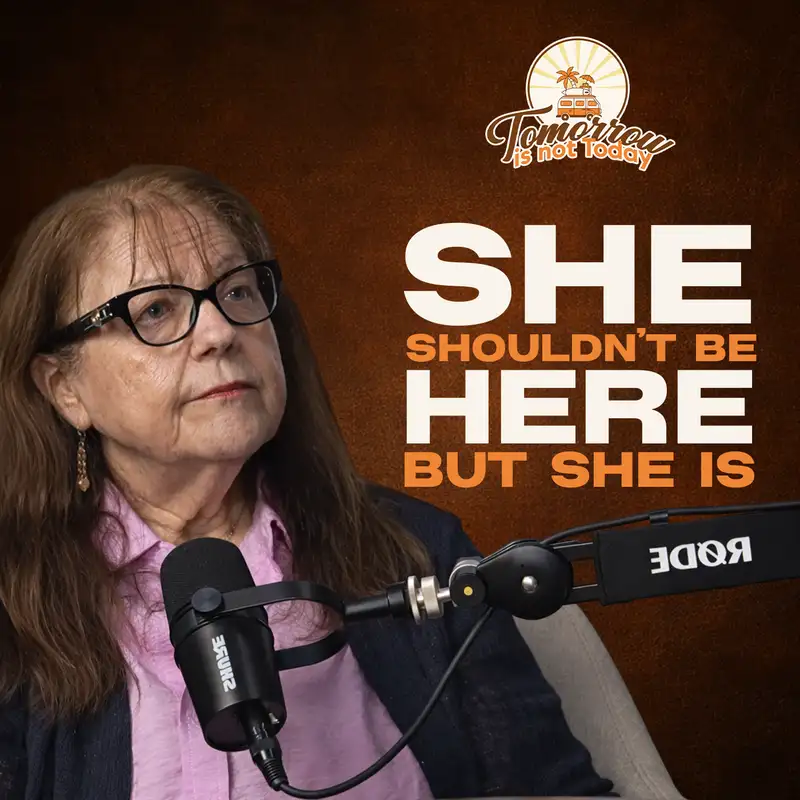
She Shouldn’t Be Here… But She Is
Download MP3TINT podcast Sally Jones _Edited_1
===
[00:00:00] I will let everybody know this could get a little bit touchy because you can't predict who's going to harm your child. It could be anybody. Some have never said anything to anybody. When the child is face-to-face with a perpetrator, although you wanna be able to protect them and, and for that not to happen, it will happen because perpetrators do get those moments and those windows in time.
My childhood trauma was the big motivator here. I was experimenting with a lot of drugs. When I was in high school, I was drinking way too much. I was a binge drinker. That point came where I said. It doesn't matter where you've been, what you've done, what life's happened, you can make a difference. Your life matters.
You are here with a purpose. I believe that I can make a contribution and one of them would be for kids never to have to go through what I've been through, which is child abuse. And how do you push past it though? I had to make a lot of early decisions in life, and one of them was a trauma does [00:01:00] build pathways and etch pathways.
In your brain that changes the way you see the world. Explain that a little bit more. Um, so people will pretend it's all okay. It's always gonna come back and bite you in the ass. How can somebody create the life they want? Leave the legacy, the crowd,
I guess.
Sally Jones, welcome to the Tomorrow's Not Today podcast. Thank you for having me. I'm actually really excited about today because you're hitting on a topic that's very relevant to a lot of people, and obviously what our podcast is about is helping people who've been through life circumstances in life, good, bad, whatever it is, but then they take those ugly bits and then with those ugly bits.
They turn them around, they go through a healing process, and then they [00:02:00] use them to then go and make a difference into the rest of the world and other people's lives. And you are definitely doing that. Yes. Yes. So I, I'm excited about that. Um, I will let everybody know this could get a little bit touchy, uh, and today's subject because probably.
I think around about 25% of people will deal with a lot of, we what we're talking about. Even higher. Higher than that. I think it's underrepresented. Yeah. Wow. So, um, but the, the big thing is a, we want to hit on some topics that are gonna hit people and realize, hey, it doesn't matter where you've been, what you've done, what lives happened, you can make a difference.
Your life matters. You are here with a purpose. We're all created with a purpose. Yeah. And that's what it's about. I definitely believe that I have a purpose to be here. Yeah. Absolutely. Every single one of us does. Yeah. So, uh, and obviously you've turned that around, and what I want people to know through this podcast more than anything is what we just talked about just then.
You're here with a purpose. Doesn't matter where you be and [00:03:00] what you've done, you can make a difference in yourself and other people's lives as well. So tell us a little bit about this incredible program that you've put together. Well, after seeing the gaps in education from being a teacher for 20 years, um, and that's part of my experience that I bring to this whole project.
Um, I realized that, um. You know, different strategies we could actually use. It would be more authentic and more objective. Um, and I've always had this kind of lens of looking, um, at child protection due to my own experience as so I noticed that, um, in teaching, usually you have an organization that comes to the school and visits, but they don't have the sustainability because they don't come regularly.
Therefore, it's just kind of like. If the kids don't get the drill and repetition or, um, to be able to carry that through, um, mm-hmm. And integrate those concepts. Um, another one is that there's a lot of negative messaging, [00:04:00] um, with people. Um, for example, that will still fall back on, um, stranger Danger.
Types of approaches which aren't authentic or true or, um, respectful to anyone either. Um, and just the amount of trauma that teachers themselves go through in teaching kids. Mm-hmm. And, uh, and another thing is. When the child is face-to-face with a perpetrator, although you wanna be able to protect them and, and for that not to happen, it will happen because perpetrators do get those moments and those windows in time.
So having the child with no skills at all when that happens is. Better to actually give them, um, a skillset so that they are able to, um, look at the situation and see how their body feels and they're reacting to it, um, and trust those feelings and follow through with whatever they need to do. So the whole program is built around that.
And, um, I did some work with [00:05:00] Attachment Theory and a, um, Greg Moran and even, um, Mary Ainsworth in the past. So I'm very well versed on attachment theory and my approach is based in that theory itself because I believe not enough people actually start from that area, but it's kind of how kids learn to trust the world and venture out and, um, in.
Gather, like be able to feel safe? Mm. Um, so a mom and a baby, for example, the baby will venture out to the world something might happen or a change in environment to, uh, upset the baby. They'll look behind at the mom and they'll, you know, approach and then learn, uh, to feel more safe and venture out into the background or into.
Uh, the area again, environment, and, um, eventually that's how they get security. They've got it with their mom, who's their secure base. Mm-hmm. But a lot of kids don't have that beginning. No, absolutely. [00:06:00] And we'll, we'll get into that in a little bit further. Yeah. I actually ask the questions backwards. I know it happens, but tell me a little bit more about you as a person because.
You are obviously not a local No. Um, and, and you've had a lot of education, a lot of experience in a lot of different ways. Tell us more about you and where you're coming from that way. Okay. Well, my childhood trauma was the big motivator here, and I remember when I was maybe 12 sitting on my mom's balcony and I had just seen Belfast bombings and people being literally using brooms to wipe.
Body parts out. That's the media that was back then in the day. And I just got really philosophical. I've always been a little bit wise in my brain and I thought, you know what? There are so many things going on in the world that I believed that I can make a contribution, and one of them would be for kids never to have to go through what I've been through, which is child abuse, and [00:07:00] wouldn't it be great?
If I can create another world where kids feel safe and have, um, and feel empowered and have a voice and all the things that I didn't have, um, and the biggest one of those within that was trust. Being able to trust other people and even trusting myself, you know? Mm. So I never disclosed, so I fell through the cracks.
I never, um, really knew I was abused in any. I guess maybe I had complex PTSD, so it was 21, I was 21 years old sitting in, um, an emporium with people doing a survey on child abuse. And I went, oh my God. I'm checking, checking off every single tick box. So this was in Canada? Mm-hmm. Yeah. Prior to that I was actually Whereabouts in Canada?
Ontario, Canada. Okay. London, Ontario. You liked it there. I love London, Ontario. Yeah. Yeah. Yeah. I do. I do. Um, yeah. It was, it was the place that I guess I could call whom I felt very comfortable in that [00:08:00] world, um, aside from what was going on in my smaller world, I guess you could say. Yeah. Yeah. Okay. And is that when you first started studying when you were in Canada?
Uh, yes. It's, I started studying, um, wow. Long time ago. Yeah, I was originally a psychiatric nurse, so I went into nurse and I was a psychiatric nurse and I worked in an environment, um, that was forensics. So they had done some, um, criminal behaviors. I, I was working with people who had killed people. Stab their babies and horror hor horrific things happening.
And a lot of those people were actually, um, psychopaths or had been someone who had severe mental health issues, for example. Um, so I worked with them and I was, uh, PTS is a great thing 'cause it just kind of makes you numb out and you don't really know the kind of danger that you could be in. Mm. Um, and that hit me up a few [00:09:00] times working there because we did have a death.
Um, on another unit, but it still affected everybody. So, um, yeah, that was, that was really bad, but it just kind of floated off me. It didn't bother me and I always thought, why is it these things? Hmm. And then I realized it's the PTSD, but yeah, that, yeah. Lady was decapitated goodness. So, and I, yeah, it, I, me, because I mention it a lot of times and I go, yeah, I used to work and this, this happened and oh my God, right?
But. The extent of trauma that I actually went through without realizing it was trauma, just in that situation alone, because the, the nurse who actually dealt with that committed suicide and, and actually committed suicide in the block of apartments that I lived in. Wow. Yeah. So I mean that in itself. And that was me at 19.
So I had all the childhood trauma and that happened. And then more trauma after that because it carried [00:10:00] in through my relationships as well. Mm-hmm. Um, my, which it does real learning. Yeah. My real, it does. Yeah. And that's, that's I think one of the, the big things that I think a lot of people don't understand mm-hmm.
Is the fact that if there's things aren't dealt with. Mm-hmm. Not to say everyone's gonna be completely healed ever. None of us ever will. I don't believe we're all gonna be carrying something with us. But if they're not dealt with and continually wanting to improve mm-hmm. The effects they can have on relationships Yeah.
Or work on everything is intense and Yeah. And, and I guess one of the biggest things that, of my learning is, uh, that you don't bring, uh, trauma into your own relationships. Mm. You know, um, and you, you have to be responsible in that way. Um, so I, I guess my life has been having to be mindful. Um, of all the things that could happen and will happen and have happened, you know, you have to make sure that [00:11:00] you don't bring trauma back and that you, that you do work on things like emotional regulation and that kind of thing.
Um, and it's bloody hard work. Mm-hmm. Because, as I was saying, oh, it is saying to Carolyn, you know, when you're, when you're already in fight flight and someone looks at you and says, calm down, you just wanna. Think about it. Yeah. Yeah. It's like, yeah. Um, but it is a really, really hard journey. So yeah, I had to make a lot of early decisions in life, and one of them was, I was experimenting with a lot of drugs when I was in, um, high school.
And I got to the point where I was taking so many that I blacked out in the mall and gave myself a black eye. Hmm. Next day I am like, that's it. I'm making a decision. No more drugs. And I was only 14 at the time I did that. And, uh, yeah, I was very young. So that was a, because it, it, I'm very [00:12:00] curious as to how people make changes in life and, and what triggers.
Them to make a decision and make the change. Because we all go through life. We're all very different people. If you are brought up in the same home, you're a twin, you're whatever. You can be completely different to the next person, next to you experience. For sure. And what makes the decision from one person to the next is very, very different.
And how things affect people is very different. 'cause we, it's very easy for us to look at someone and go, why didn't you just make that decision? They, they can do it. Why couldn't you do that? Yeah, it's a really interesting thing and, and Caroline and I were talking about that yesterday, in fact. Um, and why is it that we are the survivors and stood up and, I mean, my, my sisters have survived as well, but not without, you know, having some addictions and some things going on in their lives.
Mm. So I just was, I don't, I, I say I had a wise person inside of me. I don't know what it [00:13:00] was, but, um, I think. You know, at a certain point in time, maybe even after university, after I'd done my training in attachment theory and so on, um, because I went back to university and got my teaching degree after the nursing, um.
And that was because I had a club born with a clubfoot, so I couldn't handle the nursing as much, the physical. Gotcha. Yeah. So I went back to university and did all this other stuff and yeah. Um, where were we talking now from that? I, I think I just like, I really do feel like I had this wise person, wise person inside of me and called it what you will.
And maybe I've, um, re. Visited that in my SQS where I talk about the wise inner voice and listening to that. But yeah, there were pivotal moments that I remember that I stopped and I thought I was abused severely sexually, physically, and everything else by someone who's an alcoholic that I want that in my [00:14:00] life.
Did I want to become that? No. And I saw my, you know, my sisters were party animals at that point as well too. And I'm like, okay, I'm just not gonna do this because I got a purpose. Mm. Isn't that silly? Like I absolutely have what, 12, 14-year-old says that. Yeah. So I look back on that and go, wow. You know, and then I tuck it away, like it's just something I said.
And, um, not really realize that I actually, my life followed a trajectory. And, and began to make that happen already. You know, create a pathway. Yep. Yeah, a hundred percent believe that. Yeah, because that hap and, and I did the same with drinking. I was drinking way too much. I was a binge drinker. I loved just like down drinks and party and stuff like that.
And a point came where I said, Nope, we're not doing this either. And I stopped and I still don't drink to this day. Hmm. [00:15:00] And, and, uh, it's often you're weird if you don't drink, especially if you're in Australia and you're around all the wineries. It's like, what the hell? Where's the door? See, go back to Canada.
So then what, what brought you to Australia? Because you're now based in South Australia. I am. I have a partner here, a wife here. Um, and she was my saving grace when I was coming out of, um, uh, actually a, a healing program for PTSD Complex, PTSD in Ontario. And that was another pivotal moment where I made decisions.
I mean, it was a very quick decision, and in hindsight, it would've been better if that would've been a process, rather than hopping on a plane and saying, that's it. I've gotta get outta this life now. But then again, we say, look, in retrospect, both of us say, yeah, but you wouldn't have done it. You know? Mm.
If, if, you know. So it's good that you were impulsive and came because it was the right decision to [00:16:00] make. And yeah, it has been. So I still have a good relationship with my wife and, yeah. So now the work that you do, um, obviously based a lot. From where you've been and what's happened Yeah. And all that sort of thing.
Mm-hmm. Um, which is usually when we are our most effective. Uh, a lot of the amount of people who find their purpose, so to speak, I'll put an inverted commas because that's what everyone's looking for, uh, is largely to do with stuff we've been through in life. Mm-hmm. Quite often. Mm-hmm. Some people, they just know, like I know some people, they, since they were kids, they wanted to be a doctor.
Or they wanted to be an actor or whatever it was. Mm-hmm. That was it. That's what they want to do. And they do. But I think that's very, very few of us, the most of us, seem to find the purpose through stuff that happens in life. Mm-hmm. Uh, and comes through. Did it sounds like that's what happened to you.
It's definitely what happened to me. Yeah. Yeah. I don't think I choose to work in child protection. It's a very, you know. [00:17:00] Uh, it's a difficult job. Mm. You know, when you see a lot of kids getting hurt and, and that type of thing. Mm-hmm. Um, my job though is to empower those children to not, um, focus on the pain and hurt they're going through because that would just, you know, change the whole emotive thing.
You wanna be able to empower them. Yeah. And that's, I believe that everyone's been kind of. Standing back and not wanting to heighten the kids or not wanting to frighten, heighten, whatever. And so they don't tell them the truth. And with this program it does in a way that's very engaging. So I teach them exactly what grooming behaviors look like and what it does, and I teach them what healthy and safe boundaries are.
I, I get them to switch on their primal defense system so they learn to the concept of self-trust. Um, in their body and then in their mind. And then it's about trusting other people by learning about [00:18:00] the grooming. And so, uh, it, it's, it's normalizing those concepts, which hasn't been done in the past, and it's online, so it's very objective.
You know what's scary? Mm. Lots. Is the fact that we have to normalize that. Yeah. Yeah. It is. But it's sadly our world. We do. Yeah. Do. But we do, unfortunately. But it's, to me, it's really scary that we have to normalize that. Mm-hmm. Mm-hmm. Um, I would love it if the world was going the other way where that wasn't a normal thing.
We are. Yeah. But unfortunately we do, we do need to, to do that. Um, and it, because like the, the amount. Of kids that are affected that way. Mm-hmm. Um, I've been very blessed where it hasn't happened to me, but I know people, a number of people very well, uh, who have been through that and I could not possibly imagine, come even close to imagining.
Mm-hmm. Uh, what that could be like. Yeah. [00:19:00] But the fact that you've put a program together that makes kids aware. Now the program, 'cause I was reading up about it and how it works and where it goes and the cartoons that you put with it and all that sort of stuff. Mm-hmm. It's, it's a great thing. And it's ob it's, it looks like it's quite interactive and kids get it involved with it.
So they're learning by playing type of thing. Yep. Um, it's, it's something that obviously, from what I see, helps kids with outside people. What about when it comes with family? Well, that's where I think it took a long time for the penny to fall because I had to think of how I, I did this program. So it's not the what?
It's the how. Mm. And the only thing, like, you, you can't, you can't predict who's going to harm your child. Mm. It could be anybody. Mm. [00:20:00] It could also be a, a sibling or a peer. Hmm. So I guess that's how I got to the, you have to trust yourself first. You have to build that inner kind of pillar of trust and start to make some decisions for yourself.
Um, because there are gonna be times where you're gonna need to do that. So you need to listen to your body, to listen to your voice. You need to use your voice to advocate for yourself. Um. To find those people in your life that you can, that you can trust. You're, we call them safe people. We call them champions in the, in the um, program.
And those are the people you turn to if you have questions or thoughts. So it's not entirely online. There are connections made to, um. The people that you can trust outside, and they have to determine that themselves because they'll know if that person touched them and crossed their boundaries. They'll know if they recognize behaviors that they went, [00:21:00] oh my gosh, I've seen somebody who has paid that kind of attention to me, who has wanted to keep secrets and that kind of thing.
That person may be not a safe person. And then they would go to the, out external, the program, um, one of their champions and chat with 'em about that. And there's also a switch. Did you see the switch? No, I didn't see that. Okay. When they watch the interactive, uh, learning lessons, there is comp, there's comprehension and questions with that.
But also, um, there's a switch that the children are, um. Told that they can touch at any point in time during the program where they think maybe there might be an unsafe person in their life. Mm. So if they recognize anything at all, push the switch, that will immediately go to an email to the person in charge of that program.
Wow. And that's awesome. That is where the external also comes into play because then, um, we set it up so [00:22:00] that the person within the school is either the well person, uh, wellbeing person, person in leadership, not a person who will say, sorry, I've had my own trauma. Could you please be taking this role on?
Unless that person is very special and a champion to one of the other kids. So, um, yeah, so. The school will know about it and be able to make those mandatory reports. So that's something that's a, that's a great way to be able to deal with a whole family issue. Mm-hmm. Because in that situation, again, this is secondhand, not first Yeah.
Experience. Yeah. But from what I've heard, when that's the case, you can't tell anybody. You cannot, you are the only one. You've gotta keep the secrets. It's your fault. If anything happened. Mm-hmm. Uh, all of this sort of stuff goes on. Shame. Yeah. Yeah. Shame the blame. Yeah. All, all of that. Um, so it's a great way to be able to like, do the switch.
It goes to somebody else. Yeah. So you don't feel like you're. Telling anybody because of that, [00:23:00] but yet mm-hmm. You do get to tell somebody Yeah. What's going on at the same time. That's right. So it takes it offline because there is concern about having everything online, obviously. Yeah. That wouldn't translate into the real world, but this does through, through that switch and through building of the champions outside of it, um, and giving, uh, people information on the outside too.
The, the one thing I would like to really integrate with, um, the school is to, um, advocate for a authentic trauma informed environment across the school. I think if schools do that, they prioritize safety and. Most of the time, unfortunately that's not the case. It's all about standardized testing and Yeah.
You know, making sure they know their math and their English, but they don't give the same priority to child protection. It just kind of sits in PE um, at the back and a lot of people just [00:24:00] kind of don't teach it or try to integrate it without the knowledge and the experience they should be. Yeah, again, one of those things that we wish we'd never have to, to put in, but it is an important aspect because of the, it's huge.
And I actually think there should be a policy with the curriculum in our carra where they actually include child protection as a primary topic because it's so rampant abuse that, um, we should be taking kids' safety more seriously and their empowerment and learning around that. If we wanna change the world, right?
Yeah, exactly. Exactly. I'm gonna go in a slightly different direction right now. Um, 'cause there's a lot of people listening right now who, and again, I wish it wasn't, but there is mm-hmm. Who have dealt with life through different things. Some have never said anything to anybody, even though they're adults.
Yeah. Some have [00:25:00] but haven't dealt with stuff. Mm-hmm. A lot of our listeners are business professionals. Mm-hmm. Uh, and there's a lot of others as well. How, because like we talked about before, it affects relationships, it affects work, it affects every aspect of life. What should they do to make a difference to them, their family, their future, their business?
Ah, wow. That's a big, that's a big one, but I think first and foremost. Um, and, and in part a sidebar, but with the same lens is that I'm doing my own podcast as well to look at the other side of trauma and childhood abuse. So that is the adults that sit in that very pocket you're talking about. Mm-hmm. And so it's called Alchemy of Trauma, so it's very similar to what you're doing.
Um, I think the first one is the recognition of, um, child abuse. [00:26:00] Recognition to yourself. Yeah. Recognition of the situation to yourself. Yeah. Okay. And how actual, how, how huge it is. Yeah. And, um, what you can do. So the first thing you would do, because I mean, let's face it, you'll have a lot of perpetrators out there as well, that goes, oh god, you know, it's not something they probably want to do.
And there is help for them. Um, yeah. They can get help through, through, uh, lots of different organizations. And develop circles of trust, I think they call it, um, to support them to, not perpetrate, but also the victims. Um, because the horrible thing is that trauma does build pathways and etch path pathways in your brain that changes the way you see the world.
It changes the way you see everything. And I guess understanding some of the major things that are involved in the, and the symptoms of trauma, what happens in the end? [00:27:00] A lot of emotional regulation problems. That's, that's first and foremost. Um, a lot of problems with the relationships, full stop and attachment issues.
Um, and when they recognize that to reach out for help and to have their own goals as to what they wanna do, you know, to help the world in themselves. And that could be just, they might just be capable of helping themselves, whereas I kind of gone in the other whole direction. Mm. But those people, um.
Would be doing themselves and the world great justice if they actually reached out to address their own issues. Because they can't do anything past that. Yeah, exactly. They have to go, they have to start there, and then if they wanna go further, they can. And a lot of people who have had trauma will do that.
They have that sense of empathy. That's huge. And yeah, I think that's why we see a lot of people in the area go into trauma informed stuff. Yeah. So tell me now, or they could [00:28:00] also help me to build the project if they're busy. Tell me now how subtle little line there, uh, how we can, because you've obviously made a decision that you're gonna make a difference with people.
Mm-hmm. And once you've dealt with trauma, you've dealt with trauma, but it's still, it's still back there. Oh yeah. It's still there. It never goes away. So it's a decision that is a. If not daily, pretty close to daily thing that has to happen with people. Mm-hmm. And one of the things I think with a lot of people is they don't get that.
Yeah. They don't understand that, oh, I'm still dealing with this. It's like, yeah, we all are. Yeah, that doesn't mean you can't make a difference and you aren't here with a purpose and you can make a big difference. Yeah. And I think for a lot of people when we are dealing with stuff, that's the greatest time to go against what you're feeling and to make the difference that you wanna make.
Yeah. And I think that is one of the most powerful, courageous things anybody can ever do. Oh, yeah. I mean. [00:29:00] I say to a lot of people, do you think this is easier, what I'm doing? You know what I'm doing is not easy because I've used myself as an example. Therefore, I have to retraumatize, basically revisit retraumatize, all the memories over and over and over.
Mm. And it's bloody hard work. It's therapy in and of itself to the nth degree because you wanna make that big goal. Go ahead, but. You know, you're gonna be dealing with trauma because it never goes away. It's a scar that never goes away. And, um, you're always gonna be having to watch your own self with your emotional regulation, making sure that you're, um, taking care of yourself and doing all that really good stuff in order to move to the next level if that's something you want to do.
It's not something I think anyone would want to choose to do when they're in that spot. Like when I was 12, like I said, that wise person kind of pushed me on and, um, otherwise I don't think I could have done it because the [00:30:00] journey's just been too hard. Yeah, it's bloody hard work. So, um, I think that some people weren't meant to have, um, reach out and do that.
Some people, their actual scope is within helping themselves. Mm-hmm. And that in and of itself is going to help other people. Yeah. Yeah. Definitely. Definitely. Yeah. You gonna make a difference in yourself. Yeah. That's, it's gotta start there. Yeah. And some people, it has to start there some in small ways and some people in bigger ways depending on, you know, how hard of a journey you wanna have.
But those, the thing is that I, they say that you can change the brain, but I always think there's gotta be a scar because trauma is something you just don't. Get over trauma will last forever. That's always an experience you had that you remember. It's like anything really, isn't it? That's you. You decide what you're gonna do with it.
Yeah. Oh yeah. And it is a big decision. Decision. It's a hard decision. Decision and it doesn't stop, but you decide what you're going to [00:31:00] do with that. Mm-hmm. We all decide what we are going to do with our life. We all decide what we are going to do tomorrow. Mm-hmm. And how we're gonna make a difference. Or are we going to stay in that place?
Yeah. And for some, like I said before, it's a heck of a lot harder than what it is for others. Why? I don't know. I don't know if any of us really know 'cause we're all different. Mm-hmm. But it's a, it's a daily decision. And I know when I'm coaching people sometimes and stuff is really heavy and hard, I'll just say to them, just do one thing.
I don't care how small it is. But do one thing. What's that today that's gonna move you forward? And that's good advice. Really good advice. It can be the minute Myst thing of all, I don't care what it is. Mm-hmm. But one little thing. It, even if it's self-care. Yeah, exactly. 'cause that looks after you, that helps you get going.
Yeah. Uh, we, we all, well, not all, some people have never been to that situation, [00:32:00] which is fantastic. And how that should be normal. Yeah, that should be normal. But even then, if you really wanna make a difference, 'cause this podcast is all about people making a difference. Yeah. Leaving a legacy they're proud of.
That's what it's about. And if we're gonna do that, you have to make a decision every day still to push beyond where you are. Absolutely. Beyond what's comfortable. I know. And I feel so overwhelmed a lot of times. 'cause I'm only one person. Yeah. And it's like one person who changed. And funnily enough I did get, um, uh, special awards for women changing the world.
So that was kind of pivotal because, um, you know, you, you question it all because you get this imposter syndrome. But my bestie in Canada, Betty Ann, she said to me, I remember we went to a psychic once and they said, you are gonna change the world. Those exact words. And I'm like, oh, that's kind of cool. We like kind of the, that kind of stuff once in a while when we were little, so, [00:33:00] yeah.
Yeah. And we, and we all can make a difference. Yeah. And we all can change the world. And that's, I think that's the point mm-hmm. That we all can. Mm-hmm. Um, but how are we gonna do it? And I, I love the fact that you've taken something that was horrible, that's ugly, uh, that nobody ever wants to. Have to deal with.
Mm-hmm. But you've turned it around now and helping other people and that's, that's what it's all about. Yeah. So those decisions, what, what happens with you when the knee imposter syndrome comes along? Because again, I talk to people all the time and it's like, ah, I feel like I shouldn't be doing this. Who am I to do that?
Yeah. Like, yeah. That, that's normal. Yeah. Um, yeah, it is normal and I think it's something that you have to push past again, another barrier to, um, achieving your goal because it can be pretty real and pretty pretty, um, go, go pretty deep. How do you push past it though? Um, I[00:34:00]
guess just to realize that I'm authentic and that what I've experienced is real. And that authenticity gives me a level of expertise nobody else can replicate. Hmm. So if I bring it back to that and that what I've experienced, millions of people are experiences, and wouldn't it be great, you know, I've always wanted to make my difference, make my mark in the world.
Hmm. So it's always been a goal of mine, but for everybody else, I guess just looking at themselves and being able to, to be on a journey of self-improvement. Okay, that sounds terrible. It's like improvement means you weren't good. But, um, what I mean is when you're on a journey of health, a health journey such as that, um, just to be the best version of yourself you can possibly be.[00:35:00]
I think that works because we're all trying to get better. Yeah. None of us are there. No. If you think you're there, oh yeah. You're in a lot of trouble. It's so true, isn't it? Yeah. Yeah. We're all, we all need to get better. Yeah. Every one of us. Mm-hmm. No matter who we think we're Yeah, I know, but it's, it's interesting that imposter syndrome, and I think that actually stops a lot of people from pushing ahead and doing stuff.
I think so. Yeah. Because who am I? What have I got to offer? This has happened to me. Uh, I'm nobody and because of this or because I've done this, I can't go out and help people to do anything else. It's like, no, actually, because of that, that gives you every Right. Yeah. To go out Absolutely. And make a difference.
I get what you're saying. That makes sense. It's kind of like me saying, um, it's leveled expertise that nobody else has, so they can't do it. It's kind of like when you say to people who. Don't understand what's trauma. Trauma-informed practice is. I think the reason they don't understand is they don't have a lived experience to compare it to.
Right. Okay. You know, so, [00:36:00] um, without that, they're like, what's the problem? Just tell 'em, you know, just do this or that. Well, it's not that simple. Hmm. And, um, trauma-informed practice is a buzzword that doesn't really, um, equate to what it authentically means anymore. You know? Explain that a little bit more.
Um, well, I work as a behavior support practitioner as well, so, um, I always advocate for trauma-informed practice across environments because it's, it's respectful, it, um, it's best practice for everything. So basically it's in a nutshell, it's about having everyone in the room feel safe and confident enough to open their voice, you know, and open their mouth and say something.
Um, and if that's the bottom level, and this is, this is why maybe I understand it so well, because that's where I started with this, um, this program in itself is, is that whole basic, how do you feel safe? [00:37:00] You only feel safe if you feel secure. You only feel secure if you work on the little things daily, like you were saying, to be able to get to a better place.
So I, I think a lot of people don't understand that because they don't have the experience. Or the lens to look back on what trauma actually feels like. Mm. Because a lot of people with trauma have the empathy to be able to empathize with other people. Yeah. Who have had it. If they don't, then it's very hard.
Then that's where you get the negative narratives. Oh, come on. You know, it's not that time. Now you'd be fine. You know, she'll be right. Um, and that doesn't always work, you know? But what works is, is, is never stopping and I mean. Uh, dog with the bone. I've been told dog with the bone. I like tenacity a lot better than that.
Yeah. Yeah. But I have been probably the most tenacious person because I have had the setbacks and I have sat there and [00:38:00] bawled my head off for a whole day because this is too hard. But I haven't stopped. Why? Because I wanna make a difference. I don't want anyone to have to go through what I went through.
I felt very disempowered. I didn't trust anyone. I didn't feel secure, and that could be fixed. The healing can happen, but not without very conscious journey. So that's your driving force? Yeah, I guess it is. And do you have to regularly. Push that forward or is that something that's just inside of you or is it a bit of both?
I say it definitely is something you push forward. Yeah, it's ongoing. Um, it's an ongoing process of healing that if you are not completely healed, as you might, I think you said earlier, how can you expect to go into a relationship where [00:39:00] you know is healthy? So what you wanna do is be the best version of what you are and, and.
Yeah. My motivation to actually heal myself is also through this journey, if that's what you're asking, because that's definitely part of it. Yeah. Which I think, as we said before, that journey never ends for any of us. Yeah. And then life's gonna hit us again sooner or later somehow. Yeah, it does. It does.
And this is bloody hard work. And like I said, the, the worst part is retraumatization. I, um, only discovered. Last month, maybe a couple of months ago that I was, uh, raped when I was a virgin. That memory came to me and, um, the processing of that whole situation came to me. Um, and that was a memory that popped up from retraumatizing and redoing this, this, uh, project over and over and revisiting things.
So [00:40:00] when that happens, you have to be. You actually have to be really tough and accept what comes to you as well because memories will pop up when you're, um, doing the healing process and you have to be able to go move through them. I don't think you would have the memory if you weren't ready to address the healing around that memory.
So it is an ongoing healing process. And like you say, it never just goes away. Mm-hmm. And I would imagine you would recommend, and we need to put this in here. That if you are dealing with stuff mm-hmm. Speak to a professional. Absolutely. And there are lots out there. Yeah. Um, yeah. And just remember, you know, when it comes to suicidal ideation, um, because that's a common thing that things will change, but you have to make that conscious effort and to reach out to your people.
Because there is at least one person that [00:41:00] I'm sure everyone has the trust and faith in, and that's all you need is that one person. Mm. To be your person. Everybody has a person and that's, that's a good call for every one of us. Mm-hmm. To. Be that person for somebody. Yeah, for sure. Just to be there for somebody that's quite kind of like an adult champion, like Yeah, yeah, yeah.
It is, isn't it? Yeah, it is. Because we don't, and it's funny, when I was doing a, an interview, uh, actually yesterday mm-hmm. Obviously it hasn't air yet as we're talking about this, but the same type of thing is that everybody's going through something. Mm-hmm. We need to be there for somebody else. And I, and it's one of the interesting things with that as well, which I really want to put out here, is some people that are dealing with the heaviest stuff are there for other people, but they're doing that partly out of the fact that they're dealing with their own stuff and they're so dealing with so much, so they want to help other people to try and help themselves, but [00:42:00] that's where those people can be the most dangerous position.
Yeah. Yeah. I'm very vulnerable. I, I totally agree with you. Yeah, I mean, yeah, I'll be the first to say that I've experienced as a child, um, oh, what is it called now? Failure to Thrive. I was diagnosed with that. What's that? Um, well, you don't wanna live and you're like a baby and a little kid. Really, you don't wanna live.
I was taking off from my family all the time when I was little. I've got pictures of me as a baby. Mm. And I still have the chin, the marks on my chin from, um, climbing down steps to get away from the domestic violence that was happening in my house. So, yeah, that's, yeah. It's intense. Yeah, it's intense. And again, the whole point here.
You've taken that and you're turning it around mm-hmm. To make a difference. Make the world a better place. Yeah. Because we've got two choices. We can either do that or the opposite. Yeah. [00:43:00] Uh, and that's something, there's actually three when you think people come from that environment, they could be, um, a perpetrator.
Mm-hmm. They could be a survivor who does what I'm doing, or they could be. Um, not dealing with it at all and sitting in the closet and, you know, and that's, that's probably the worst place to be when you think about it and pretending it's all okay. Yeah. Yeah. So, so people that pretend it's all okay or just go on with life and let's, let's shove that in the back because it's always gonna come back and bite you in the ass.
In one way or another. I'm a firm believer that if you need to learn something or whatever, that something is, uh, that lesson or that, uh, skill or that ability will always challenge you by showing up in your life in other ways. Hmm. So it's best to just address that, don't you think? I think Oh, I agree. I agree.
And it is [00:44:00] ridiculously hard Oh yeah. To address these things like. Ridiculously hard. Yeah. But if you don't, I've always said, if you don't deal with your crap, it will come back to haunt you. It definitely will. Yeah. Sooner or later. Yeah. And I've seen it way too many times. And the damage that it can cause is insane.
Mm-hmm. Um, yeah. To just get stuff done and then you can be when you do that because when you're living with that, you live outta fear, not love. Mm-hmm. You operate. Yeah, that's true. You see people from fear a, a, a version of fear not love. Mm-hmm. You speak out of fear, not love. You react out, fear, not love.
Yeah. And I think once that happens, then the whole world starts to change. And you can cover it up for a while. You can do all sorts of good stuff and lovely things, and it looks like all lovely and beautiful. Mm-hmm. But sooner or later it's gonna fall to bits. Yeah. If we don't deal with it. There's this crazy thing called masking.
Yes. [00:45:00] And a lot of us do it at some point or another, but at the end of the day, you're faced without the mask. Mm. You look in the mirror and it's you. Mm. And you can't fool yourself. So. It's a good time too. It's a good analogy, isn't it? It's a good time to actually take a, a more deep look at yourself and, um, underneath that actual, actual face of your own and say, okay, what can I do to heal myself?
Because how many people actually go home at night and they stand in front of the mirror? Mm. And they know themselves, but other people. Don't see that they've got the mask. And that to me is the dangerous place. Yeah. That I really wanted people to understand and get to. How can they not be the best version of their self for their kids?
Mm-hmm. For their, for their partners. Yeah. For [00:46:00] their life in general. Or even if they have a family and have gotten to that point, it just can't, you wouldn't be the best of yourself for anybody, including yourself. We've gotta live beyond ourselves, don't we? Yeah, for sure. I think if we live around ourselves, it's a very small world.
Mm. We live outside of ourselves. It's fantastic. Yeah. There's so much there, and I think that's where the opportunity is. Yeah. That's where potential is. That's where purpose lives. Mm-hmm. To make it all work. Yeah, I agree. So with. With people who have, and I'm gonna ask you this, just we are coming close to the end now, uh, with people who've dealt with things in life and they, they do okay.
Maybe they're doing okay, they may not be, you know, dealing with a lot of the stuff whether we've gone into Yeah, yeah. But they wanna make a difference. But they're like, who am I? What difference can I make? Really, I've got nothing. Nothing in particular to say. What [00:47:00] would you say to those people? They're the normal, average.
Nice Joe. So they haven't done any of the work? Well, they may not have been through anything drastic like we're talking about. Oh, okay. Okay. They may just be the normal Joe. Life wasn't too bad. It was all okay. I'm pretty comfortable now. Um, but you obviously, uh, driven is, can be taken the wrong way. Um, I, I use the word driven in a very positive aspect.
Mm-hmm. Is how I see it. Yeah. Um. Which you are and a lot of other people are. How would you encourage people to get a bit of a drive, a bit of a passion to make a difference in the world? I think just by, um, having more of a growth mindset and saying, okay, I was one of the lucky ones. Mm. But I think the best thing they can do is try to understand how luck, just how lucky they were.
To not have not gone through that, and how they can actually try to [00:48:00] understand that this isn't the norm and that they can reach out and help people. They can, they can understand better who they are if they progress through their journey. And it's a different kind of journey. Um. It would be good to realize, you know, looking at the research and the statistics out there of what this problem had, the scope of this problem.
In fact, I met one yesterday, um, and he was lovely, absolutely lovely. Had a beautiful family, and it gave me hope because there are people out there who do care about the world, who haven't gone through the trauma. And you look at them and you think, oh my gosh, how well put together, are they And they're just authentic, lovely human beings.
Mm. Not always, but I mean, I've, I, I've, I've met quite a few of them. Definitely. They, absolutely. Yeah. And I think their part in the world, and his definitely was, was to reach out to others and try to help them and try to understand them. And I gave them some pieces of information that. Uh, [00:49:00] we'll help him understand as well.
So I guess that's another part of my job as a, you know, that I should be responsible for educating others about what it is like, um, to have this journey of that I've had anyway. I think the word you used there understand. Mm-hmm. Is huge. One, because we don't understand Yeah. We have, if it's not our experience mm-hmm.
If it's not me Yeah. Quite often we don't understand or we don't try to understand. Yeah. And I think in trying to understand scenarios and people. Makes all the difference in the world. And I think understanding, when you talk about that word itself is, um, and I, I talk about empathy, but it comes down to a cellular level.
I mean, when you look at intergenerational transmission of abuse, that's genetic. Mm-hmm. And having trauma is genetic. You feel it at a whole nother level. The body level, um, the brain level, everything. It's not just knowledge in your head. Whereas, um, yeah, maybe that's where [00:50:00] the empathy comes from. This is getting to be a very deep conversation.
It is. From having the body memory. Yeah. And not just the physical memory, but the body memory, the cellular memory, the memory that takes it to another level. Yeah. Which can have the potential. So that might be, uh, an interesting thing for people to explore is, um, to understand that it's more than just knowledge.
Yeah, absolutely. Yeah, absolutely. Um, it's all very scientific, all of that. Mm. And honestly, that's actually a biblical thing as well. Okay. Talks about it. Yeah. A hundred percent. Did not know that. Yeah. Yeah. It's amazing how, how science and everything works out and our body, we know it's in our body and you can feel it intensely.
Uh, 'cause as much as I haven't been through a bunch of the stuff we're talking about, there's other stuff. Yeah. Um, and you, do you feel it inside your body and an a cellular level? Yeah. You can tell that and that. Is the key component of what I'm working with my SQS for kids with right? Is that they have to recognize in their [00:51:00] body where they feel that all the danger and warning signs and it's interesting.
Different things show up. And, uh, Dr. Gable, Marta, I'm not sure if you've read or heard much of his stuff, like Yeah, phenomenal. Um. I think he's a psychiatrist. Okay. Uh, or psychologist. And he'd studied normal medicine and everything else as well, and he talks a lot about that and how he will actually listen to what someone's telling him.
Uh, but what he'll do is he'll find out where there's pain or where there's inflammation or where there's different things, different things that are happening to their body. And he will come to a conclusion pretty much with what's happened to their life. Yeah, interesting. From a traumatic sin scenario.
Yeah. It's really interesting how, how it works. It is, it is. Um, that was, that was very intense, Sally. Thank you so much. That was, I always, we've got one question we need to ask at the end. Okay. We're all about creating the life you want and leaving a legacy you can be proud of. So I want to ask [00:52:00] you, how can somebody create the life they want and leave a legacy they're proud of
by taking their experiences, good and bad, finding out where their expertise is and what their uh, what information they can share with the world to make a better place. Um, and actually going out there and doing it, going out there and, and getting yourself known, making a lot of people don't do this. Make your pa make your work your passion.
Hmm. You know, make it purposeful for you so that connection can be made. Um, yeah. Because everybody has lots of different things to offer and Yeah. From the trauma, from anything else, just to be able to, um. Share whatever is they feel passionate and purpose, purposeful about, you know, that's what I think.
Love it. Love it. Sally, thank you so much. Uh, what you're doing for kids with [00:53:00] kids, for families, and obviously future generations as well, that's gonna be affected by this. Mm-hmm. Thank you so much and I really appreciate you being on the podcast. Thanks for having me.
Creators and Guests