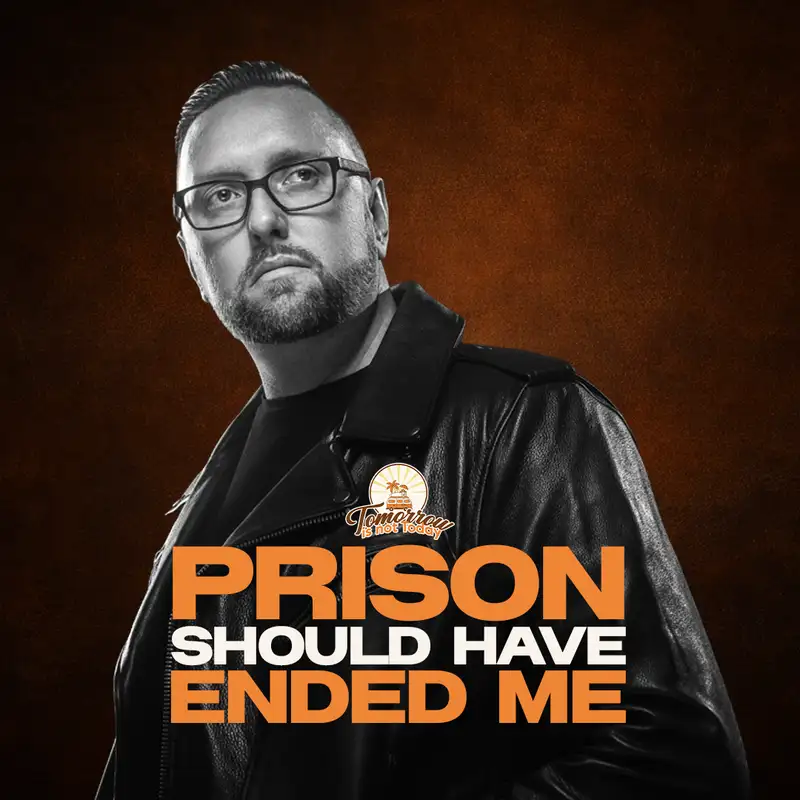
Prison should have ended me
Download MP3Tint Patrick
===
[00:00:00] I found in my life that the, my purpose was directly tied to the way in which I was wounded the most. Uh, I grew up in a broken home, and my father, when they went through a divorce and he essentially left the family, I was probably around five years old, you know, but I still always wanted to know who my dad was.
And so, because I felt unseen, I would go to these extreme lengths just to be seen. Well, you don't see me, so I'm gonna lash out. I'm gonna get in trouble at school. I'm gonna do this, I'm gonna do that. My stepmom, she had a gun, she had this, she had this huge 3, 3 57 magnum correction. Officer comes to my cell, he says, Hey man, I got some bad news for you.
Uh, last night. Your brother was stabbed to death, and so. You are in prison and you actually got out really, really early. Tell us how that happened and then what you did afterwards. I was strategically planning on how to kill this guy when I got out. I heard this voice when I was in that cell and it was like, that will do nothing to honor your brother's memory.
I'm talking to this, this [00:01:00] therapist, and he is like, man, you, you've got an inner child in you that's still in there, bro. The fact that you exist alone is a mathematical miracle that you're even here.
Welcome to The Tomorrow Is Not Today podcast. I am so excited about today. I've got a friend of mine who we've been friends for, I think 26, 27 years, something like that. Patrick. Yeah, man. Has it been that long? It has been. It has been. It's a long, long time and I cannot wait to get your story out for people to hear your story because I know.
It's gonna have a big impact on people. And that's what we, exactly what we are wanting to do. We wanted to help people go from, I'm living a life to, I'm living with passion and purpose and making a difference for, for people's lives. Leave a legacy that can be proud of. You are definitely doing that. So, Patrick, just tell us a little bit about who you are, where you're from, that sort of thing before we get into it.
Well, I would say first, I, I'm [00:02:00] a, I'm a husband, I'm a dad. Uh, got four kids and, uh, I'm, I'm an artist. I'm a pastor. Uh, I'm an entrepreneur. A little bit of everything. I don't know. It depends on the day. Uh, uh, I live in the States, of course, uh, but I love Australia. I've been there many times. Uh, I'm definitely ready to come back.
Uh, but yeah, I, I do all kinds of different stuff here, here in the States. Uh, we've started some businesses, which I'm sure we'll get into at some point, uh, to kind of help people get on their feet after they made some dumb decisions. Uh, but yeah, living live in Ohio, southwestern Ohio, in a city called Hamilton.
It's in between Cincinnati and Dayton. If you're ever in, uh, America, Ohio is like, they call it the heartbeat of America. So if you look at the land mass, it's like up to the right and, uh, but yeah, it's home, man, and, uh, yeah, it's, it's an honor to be here. Uh, I, yeah, this is long overdue, so I'm excited to be here.
It is long overdue. It definitely is. And uh, I, [00:03:00] we've been trying to do this 'cause there's some other projects we're looking at doing together as well. Uh, this is gonna be the first part of those. The others are, they're in the works. I can tell you. You're probably going, man, when are you actually gonna get on and do that?
They are in the works at the moment. Uh, along with this. But I want you to take us back for now, Patrick, before we met, take us back to your childhood, what that was like. 'cause I think that's gonna give people a very good idea of how you got where you are now. Yeah, yeah. Yeah. Yeah, I mean, I, there's so much I could say about that, but I would say, uh, first, you know, I grew up, uh, I grew up in a broken home.
I grew up, uh, you know, there was five of us children, and my father when, uh, I was probably around five years old, you know, he was, he was unfaithful to my mom. And she, you know, they, they went through a divorce and he essentially left the family. And we were living in Colorado, in Denver at the time. And so my mom had family back in Cleveland, and so she packed five kids into one of those old [00:04:00] station wagons with the wood paneling siding.
Uh, and, and we just. You know, being an adult now, like I got a new respect for like, what she must have went through as a single mom, bro. Like Mm. You know, so she packaged yeah, totally. These five kids, uh, in this car and drove back to the only home that she knew. Uh, but because of that decision and because of the absence of a father, uh, which unfortunately this is the story of a lot of inner city children, you know, that can immediately thrust you into abject poverty.
And so we, we went from being somewhat okay financially to, you know, living in housing projects and growing up, uh, there was never enough, right? And so, yeah, there's so much that comes with that. Um, you know, as a child, especially as a young man, you know, you wanna know what is your origin story. You know, where, who did I come from?
You know, who is my dad? You know, you struggle with that. And as you get older you struggle with that even more. And, uh. I just remember growing up, like [00:05:00] not really having a sense of identity and not knowing who I was. And you know, on top of it, I'm the middle child, so, you know what I mean? Like, you know, the oldest, they know who they are.
Yeah. The, the, the baby thinks they're the king. Right. But they, us middle children, like we don't, we don't have a clue. Right. And so who are you? Where'd you come from? Yeah, yeah, yeah, yeah. And so, uh, I do, I will say my mom always said I was the one pregnancy that was planned. So, so, so maybe there, maybe there is something to, to my existence, but yeah, man, so I, I grew up, you know, in that environment and, you know, it was in the inner city of Cleveland, you know, you're seeing drugs, you're seeing addiction, you're seeing, uh, poverty, violence, uh, gang activity, and.
The longer you're in that environment, and I think this is true for any environment, the longer you're in a negative dysfunctional environment, the more it becomes normal. Right? And so what happens is over time you get desensitized to, I'm sure there's somebody watching this right now. You know, you, you've been in an abusive [00:06:00] relationship and you know, you put up with that longer than you should have, and you told yourself all these things.
You know, maybe it's not really bad as I think it is. Uh, maybe it's not really as bad as everyone else says. And then finally the voice of reason. Somebody comes in from the outside and says, Hey, this isn't normal, right? And so, uh, yeah, grew up around that stuff and. But I still always wanted to know who my dad was.
And so my father was still living in Colorado at that point, you know, probably when I was in about fourth grade, you know, my oldest brother, uh, Chris, he had already moved back to Colorado. He wanted to know his dad. He hated the inner city of Cleveland and wanted to get out. And so he flew back there and was living with my dad for a couple years.
Then my older brother, Larry, who we're all two years apart, he went after Chris and then, you know, it's just seemed like the, it's the next, it's the rite of passage. You know, we all go to Colorado at a certain age. And so, uh, my father was living in the city called Wheatridge, which, you know, coming from the [00:07:00] environment that we came from, the inner city of Cleveland and Wheatridge, Colorado are like, they're such polar opposites culturally, you know, food wise, uh, socioeconomic statuses of people, uh, you know, interest, just everything.
It was a, it was a foreign landscape, and so, you know. I eventually convinced my mom to let me go out there. I'm, I'm happy to be with my older, two older brothers, even though my two younger siblings are still in Cleveland. And you know, I had this idea in this picture in my mind what my dad was gonna be like.
He's gonna be this great guy, you know, he's gonna play catch with me with a baseball outside, you know, we're gonna hang out. He's gonna take me fish fishing, he's gonna teach me about girls. You know, just all the stuff that you think of when you think of a male, you know, role model. And so I ended up getting out there and I found out like, you know, my brothers were being abused, they were being beat up and.
Mm-hmm. He was a raging alcoholic. There was, you know, women, different women coming [00:08:00] in every other night of the, uh, of the week. And just like everything that we thought it would be, it was the opposite. Right? And so I remember one time, uh, my brother was un, my oldest brother was unloading a dishwasher, and him and my dad are arguing.
My dad's a big guy. He is six four at the time. He is like probably 260, 270 pounds. I'm not sure what that is, A kilos, Aussies. But he, he, he's a big, he's a big guy. He is a big guy. And, uh, him and, and my brother, my brother's probably 14 at the time. And they start arguing and my dad pulls out a, a, a plate out of the dishwasher, smacks him in the mouth with it, uh, splits his mouth open, knocks his teeth out, and tells him that, you know, I'll take you to the hospital, but if you tell him who did it, uh, I'll do it again.
Right. So that was like my orientation of moving out to Colorado. But at the same time, it's like, okay, Colorado is beautiful. The sun shines out here on Lake Ohio. You know, there's some cute girls I met, you know, [00:09:00] uh, and I was just, there was part of me. I wanted to get away from the environment too, you know?
Uh, but it just, the, the abuse, the chaos, the, you know, the alcoholism, my dad's drug, drug stuff, it just got to be so ca it, it got to be so chaotic that I just, I couldn't take it, uh, anymore. So I started lashing out. I felt unseen. And so, you know, the only time that he was interacting with us was yelling at us, arguing with us, you know, uh, violence, that kind of stuff.
And so, you know, and I wanna say this, and I think anybody can relate to this. There's people that ha have never gone through abuse, never gone through hard stuff, uh, in terms of family dynamic that can relate to this and. Or I remember like more than anything, I grew up feeling unseen. And I heard somebody say one time, man, it makes me really sad when I think about the length that I went to just justify my own existence, right?
And so. [00:10:00] Because I felt unseen, I would go to these extreme links just to be seen. Well, you don't see me, so I'm gonna lash out. I'm gonna get in trouble at school. I'm gonna do this, I'm gonna do that. And really, it was a cry for help, you know, but nobody was listening, unfortunately, on that side. And, uh, you know, my dad had remarried and, you know, she was very abusive as well.
I mean, it just, there's so many stories. I could, I could say, but I remember at one point, uh, the violence had gotten so bad that, uh, my stepmom, she had a gun. She had this, she had this huge 3, 3 57 magnum, uh, in the house. And I remember I found the gun and I hid the gun and I hid it in the basement. And so they're freaking out.
Can't find the gun. And they, you know, I, I'll be honest, I was a bad kid. I was a bad kid. I was always getting in trouble. But there was a root, there was a root to it, right? Yeah. And so, uh, they knew to come right to me. They didn't come to Larry or Chris, like, Hey, hey Pat, where's the gun? I was probably 10 at the time.[00:11:00]
And I remember looking at my stepmom and saying, uh, I do have your gun. I took your gun and if you ever touch me or my brothers again, I'm gonna shoot you in your sleep. Now I, this sounds shocking to, to hear, I'm sure. And, and when I said it, I wasn't trying to be some tough guy or some gangster, like honestly, I was just a scared kid and there was so much abuse and chaos going on.
Like, I, I felt like How old were you at this stage? I was probably 10 years old. 10 years old. Wow. Wow. And so, thankfully, I had a couple friends, uh, down the street, shout out to Aaron. And Aaron and Chris Lucas, uh, lived down the street from me and, you know, we grew up together and I would run down to their house and hang out down there until things kind of subsided at my house and then go back.
And it just got to be so crazy, man. And then finally, you know, I, I, uh, I went back to, I went back to Cleveland 'cause I just couldn't take it anymore. It was just, it was that horrible. And. And so I go back to where [00:12:00] my role models are, drug dealers, gangsters, you know, uh, criminals, thieves. Mm-hmm. And I go back to that environment, even more angry, even more confused about who I am, feeling even more alone.
Um, and so I very quickly jumped into that lifestyle, uh, that street lifestyle. And so, you know, I, I tell people this all the time. My wife and I, we do work inside the prisons. We, we, I've done, uh, stuff inside prisons, uh, in Brisbane, Sydney, in the uk, uh, all over the world. Uh, mainly here in America. But we've done tons of prison work here in Ohio and.
Out of all the years of doing that, like the men and women that are incarcerated, like a lot of 'em, not every single one, but a, a lot of 'em, the, the real root reason of why they're there and why they've done what they've done is they have some unresolved trauma or chaos as children that they never dealt with.
And so, I'm not saying that that's a free pass. Like, you know, there's a lot of people that have gone through abuse [00:13:00] that don't break the law and don't hurt people. Like I'm not, this isn't a, a free pass. Uh, but for me, you know, that that was a big, that was a big part of why I was so angry and while I was lashing out.
And so feel free to cut me off at any, any moment. So I moved back to, yeah, it's just, I was just, I was just going to say like, hearing that story, 'cause most people, like, we hear somewhere somehow that apparently that stuff happens or we watch, watch tv and you can see movies and all that sort of thing.
But it's actually talking with somebody who's lived that life, been there. It puts it on a completely different level. And, and when you think of how you grew up, what you grew up with, and what you are doing now to help people, like going into prisons all around the world and doing all that sort of thing, uh, to help people is a phenomenal thing.
And that's part of what I want people to hear is that no matter who you are, [00:14:00] where you are, what's going on or going on, you can actually make a very, very positive difference to the life of other people. And that's, you've dedicated your life to doing that now. Yeah. Which, which is awesome. Yeah, man. What, what was it the catalyst for you that took you from, 'cause we'll get back into more of your story as we go on, but what, what was the catalyst for you that changed you?
I guess it was tragedy. It was tragedy on that road, uh, which, you know, if you want, I can jump into that. So eventually, yeah, let's go there. I come back to Ohio. I'm more angry. I 10, 11, 12, 13 years old. I'm getting in fights in school. Um, I start getting high. I start drinking alcohol. Uh, I start stealing cars.
I'm doing robberies. I mean, it's just one thing after another. And without getting all into all the war, the war stories. When I was 16, uh, I was [00:15:00] arrested for, uh, five counts of kidnapping, an aggravated robbery with a gun. Uh, I was also charged with a home invasion, so I forced myself in somebody's house with a gun.
Uh, I had gotten involved in selling narcotics at 15, 16 years old, and I owed this supplier thousands and thousands of dollars. My drugs, I couldn't find them. Uh, it's, I always joke with people like, that's a question I have for God on that day is like. Like, I don't want to back, but like, I know you took the drugs, like, you know, but that was a, it was a turning point for me.
Like, things had to get bad. They had to get hard, the walls had to close and the, the floor had to drop out, you know? And so here I am, they arrest me. And here in the states, uh, you know, if, even if you're a juvenile, you're 16 years old, you get arrested for five felony ones, which fell. There's a, there's a level system here in the states where, you know, felony five is the lowest, uh, least serious.
And then obviously misdemeanors aren't that. But I had five felony ones, which is like the worst. [00:16:00] And I was facing 45 years in prison, a minimum charge of 45 years in prison. And so they locked me up, they arrest me. Uh, you know, I, there was no way they could say, uh, you know, I could say, oh, you got the wrong guy.
They caught me on the scene and, you know, while I'm waiting to go to court. The, a correction officer comes to my cell, he says, Hey man, I got some bad news for you. Uh, last night your brother was stabbed to death. And so because of the childhood trauma and the stuff and the struggle that we went through as children, like me and my sibling siblings are very, very close and like.
At the time, they didn't know which sibling it was. I eventually found out which, which brother it was, but my brother, his name was Larry, he was the opposite of me. He had never been in trouble. He was a star athlete, had ne like never been arrested, and he went to a club downtown Cleveland was hanging out with some friends and this guy picks a fight with him and stabs him eight times.
And so he bleeds to death while I'm sitting in juvenile, [00:17:00] in the detention center. My best friend, wow, he was 16 at the time, his name is Joe. He was also with my brother. The same guy stabbed my best friend and stabbed him in the heart. And he died on the scene. They brought him back. Uh, but he's, he's blind and paralyzed to this day from that same incident.
And then, you know, the guy, the guy who killed him, uh, never did a day in, he never did a day in prison. Right. And so I'm sure that there's somebody watching this, that life has given you a horrible, you've been dealt a horrible hand. Like you've, you've had, you've had horrible stuff happen. Maybe that business relationship fell apart.
Maybe your marriage fell apart, whatever your thing is, where like that injustice happened and you were wronged. Like that's really, it's really hard to recover from, you know? And, and I remember like when all that stuff happened with my brother, they had to go to court. And so my mom's going to court. She has to look at the guy who killed her son.
And because his family spent close to a million dollars on a lawyer, they were connected politically. Uh, he walked [00:18:00] away scot free, didn't do a day in jail. They gave him the, they gave him the knife back in court that he killed my brother with in front of my mom. Okay? And then I find out kidding, oh man, like you didn't know all these, you knew the story, but you didn't know all these details.
Like, and then I found out the guy, the same guy who did it, he eventually becomes a police officer, right? And so like, here I am, I know why I'm in prison. Like I robbed somebody. You know what I mean? It's not a shock that I'm sitting in this cell. Like I, I never felt like, oh God, why me? No, I know exactly.
Why me? Uh, right. But the injustice of that situation, like, like, God, why am I still alive and he's dead? Right. And so I I, and then back to what I'm saying to, to the listeners, the viewers, like, we all have those times of injustice and that thing that should not have that way. And maybe something fell apart in your life.
And I remember, like I was, I was strategically planning on how to kill this guy when I got out. My friends already had his address. [00:19:00] You know, I was gonna, I was gonna hide outside his house and I was gonna, I was gonna blow him away as soon as it came out. And one, one of, one of the, one of the first, one of the first times I ever heard, heard God speak to me and not to get religious here, but it, I heard this voice when I was in that cell and it was like, that will do nothing to honor your brother's memory.
If you like the world on fire and you burn everything down, like that will do nothing to honor your brother's memory, right? And so, mm-hmm. I had a choice to make in that cell. And you got a choice. Whatever it is that you're going through to make that, like, this can be fuel that becomes a vehicle that pushes me forward, that actually empowers me, or it becomes a thing that just destroys my life.
And we all have those, we all have those things. Maybe it wasn't a loved one that was killed. Maybe it was something different. Maybe I could say there's a marriage falling apart, or a business that fell apart, or, you know, maybe you lost money and, and, and, you know, you went through a time of financial struggle and like you're so angry.
Or maybe a [00:20:00] friend betrayed you, right? And, and that can become the fuel that, that just burns your whole life up. Or it could become the fuel that pushes you forward. And I made the decision, man, uh, you know, when I connected with God in prison, was like, I refuse to allow my brother's memory to be dishonor.
And this is gonna become fuel. It's not gonna become fire. And I didn't reach that point overnight. It doesn't happen overnight, you know what I mean? I, I was, I was built for vengeance. Like my whole worldview was like, someone does you this way, you have to get revenge. Right. And, um, how did you come to that?
Because like you said, you can go one way or the other with this, and I've seen people do both. Mm-hmm. How did you come to terms with that? Because if there are people, and there would be people listening and watching right now who are in that decision mode where you just want to get vengeance. You just want to get them back and, you know, for good reason, like you've just said, there's good reason for it.
But obviously that's not the end of the day. That's not the [00:21:00] best choice to make. How did you come to the fact where you made the best choice? This is, this is gonna get very uncomfortable for somebody, is I had to learn how to forgive. Hmm. Now, again, I'm not telling you this just 'cause I'm a pastor, like I'm telling you this.
As someone who has walked through horrific stuff that, that in my natural state homie, like I would, I do not wanna forgive you. I want exact judgment, whether it's the abuse as a child, the stuff that happened to my brother, but I had to, I had to, for me, I had to realize that like, if I don't let this go, it's going to eat me alive.
That, again, walking around full of bitterness. They've done, they've done studies on this, uh, scientific studies. If you walk around with bitterness and unforgiveness your whole life, you are at a much higher rate of getting sick and having some, you know, so, you know, not living a full life, it will sh it will literally, scientifically and physically shorten your [00:22:00] life, right?
Mm-hmm. And so, you know, for me it was like, yo, I'm not gonna let this have power over my life. Are there days, 20 years later that I still wake up that I'm angry? Of course, of course there are. But every day I choose to say, you know what, God, Hey, there's, there's, there's some things that I, that I need forgiven of.
I've done people wrong. There's, there's times that I wasn't a good friend, that I wasn't faithful, that I didn't do X, Y, Z. Right? And if you could forgive me, yo, I, I gotta, I gotta extend that. Does that mean I want to go hang out with the guy? Of course not. Of course not. Uh, does it mean you gotta have boundaries and maybe some people you don't go around again?
Of course not. But I couldn't move forward and, and allowing that to become fuel if I didn't forgive first, because unforgiveness and bitterness, that that's gasoline on the fire that, yeah. So for me, I, I had to forgive. I had to forgive and, and. Uh, if you don't forgive the people, the circumstances, if you don't let it go, it will rule your life.
It will control your life and it [00:23:00] will be the reason why you fail instead of the reason why you succeed. Right? And I, I really, that is such a big important point and 'cause I think it is easier to hold that grudge in unforgiveness to a large, it is easy to actually get to the point where no matter what somebody's done or what's happened to you, whether it was you or somebody else, to get to that point where you are big enough to forgive and let that go, that is a huge thing to overcome.
And for people in that place, if you can get to that point right now, that'll be one of the biggest, best things you can ever do in life. Yeah. And it will completely change the direct trajectory of your life from the time you do it. And like you said, it's, it's not an instant thing. It doesn't happen instantly.
It takes time to actually get to that point where you can, where you can do it. And, and I look at you and I, I'm like, okay, you've, you've come through what you've come through, [00:24:00] you are stuck in prison for, for good reason. Yeah. Um, and yet all this happens to your family and people get off scot free mm-hmm.
And you are like, I'm gonna forgive you. Yeah. That's, and I, I, I had not been sentenced yet either, so I still had that sentence hanging over my life. But, you know, and, and, and I, I don't wanna say this too, and again, not to, not to jump full, full fledged into religion, but I, I think the ability to forgive people is a supernatural gift.
I, I don't, I don't think that within myself, that I'm, I'm somehow holy and like I just have this amazing ability that I could forgive somebody of an atrocity like that. Like if it was up to me, I, I, no, but, but I think me, that, that's where again, you know, I had to come, I had to come to the end of myself.
You know, we worked with a lot of people that are in addiction, coming out of drug abuse and alcoholism, and [00:25:00] regardless of what you feel about God, you know, a big part of AA and NA is realizing, yo, like, I need something bigger than myself. You know? And for me, uh, I, I had to, one, I had to receive forgiveness for myself.
You know, who the hardest person for me to forgive Kingsley was, it wasn't that guy. It was myself. Mm-hmm. You know, because we, we'll, we'll often treat, we'll often treat other people we'll treat our enemies better than we treat ourselves in our, in our minds, don't we? That's, man, that's huge. There's, there's stuff that I would never say to an enemy that I say to myself every day, right?
Mm-hmm. And so I had to, and again, I couldn't forgive my, I couldn't forgive myself. I had to reach, reach out to something larger than me. And when I was able to do that, and I was able to allow his forgiveness to heal my heart, then I was able to extend that to somebody else. Uh, and so, you know, I wasn't in a, I was not in a church service when that happened.
I was in a solitary confinement [00:26:00] prison cell. There was no preacher, there was no bible, you know, there weren't minor cords in the smoke machine in the background, you know, like it was raw. It was raw, it was visceral. It was, you know, it was, it was grimy. It was, it was, uh, it was, it was very intense. Uh, but it was no less real.
And so that became moment, I, I really want, I really want people to grab that, the go deep inside of yourself. And understand to forgive yourself no matter what. Yeah. No matter what's gone on, no matter what's happened, you have to do that because I, I don't think you can truly forgive other people until you actually forgive yourself as well.
No, you can't. You can't. I've yet to, I've yet to meet a person, and I've dealt with the most dangerous people in the state of Ohio that have committed crazy, crazy crimes. Uh, I've dealt with, you know, people incarcerated in Australia, overseas, uh, in the [00:27:00] uk. I've yet to meet somebody who has truly extended forgiveness that has not first done that inner work themselves, right?
Because you can't, you know, there's a saying you can't pour from an empty well, and if that thing's not real to you first, how can you possibly extend it to somebody else? You know, what, what goes through, I'm gonna say your mind, but also your heart, because that's a seed of it really. What goes through your mind and your heart to actually forgive yourself?
Hmm. I, I think for me, uh,
it was realizing that nobody is all good or all bad. Hmm. You know, and I've been told my whole life, even as a child, you're just this and you're gonna be that and you're gonna end up like your dad and you're gonna be dead or go to prison, which I did go to prison. Uh, it was [00:28:00] almost killed several times.
So I guess they were, they were partially correct. Yeah. Pretty close. Uh, but yeah, I, I think for me it's, it's. It's not, it's not something that I can muster up. I had to re, I had to receive, I had to receive forgiveness myself. Uh mm-hmm. You know, there's this, there's this ancient book. I won't say what it is.
If you're clever, you can figure it out. But there's this ancient book that has this verse in it that says, you know, those of you that have hearts of stone, I will take out your heart of stone and I will give you a heart of flesh. And like that is a perfect description of what my heart was like before that experience was, I was a very hard hearted person.
I think that's a lot of people, uh, that have not opened themselves up to that. It's like, and it's not that you want to be that way. I didn't enjoy that. It wasn't working for me, but that was all that I knew. It was all that I knew. Yeah. And until Grace crashed into my life, you know, this tsunami of love that like, yo, I've seen everything that you've done.
I've, I know all the skeletons in your [00:29:00] closet. I know all the evil stuff that you did that you didn't get arrested for. The crimes that you didn't confess. I see, I see. All those, those relationships that you had and the way that, the way that you just, you abused your body and the way that you abused your body with drugs.
And man, I, I still, I, I still love you and I still see value. And not only do I love you, but I'm gonna demonstrate my love towards you. You know? And, uh, and when I realized that, that, yo, that's how God thinks about me, bro. Like despite all that, there's, it says that the, it is the, his goodness that leads us to, you know, a new way of life, man.
Mm-hmm. When we realize the goodness of, of, of God. And so. Yeah, man, I battled self-loathing, self-hate, you know, it's something even as an adult I've had to work through. But I'll, I'll tell you what else has helped me too, is therapy, bro. Is, is realizing that it, it's okay to ask for help, you know? And, uh, mm-hmm.
I was in a session not long ago and we were talking about the inner child. [00:30:00] I, I gotta, I gotta send you this teaching. I gotta, I got a good teaching on this and I talk about in this, love it, in this message, it talk, I talk about in the message if, if we believe that we have a soul, right? Our soul is eternal.
It's not like our body, you know, we've all been to a funeral. We see that our loved one's body, and we know whether we can articulate it or not. All of them is not there in that casket. Right. Something has left. And, uh, I talk about in this message how our soul is eternal, right? And so, yes, our body ages. I was a 5-year-old kid.
I was a 10-year-old kid, a 15-year-old. I'm a 25, you know, I'm 46 now at the, the gray, right? But my soul, my soul is eternal. And my soul never ages. And so I'm sitting, and I talk about that in this message and, but I, I'm talking to this, this therapist, and he is like, man, you, you've got an inner child in you that's still in there, bro.
Like, yeah, your body's gotten older, but that young Patrick, that wasn't [00:31:00] safe, like he's still in there. And so we're sitting in this session and he's like, I want you to close your eyes and I want you, if you could say anything to him, what would you say to him? And like at first, I didn't grow up with therapy, man, so I'm a little weirded out, you know?
I was like, I dunno if I can do this. He said, nah, man, just relax. He was a, he's an amazing therapist, and he is like, I want you to speak to that, speak to that child. You know, think about that space, that, that was dangerous, that you, you were afraid, uh, that you were harmed. What would you say to that? That inner child.
And, uh, you know, I think the first thing that came out was like, it's, it's not your fault. It wasn't your fault. And like, and bro, I just started like, I could, it, it was not rehearsed. I couldn't help. Like, I, I'm tearing up thinking about it right now, like these tears just came pour. And I like, yo, you're safe man.
Mm. And, and, and then I just, he encouraged me and prompted me to continue to talk to that inner child. And, and, and it went from [00:32:00] that to like, we made it, we survive. You survived all that. We're okay now. Wow. And like he had me hold my heart, my hand on my heart. And like, it was powerful man. It was healing, bro.
And uh, and so I think like, you know, especially as men, you know, you could be a successful entrepreneur that, you know, makes a million, $2 million a year, but that inner child is still broken. And, uh, and a lot of us as men, we grow up not thinking therapy is, is for us and that's for weak people. And we grow up, you know, being told we should just bottle up our feelings and our emotions and, you know, how's that working for you?
It didn't work for me at all. It made me violent and dangerous and, and criminal. And so once I found some healing, uh, yeah, I'm now a man of peace and I've got joy, uh, man, the, the, the war that I had to go through to, to find peace, you know, and I, you know, there's so many people who are actually in that [00:33:00] place.
What you, who you were talking about, where there is that inner child at the moment and they, they look successful on the outside. They look like things are going well, and they are going well. Yeah. But that's the outside, and the reality is they're not necessarily living a fulfilled life. Mm-hmm. They're not necessarily enjoying life.
They might have the toys and the bits and the pieces and the house and the car and all that sort of thing, but is that real joy? Yeah. Is it real fulfillment? Is, is that really what you want, what success is to you? Yeah, because I've met a bunch of people and I, I don't really think that it is. No, it's not.
It's not. Yeah. I, I, it's same, i I, some of the work that I've done, uh, on the side, I've had construction businesses that employ people coming outta prison and stuff like that. And we, one of the things that we did was we paint, we painted houses and, uh, some very, very expensive homes. Multi-million dollar our homes.[00:34:00]
And you know, it's not, it's not to say it's true for everybody. I've met some extremely wealthy people that are very balanced and they have a sense of purpose and they have joy. Ab absolutely, they're generous, kind, wonderful people. Selfless and, uh, but, but yeah, there's a lot, there are a lot of 'em. Uh, and even a lot of just middle class people, they're just in the pursuit of more and more and more because we've all been lied, lied to through our western system, that man, yeah, if I have this, that when I get that, then I'll be this.
And if I can have this, and when that relationship comes, then I'll be happy. Um. Yeah, I, I just, it's, it's just not true. Mm-hmm. I, I've climbed that ladder and I, I, I've been up there, some of it criminally and some of it legally and, uh, and without purpose, there ain't nothing at the top of that ladder. You know, I heard somebody say one time, you could climb the ladder of life and the ladder success to find out at the end your ladder is leaning on the wrong wall, right?
Mm-hmm. And so I think when we think about [00:35:00] legacy, and you and I have talked about this, like what if I were to take my last breath today, I would not want to be known just for what I've produced. I, I would, I would want, I want to be known for what I added to a room, what I've added to people's lives. Uh mm-hmm.
I'll never forget, you know, and I've been to funerals with two, I I've been to funerals where babies, newborns were shot in a drive-by. I've been to funerals with overdoses, suicides, you know, the saddest funeral I've ever been through was none of those. It was a man that lived till he was like 90, 98 years old.
And every person that came up to talk about this guy at his funeral, all they could say about him was, man, he was a hard worker. Wow. And like one after another, after another. He never committed a crime, had never done anything bad. And there was, you know, I'm sure there was more than that, but like literally his own family, like one after another, his kids.
And I'm thinking, man, if there was ever a picture of failure for [00:36:00] me. Like, at the end of my life, it would be that, if that's all I'm known for is like, yo, I produced this amazing stuff, but like my kids, all they could say was, I, I created stuff and, and, and I didn't add to their lives. Uh, yeah. That, that's, mate, I think you might have just prick a few freaked, a few curly ones there with that statement.
'cause that's what, that's what a lot of people look at. Yeah, yeah, yeah. We've, that's what a lot of people look at. And there's nothing wrong with that. Nothing wrong with it at all. No, not at all. Like I said, if that's all, that's all everyone knows about you Yeah. Then it's pretty shallow. Yeah. Yeah, yeah.
Yeah. I love nice stuff. I mean, I love fashion, I love clothes, I love nice cars. Uh, but, but yeah, at the end of the day, you know, it's, it's like, you know, what, what is, what is, what am I gonna, what am I gonna be remembered for? Uh, and I, and I, I think, and it's good to be able to do all that. It, it's good to be able to do that, have that produce that do, and be known for that.
That's, that's a good [00:37:00] thing. I don't want people to get the wrong impression from what I'm saying here. Yeah. Of that's a great thing. But there's gotta be more to it than mm-hmm. Than just that. Well, a lot more to it than just that. I think to leave a legacy and to live it live with purpose is to live for something more than just yourself.
Yeah. So whatever it is that you're building, whatever it is that you're creating, if it's a business, if it's, you know, if you're amassing wealth, you know, generational wealth, it's a beautiful thing. That's a, that's a beautiful thing. I grew up in poverty, like, man, that's, there's, I would love to be able to create that for my children.
Uh, but, but what, what am I, the question I ask myself with what anything that I create is, is. How is this benefiting society? How is it benefiting the world around me? And is it just self-serving? And it, it could be partially self-serving, like this is self-serving to be on this podcast. 'cause I get to talk with my friend and like share my story.
And there's a part of me that I, I love that. But if [00:38:00] this isn't adding some life to somebody watching this, like all it is is noise, you know? Yeah. But I think it could be both. I think it could be both. Absolutely. And that's what I wanna Absolutely. To anybody out there is like, yo, whatever it is that you're creating, building, uh, you know, whatever your dreams are, whatever your vision board is, whatever your, your aspirations are, like, they can, they can benefit you and, and bless the world around you.
Uh, a hundred percent. I think that's where whatever it is that you're doing, if it's art, if it's music, if you're a construction worker, if you're an entrepreneur, if you own a Fortune 500 company, that's where you, you see, those are the people that have peace. They have those things in common. Right? Mm-hmm.
Yeah. They're living with a purpose. It's, it's beyond, like I said, it's beyond yourself. It's living with a purpose, but there is an end game to this, uh, on purpose. It's the also has fulfillment on the way through. Patrick, I want to go back to obviously, um, you're in prison and you actually got [00:39:00] out really, really early.
Yeah. Yeah, yeah. Tell us how that happened and then what you did afterwards. Yeah. Yeah. So, uh, I did get out, I was facing 45 years. They were supposed to charge me as an adult, so transfer me to the adult court system. Bound me over and sentenced me. And that was a minimum sentence. By the way. That was not maximum.
So the 45 years, this was not like, oh, you could, no, this was like, you're probably gonna do this. And so the best explanation I could give for why I didn't is God intervened in my life. Like I, there's no other, no other credit I could give, but so I go to the hearing where they're gonna bound me over and they say, is there anything that you wanna say?
And so, for the first time in my life, I stop blaming people. And I, I wanna encourage anybody watching this, sometimes the problems in your life are not everybody else's fault. This isn't just criminals that do this. This is husbands, this is wives, this is business owners. Like sometimes the problem is you, bro, sometimes you are the issue.
And I wa I was, I was a pathological liar up until that [00:40:00] point. I was somebody who loved to blame everybody else, you know? And so, you know, I had this encounter with God and myself. I, I, I, I experienced forgiveness, uh, experienced God. I, I forgive, you know, the, the atrocity that happened. Uh, but I, I still had to face the, face the music, you know?
And so, but I made a decision that morning, like, I'm not gonna go in there and I'm not, I'm done lying. Like, I'm gonna go in there and I'm gonna own this. And, and so I go in and I tell the judge, I said, you know, everything that you guys said, I did, I did do it. And whatever sentence that you give me, I deserve it.
And I looked over at the victims, I apologized to them, and I said, I'm so sorry for what I put you through. Uh, and I said, judge, whatever you think I deserve, like I, I. I, I did this and, and I'm sorry. And, and, and I accept whatever you sentenced me to. And now, mind you, and I'm, I'm trying not to rabbit trail here too much, but I had already been previously incarcerated.
I had escaped from a [00:41:00] juvenile prison on an unrelated charge. Like, I mean, I, I had violated probation and parole a hundred times before. I was not the good example of somebody to get a second chance. And this judge, her name was Judge Rubin, she was the strictest judge for those serious kind of violent crimes.
And she looks over the bench and she says, Patrick, I don't know why I'm doing this, but we're gonna keep you in the juvenile system. Which was like, bro, my mind just blew. 'cause I knew what that meant. That meant I was 16. They could only keep me till I was 21. So I went from facing 45 years in prison to four and a half, which is just, it was mind blowing, you know?
And so, you know, I obviously, I'm free now. And, you know, sometimes I'll be preaching and or doing church stuff and people like, well, where did you go to Bible college? And you know, I a prison for four and a half years, but I like for real that that was my training ground. You know, I got my education in there.
I went to [00:42:00] Barber College, I learned some accounting stuff. I mean, I, I, I made up early in my mind in that sentence, like, if I'm gonna lose this time, it's gonna, this, hey, this is, this is for somebody right here. This pain is gonna pay me something. This, this suffering is gonna pay me something. I'm not gonna lose all this time and not gain something from it.
One of the best teachers you can ever experience in your life is pain and suffering. I know that's not popular, it's not comfortable, but I'm telling you, I would not be the person I'm today without pain and suffering. True self-inflicted pain and suffering. It's so true. Right? I own it. It wasn't somebody else.
And so, yeah, man, I, I get out, I get released. Well, I go to court and. Part of my release was, you can't go back to Cleveland. You gotta go to Colorado. Which was crazy. 'cause again, my last experience with Colorado was abuse and mm-hmm. You know, just a jacked up family situation. But I, I had peace. Scott spoke to me and said, it's, you know, it's okay to go, just go.
I'm, I'm gonna work it out for you. Uh, I didn't audibly hear this, but I had a [00:43:00] sense of it. Right. And so I went back, I, I went and lived with my, my, the same, the same father who did all that stuff to me. And the first thing that they said when I walked in the door, he, he and my stepmom said, you know, you're just, you're faking and you're just a criminal and you're gonna end up back in prison.
That was literally the welcome home after my brother was killed when I did these four and a half years, didn't get in one single fight in four and a half years, which, that's a miracle. If you knew the person that I was, you know, uh, you got my education, I had college education at that point. Uh, none of no welcome home.
No. Hey, hope you could do better this time. No, you're gonna go back. And so, but nice encouragement, this, you know, and, and there's people out there watching this, that there's people that don't believe in you and people that think you're full of it and they think your dream is trash. And like, there's no way you can do that.
Nobody has ever done that. Don't listen to that stuff, man. Like, some, sometimes we're called to do something and, and we get to choose. Are we gonna believe what we've been called to [00:44:00] do or what everybody else is saying? And I refuse to, I refuse, uh, to fall into it, man. And so my friend Aaron, who lived down the street and, and Chris, they had obviously moved, they're adults now.
Last time I was hanging out with them, uh, I think we were getting high together. And so I, I look, I look up Chris's number and, uh, I just figured, I text him, Hey man, I'm, I'm back in Colorado. And at this, he, he's, he's, he's in church and he is like, yeah, you ought to come check this church out, you know, and, and him and his brother Aaron, uh, we're part of this church.
And man, I, I'll tell you like that place was so. Critical for me to rebuild my life. You know, when, when you're going through a rebirth, sometimes not everybody, sometimes not everybody can be in the room with you. If you've ever been in a room and, and you've had a child, not everybody is allowed to be in that labor room.
And I was going through a new birth and I needed to be in the right [00:45:00] environment, right? And so I was able to connect with this, with this amazing church. That's where I met Kingsley. Uh, he was a youth pastor. And, uh, yeah, it's crazy, man. Know you got this big old gray beard. You know, my all gray be different now.
I'll tell you, man, these guys, uh. You know, it was the kind of place that I could walk into despite my past, despite my experience. And I could be honest, I could be vulnerable and say, yo, I made some mistakes. I just got out of, I literally said that to Pastor Mark, like, I just got out of prison. I don't have a clue what I'm doing.
Uh, but I love Jesus and I've had this, this transformation in my life. I don't wanna sell drugs anymore. But I've never had a real job, like, just so raw, you know, like, I have no idea how to not be a womanizer. You know, like just all the things, you know, and they never judged me and they welcomed me in and they, they just, you know, just welcome me and to use a church word, they discipled me and, uh, helped me figure out what it means to not live in chaos, man.
And, um, you know, I [00:46:00] was telling Kingsley when we did the pre-call, uh, I think it was a couple weeks ago, like, I would not be who I am, bro, without you. Like I know years have passed and like you're back in Australia. I'm back in the States, but like. The way that you treated me and my brother and like the love that you showed us, man.
And like, not all that religious nonsense, but just genuine compassion and empathy. Like, yo, I'll help you figure this out. I'll walk with you. I remember, you know, I, I was doing hip hop music at the time and like, you know, I remember telling the guys I loved it, so they're like, well, get up on the stage and do it.
You know, and I was thinking, this is a church, you know, wrapped us in the wrong church. And, uh, they didn't care. Well, they're Aussies, right? Ozzy, Ozzy, Ozzy, right? Uh, Aussies is a little different than, than people in America. But like, even just that simple gesture, like, oh man, like maybe, maybe I do have gifts.
Maybe there is something inside me that can add, add good to the world, you know? And so, uh. [00:47:00] Yeah. Connected with that church man. And that was so critical. Uh, yeah, just those relationships. Uh, you know, it, it was, it was so critical. 'cause there's a lot of people, uh, when you go through something traumatic and you're trying to rebuild your life, you know, especially if you've gone through a divorce, like if you were married for, for a length of time with that person, that was the only life that you knew, right?
And when you're starting over and like, and maybe, maybe it's a failed business. Maybe it was a career that you had that was wildly successful and for whatever reason that thing blew up. Now you're struggling like, well, who am I? Where do I belong? And I, I just encourage you, uh, you're going through a rebirth process and you gotta have the right people in the delivery room with you.
And, uh, I'm so thankful for you, bro. I'm so thankful that you guys were the ones and, uh, because I don't think anybody else would've been equipped to, to handle me, to be honest. You, you know what's funny and, and I think. [00:48:00] I say this for a lot of people out there who are just think they're living their life, but just living a life of you just generally care for people is that I look back at that and I cannot in any way, um, take any credit for any of that because I didn't think I was doing anything.
I was just living. Um, and yet it has a big impact. You don't keep though, uh, and, and I I It's the practice of presence. No,
you didn't, you didn't have to do anything. You, you, you, you were present in my life, bro. Without judgment, without condemnation, without, you know, keeping me at a distance. Yeah. Yeah. You, you didn't have to, it wasn't any one specific thing. It was, it was the, you, your, it was your presence, you know, there wasn't a single time, and, and that was a very jarring thing to go from being.
And it was a high security prison I was in. We didn't go outside for nine months before I got out. And so from going from [00:49:00] that environment to getting on an airplane immediately upon release to coming to Colorado and stepping into a church, I had never been in a church. And like there wasn't a single time that I walked into that building that I didn't feel welcome.
Right? And so, man, you, you got the, you got the gift of hospitality, bro. And you, you got the gift, the presence. And, uh, that is one of the most powerful forces on earth. I, I wanna encourage people then, um, after hearing that, just, just to be there for people. And I think I, I know right now, particularly in business world and in other worlds as well, is, that's probably one of the things that is missing.
There's a lot of things about, Hey, just are you okay day and check how people are going and that sort of thing. But it's, it is just generally being there, just generally be a friend. Pretty simple. There's not a lot to it when you think about it from what, what you just said. That's all there is to it. We overco it though.
Um, and yet the difference. [00:50:00] Yeah, a hundred percent. We really, really do. Because I look at, and I want you to take us down a little bit, a little bit more of your story 'cause we're coming to where we're gonna have to end up soon. But to, to what you've done because like how you've totally transformed what you've done into helping hundreds, probably thousands I would say, of other people get their lives either a, find that they are worth something as human, but then helping them totally transfer form their life and actually have a great future as well.
Yeah. Take us down that track a little bit. Yeah. So, uh, you know, I, I found in my life that the, my purpose was directly tied to the way in which I was wounded the most, right. Yeah, my purpose was directly connected to the thing that I was the most ashamed of, the most embarrassed of the thing that hurt the most.
Right? And so after coming through all that stuff, I, I, I realized, man, I'm [00:51:00] not the only person. It's not just people in prison, it's college students, it's business owners, it's, you know, young families and, and, and pain is pain. Suffering is suffering. And so. You know, I've, I've, uh, traveled sharing my story.
Uh, we've started businesses, you know, to help people that, you know, when people get out of prison here in America, a lot of people don't wanna hire them. They don't want to give 'em a job because of their criminal history. It's like, how can you expect somebody to change it, build a new life if you're not willing to give them a chance?
And so, because I received a second chance, because I was welcomed in, I, I felt like I had an obligation to reach out to somebody else who was behind me who didn't have that opportunity. And so we would start businesses, coffee shops, construction companies, uh, that specifically only employed people coming out of prison, only employed people coming out of drug treatment.
And, and we saw amazing transformation. We saw people lives who you would never think in a million years would ever get sober, ever, not go back to criminal [00:52:00] behavior. Uh, they left that lifestyle. I think at one point we had over a, like a 87% success rate, which is unheard of. Here in America. Wow. Uh, there's one other organization that has one that, that high, and it's in Los Angeles.
It's called Homeboy Industries, uh, which we kind of modeled after. And, uh, but yeah, just, you know, share my story and, and going around doing music preaching and, and just, you know, anybody out there who feels unseen, who feels unworthy, like it, man, if, if there was a place for me, bro, like, Hey, if there was hope for me, there's definitely hope for you.
The fact what you did there, I just, I just got to, sorry to cut in, but I, I just have to say that that is not only, um, a big thing to do for someone's life, but that is very brave where you set up businesses and you, all you did is employ people who nobody wants to look at. That. Like, these are people, everyone [00:53:00] throws out and you are like, no, you are the only ones I want.
Yeah, that's huge. And you know, the interesting thing part you want, the interesting part about this is, is those were some of the most hardworking people I ever employed. It, it, it wasn't, and I'm not saying there were some people who didn't have criminal histories that were good employees, but man, you find somebody who's never had a chance.
Sure. Somebody who's never had somebody believe in them. And yes, we still vet them and we make sure they're ready and they're serious about moving in the right direction. Uh, but you may you find a, a man or a woman or, or a young, a young kid coming outta the juvenile system that's never had a father figure or a mentor and have somebody believe in them.
Like they, they'll be the most loyal, hardworking person you could ever imagine. 'cause they never, they've never had a chance. Can you give us a couple of examples of a couple of people who you've helped? Like that? Yeah. Just tell us their, just briefly. So this story is gonna make everybody cry. I'm gonna warn you.
Uh, but yeah. There's so many of these. Try in a good way. Uh, so there was this [00:54:00] guy up in Cleveland, uh, we call him Big Al, if you've ever seen the movie, the Green Mile, uh, that's what they called him in prison was the Green Mile. This guy was huge. He's like six foot nine, 300 pounds of sod muscle, you know, completely institutionalized.
And uh, you know, he had been in and outta prison for violent crime his whole life, for decades. And I get a call one day from a church and they're like, yeah, we got this guy. You know, he's scaring us, but you know, could you try to help him? We heard about what you do. And, and I'm like, well, I'm out to fix it.
I can't fix everybody. Like, I don't think I fix anybody. I think something bigger is happening, but I get to play in the sandbox, if you will. Right. So, sure, I'll meet the guy. And so, uh, I go to his house. He lives in this area called East Cleveland, which is, you know, east Cleveland was one of the most dangerous communities in the United States.
At one point, I get to his house, I knock on his door, and the guy's so big when he comes out of the door, he has to like, you know, bend [00:55:00] down to get out of the doorway. Like, he's huge. And, and so, wow. I'm like, Hey, I'm Patrick. You know, the church reached out. I wanna see if I can help you. And immediately this guy's like, sizing me up visual.
Like there's a prison stare that they got when they, they come home. And I know because I had it. And, uh, you know, this guy, he's standing way too close to me, like, just very, very awkward. Uh, very intense. And I'm just smiling. I am laughing, you know, and just showing him like, bro, you're not gonna scare me.
Like, I'm here to help you. Like, you're not gonna push me away. Right? And so I asked him, has he, has he had a good meal since he's been out? He said, no, no, no. The guy's been out for two years and hasn't had a real meal. And so, whoa. I take him to a steakhouse and we're sitting in the steakhouse and they've got the football game, uh, above us.
And I see him, he's sitting across from me, but I see him staring across the room like he wants to kill somebody. And he is shifting in his chair. This is probably, I don't know, two months [00:56:00] after knowing him, we've been hanging out and he is like, pat, if this guy keeps staring at me, I'm gonna kill him. I'm gonna kill him.
So I look behind me and the guy's looking in his direction, but I look at where Al's sitting across from me and there's a television above his head. The guy's watching the game. And so, you know, I called the guy, I'm like, bro, what's up? You know? And he is like, oh man. And it was like a little light bulb moment.
You know, everybody's not out to get me. Well, a year goes by, two years go by. I'm not making any progress with this guy. He has two or three emotions, anger, suspicion. And violence. Like that's, that's, that, that is the emotional, uh, gauge that he lives on 24 7. Anger, suspicion and violence. There's no in between.
And so I'm praying, God, I tried everything with this guy. I just can't break through to him. He seems so institutionalized. I took him grocery shopping one day, and mind you, he's been out for two years. He's buying the [00:57:00] items that they only sell in prison in the grocery store. And I'm like, bro, you don't see all this food.
You're not in prison anymore. But mentally he was still in a prison. And so, man, I just couldn't get anywhere with him. He's like trying to fight people all the time. And I'm in the middle of it, you know, and I'm like trying to diffuse it and, um, and so. My friend, uh, another Australian Phil Evans. Shout out to Pastor Phil.
Uh, he's a pastor down in Sydney. Uh, he came to visit me in, in America. He bring a team of probably like 12, uh, young adult Australian musicians. They came over to the United States for a mission trip and we did a tour in the Ohio prison system when we just, we just did concerts and shared our stories. It was amazing.
And so they were with us for probably like a month. And so all the Aussies are staying at my house and Big Al's there. And they're, it's just, it's such a bizarre scene, right? And, uh, he's, he's, he's getting a kick outta their accent. And, uh, but he's still [00:58:00] so, just so intense. And at one point his phone rings, this is going somewhere.
Stay with me. I'm almost to the end. All this is gonna make sense. And so his phone rings at the house when we're all hanging out, and so he goes outside. Well, I had to take my dog out to use the bathroom. And so I take the dog out. I'm trying not to pay attention to him. I'm not eavesdropping on this conversation, but the guy's so big he can't whisper.
And so I hear him say on the phone, he says on the phone, he's like, yeah, man, tomorrow's my birthday, but I don't care. I've never had a birthday. Now, mind you, this guy at this point is 35 years old. He, I hear him say on the phone, he's never had a birthday. He's never in 35 years of life, he's never had somebody celebrate his existence once.
Like, no wonder, no wonder you're violent. No wonder you're lashing out, you know? And so I go back into my homeboy, Phil. Mm-hmm. I'm like, Phil, I got an idea. I'm like, bro, this is crazy. I'm just warning [00:59:00] you if we do it, he may swing on us. But I've tried everything. I've tried everything. I said, this is what we're gonna do When he leaves tomorrow, we're gonna go to the store and we're gonna get birthday hats, you know, and we're gonna get a cake and we're gonna put his space on it and his name on it.
And uh, and uh, and I said, he has no idea. Any of us know, know, know, uh, it's his birthday. But we, bro, I've tried everything else. Nothing's working. And so I invite Big Al back over. I'm saying, man, the Aussies are here. We're gonna have, we're gonna have a, a barbecue come back, you know? And so he comes back the next day, has no idea.
We're sitting at the table and I say, big Al. I said, I'm getting ready to turn these lights off. I got a surprise for you. I said, but please don't flip the table. Don't throw any of us out the window. Don't hit me. I said, I got a surprise for you. And he again, he's very suspicious. What do you mean? What do you, I don't know, man.
I don't know, you know? And I'm like, I promise you just relax. And so we turn the lights out. The girls [01:00:00] are in the kitchen. They got the cakes, the cake, 35 candles, this dark room. These, this cake comes out of the kitchen, this glowing cake comes out of the kitchen. And all of us together start to sing Happy Birthday to you.
And for the first time in this man's life, the world was as it should be for the first time in his life, somebody saw him. And this angry. Bitter violent man starts to just weep and weep and weep for two and a half years. I never saw him show any emotion. And all that anger and all that rage began to fall off of his life.
Why? Because somebody saw him for the first time. And uh, later that night, we had a bonfire and he still had his prison clothes and his prison id, and I said, big Al, we're gonna throw that into the fire. I said, that may have [01:01:00] been who you were, but I want you to know that's not who you are anymore. You are more than the worst thing that you've ever done.
God's writing a new story for you, big Al. And I can tell you that that guy has not been back to prison or harmed another person in over 10 years. He is the most gentle kind man you would ever meet. I would trust him to babysit my 9-year-old daughter right now. And there's not many people I would trust to do that, but his life was completely trans.
I could tell you hundreds of us. And we, back to what you said earlier, we didn't do anything clever. We just showed up. We just showed up and we welcomed him, baby. And, uh, his life was transformed. And, uh, you know, I was, I was speaking, that's so cool. I was Western College here speaking about what we do. And one of the students said during q and a, Mr.
Davis, how would you measure success? And Big Al sitting in the back of the room and I said, well, I know this crazy guy that used to hit people with hammers [01:02:00] and he doesn't hit people with hammers anymore.
And the students and the faculty are, oh my gosh. You know, and he, he knows I'm talking about him. Uh, but he's the most gentle, beautiful soul you'd ever meet, man. And, uh, because somebody saw him. And I think all of us on a, on a primal human level, that's what we all long for. We all long to be. To be heard.
Yeah. And to be welcomed in, man. And, uh, there's no greater force on earth that can change the course of something than love. Right. So hundred percent change him, but he changed too. Absolutely, man. Oh, it, it always works that way. Every single time. It works that way. You might go and do something for someone else, but, and, and it's like when you raise your kids like you think you are raising your kids, but when, when you're working with them as they're growing up, you are learning as much from them.
Absolutely. And gaining as much about what real love is because they're [01:03:00] just pure and authentic. There's no, there's no masks there. Uh, so you learn how to be a real person sometimes from them just being them. Sure. Man. I thank you so much, um, for your time, for your stories and I, I just love like what life the world dealt you early on that you've managed to turn around.
I mean, we've got Big Al there. Yeah. That's just one of hundreds of examples of people mm-hmm. That you've worked with, um, with a changed life. That your, your business, your vocation, your everything you do and everything you are about now is about helping people who were where you were and transforming their lives as well.
And there's not one person on this planet that can't do the same thing. Absolutely. In their degree, in their way with that. And I [01:04:00] may not so much. I appreciate your friendship over the years. Appreciate what you've done. I love your music. 'cause I'm not sure, are you still doing any music at all, or? I haven't really seen anything.
I'm, I'm doing more preaching. Uh, I, I, I, I, I'll, I'll perform here and there still a little bit, but not a, not a whole lot. Yeah. Mostly Okay. Traveling, speaking and stuff like that, but yeah. Yeah. But thank you so much for what you've inputted and I know that the input, what you've said today is gonna have a massive, massive impact on people, uh, listening and watching this.
I want you to, if you can sum up for us just real quick as we end for someone to create the life they want and to leave a legacy they are proud of, what does that take? Um, I, I think first you gotta realize that, that you, your life before you do anything, has worth and value before you ever produce anything.
One, one of my favorite verses, uh, in all of scripture, it's [01:05:00] when, uh, John the Baptist is, is baptized Jesus. And there's a God's voice comes down from heaven and it says, you are my beloved son, in whom I'm well pleased. Now, if you're not familiar with religion, why does that speak to me? It's, it speaks to me because it was said before Jesus did anything.
It was before he did anything. Mm-hmm. And so you gotta realize that you have worth and you have value. And like there is something like you could have, the fact that you exist alone is a mathematical miracle that you're even here. Like you get to be here with this group of people during this time in the course of human history.
Like your life is not an accident. And, and the fact that you've survived that you've, you've come through what you've come through that you know, that you've got to this point is, is a, it's a miracle. Uh, there's people that got up this morning and got in their vehicle and they got a crash and, and they're no longer with us.
And so, man, you gotta realize [01:06:00] your value, your worth. You gotta realize that life is short, you know, the most valuable place in the world. It, it, it's, it's not, it's not a business. It's the cemetery. Why? Because all these people, with all this potential and all these gifts, how many people go to their grave never using their gifts and their talents, right?
And so we got a short window of time. And, and I would encourage you, man, know your worth. Know your value. Know the shortness and the brevity of life, and then find something that makes you feel alive. And how can you use that for, for, to, how can you use that, uh, for the good of the world, man? And for me, for the glory of God, right?
For something bigger than myself. And so I think if you live your life realizing you got worth, you got value, that life is short, that you've been given a gift of, it's a gift to exist. You know how I know that's true? Because there were several times I had people trying to blow my brains out. And I'm here, I'm still here.
That little child, your little [01:07:00] child is still there. Like you survived. You're here. You, you are alive. That's not for nothing. And so, man, like just I, my epitaph, I wanted to say that guy rode that vehicle until the wheels fell off. You know, don't, don't live your life with, with, with regret, man. Like, you get one, one swing at this thing and uh, you were made.
There's a purpose and, and there's a purpose for your life. And, and it's way bigger than just you. It's for you, but it's bigger than you. And so that's what I would say, mate. That is a perfect way to end the podcast. Thank you so much. And, uh, yeah, just thank you so much. Thank you, brother. I loved it. Love you, man.
Good seeing you, bro. Thanks Patrick.
Creators and Guests